

You do not need a dedicated coffee bar or a large kitchen to create a cozy coffee corner. A narrow console, empty balcony corner, unused kitchen space, or even the area beside a reading chair can become a practical place for your morning coffee. These coffee corner ideas for small spaces focus on real-life layouts, limited counter space, smaller furniture, and cozy touches that make your morning coffee feel more enjoyable. Whether you live in a small apartment or simply have an awkward corner to work with, you can create a coffee spot without adding unnecessary clutter.
Quick Takeaway: What Works Best in a Small Coffee Corner?
The best small-space coffee corner keeps the daily routine compact: choose a stable, heat-resistant brewing surface near a suitable outlet, leave room to refill and clean the machine, and store spare mugs and filters vertically or out of sight. In tiny kitchens, a fixed counter or sturdy sideboard can hold the brewer; a rolling cart or floating shelf is usually better for lightweight supplies. Renters should test the walkway and favor reversible storage before buying furniture.
Choose a Coffee Corner Setup That Fits Your Space
For renters, tiny-kitchen households and occasional coffee drinkers, choose the layout around your brewing routine, available outlet and walking space.
| Situation | Practical setup | Check first |
|---|---|---|
| Very little counter space | Compact brewer on one counter section; supplies in a drawer | Appliance footprint and refill clearance |
| Rental with a blank wall | Stable narrow sideboard | Walking space and nearby outlet |
| Flexible setup | Cart for mugs and supplies; brew on a fixed surface | Wheel locks and hot-liquid safety |
| Balcony or reading nook | Tray and thermal carafe; brew indoors | Spills and weather exposure |
Small Coffee Corner Setup Checklist
- Measure your surface and appliance clearance.
- Use a stable, heat-resistant brewing surface.
- Keep cords clear of walkways and water.
- Store hot equipment out of children’s reach.
- Keep daily supplies together and extras away.
- Test the layout before buying decorations.
A Five-Step Coffee Corner Setup Plan
- Choose: Pick one spot near a suitable outlet.
- Measure: Check the brewer, lid clearance and walkway.
- Place: Put the brewer on a stable, heat-resistant surface.
- Organize: Keep daily mugs, filters and beans together.
- Test: Make coffee for a few days, then adjust storage before adding decor.
Three Real-Life Coffee Corner Layouts You Can Copy
Studio apartment: Keep the brewer on one dry kitchen-counter section, filters in a drawer, and one mug on a tray. If you already own these items, you need no new furniture.
Rental with a narrow wall: Reuse a stable sideboard only if it supports the appliance and meets the manufacturer’s heat and ventilation requirements. Keep mugs below and mark the furniture footprint before moving it.
Family kitchen: Brew on a fixed surface away from the edge and children’s reach. Store spare filters and mugs in a cupboard or cart, not around the hot machine.
Decision rule: If the machine blocks food preparation or a walkway, move supplies instead of squeezing the brewer into an unsuitable space. Measure with its lid open and check the manual.
15 Coffee Corner Ideas for Small Spaces
1. Small Balcony Coffee Corner
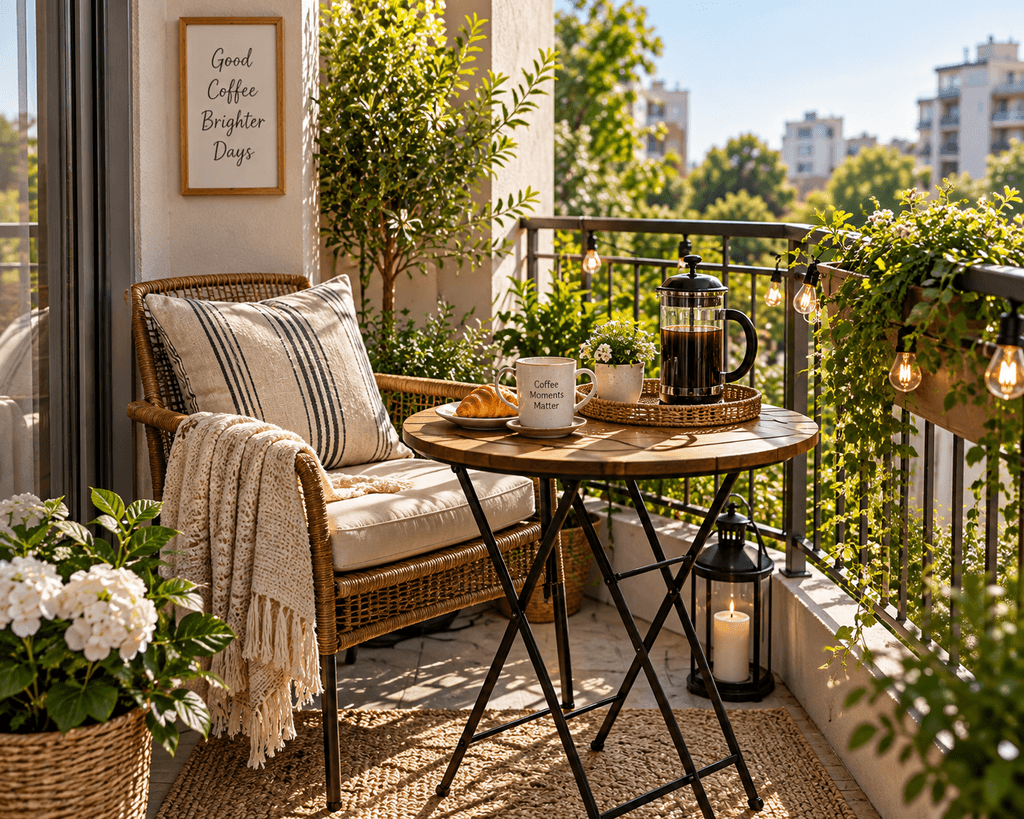
A small balcony can be the perfect spot for your morning coffee. You do not need a full outdoor furniture set. Use a small bistro table and one comfortable chair, then keep the setup simple with coffee prepared indoors and carried outside in a lidded mug or thermal carafe. Brew with electrical equipment indoors unless it is specifically suitable for outdoor use. Add one small plant and a weatherproof cushion to create a welcoming space without making it feel cluttered. Small space tip: Choose furniture that folds or can be moved when you need more room on the balcony.
2. Use a Narrow Console for a Small Coffee Station
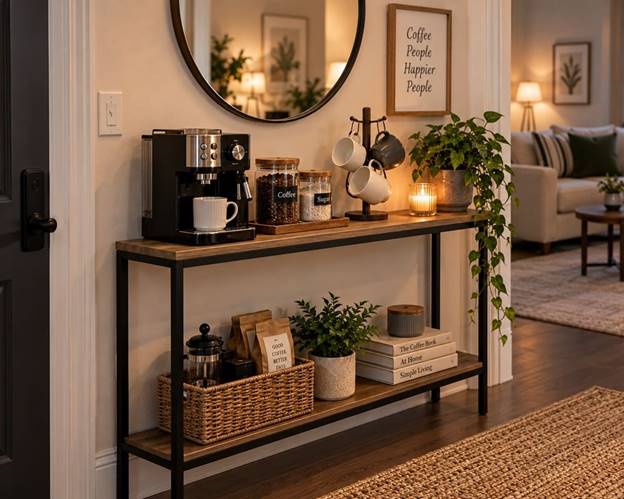
Short on kitchen counter space? Check a narrow wall near a suitable outlet before buying a separate coffee cabinet. A stable, heat-resistant console or sideboard can hold the brewer only if it supports the appliance and provides the clearances specified in its manual. Keep the refill route dry, place mugs and filters in a lower drawer, and check that the station does not narrow a walkway. These small-space organization ideas can help you reuse nearby storage instead of adding more furniture.
Small-space tip: Choose a console that leaves enough room for comfortable walking in front of it.
3. Create a Coffee Corner Under an Existing Shelf
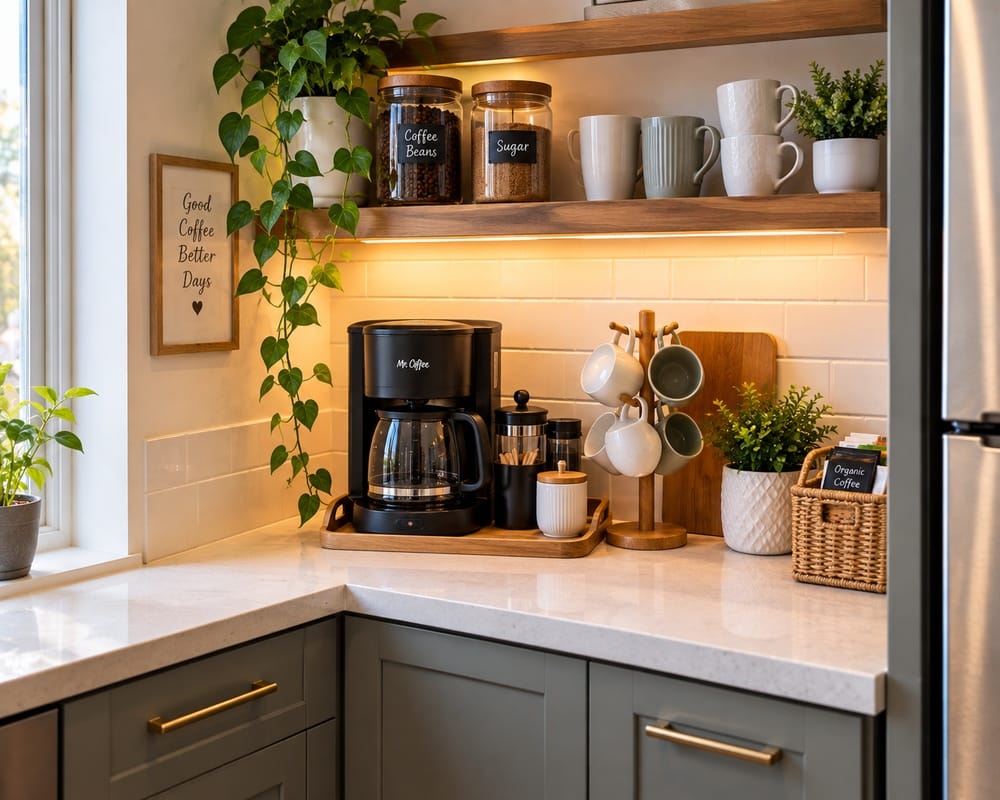
Looking to make better use of an underused shelf? Use the space below it as a mini coffee station. Place a coffee maker on the counter or cabinet below, then keep mugs, coffee containers, and a small decorative item on the shelf above. The vertical storage lets you create a defined station without adding more furniture. Keep the shelf uncluttered, and use only the items you reach for regularly.
Fit test: Measure the brewer with its lid open and the water tank removed. Follow the appliance manual’s steam and ventilation clearances. If the shelf is too low, store mugs there and keep the brewer on an open counter.
4. Small Coffee Station Idea Using a Rolling Cart
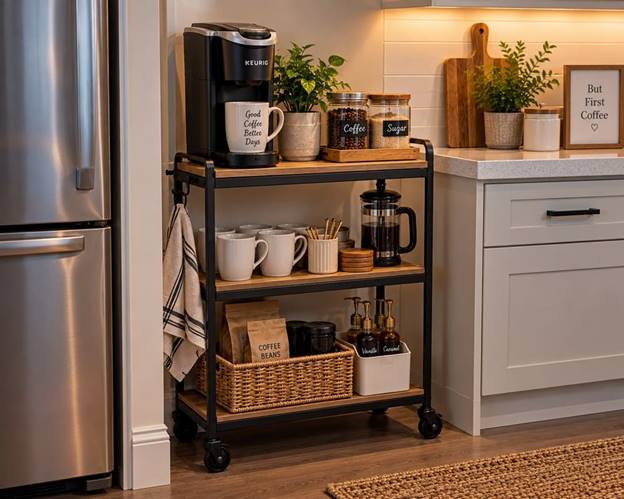
The space between a refrigerator and cabinet, or between two pieces of furniture, can become useful storage. A slim rolling cart lets you organize coffee supplies across several levels. Keep frequently used mugs and supplies on the upper shelf and extras below. Brew with an electric appliance on a stable fixed surface near a suitable outlet rather than a cart that could move or tip. The best part is its flexibility. You can move the cart when you need access to the area or want to clean underneath it.
Small-space cart test: Measure the gap with the cart fully loaded, check whether wheels lock, and make sure you can pull it out without blocking the fridge or doorway. Use the cart for mugs, filters and coffee supplies; prepare hot drinks on a stable fixed surface unless both cart and appliance are specifically approved for brewing together.
5. Create a Cozy Coffee Nook in a Small Space
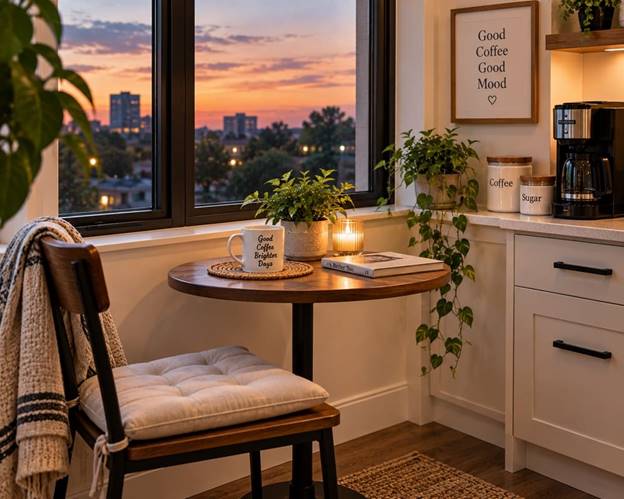
Place a small round table beside a window and chair to create a quiet coffee nook without adding a second kitchen. Brew in the kitchen, then carry the finished drink in a secure mug or thermal carafe; keep powered equipment and loose cords off the reading table. A wipe-clean tray holds a mug and book without taking over the surface. With children or pets, keep hot drinks away from the table edge.
6. Turn an Awkward Kitchen Corner Into a Coffee Zone
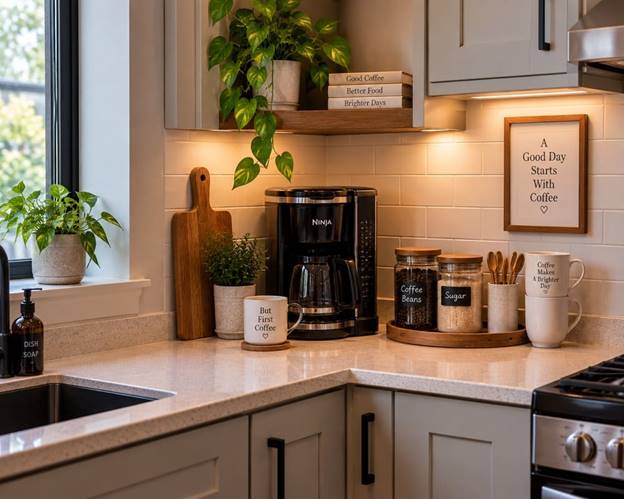
Turn an unused kitchen corner into a coffee zone only after checking that the brewer can sit level and nearby cabinet doors, refrigerator ventilation and the main work area remain usable. Place the machine on a stable heat-resistant surface, keep its water tank accessible, and store mugs or filters without obstructing steam vents. If the corner is too tight for the appliance’s specified clearances, use it for supplies and brew elsewhere.
A small framed print, wooden cutting board, or plant can soften the space without getting in the way of the practical items. For more ways to make a small home feel intentional without spending much, see these cheap DIY home decor ideas
7. Hide the Coffee Station Inside a Small Cabinet
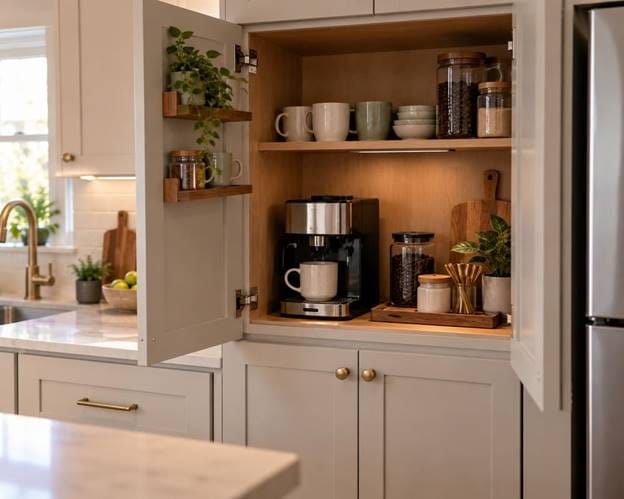
For a cleaner-looking kitchen, use a cabinet to store mugs, beans, filters and other supplies. Do not brew coffee inside a closed cabinet: heat and steam require the clearances specified in the appliance manual. Move the machine to a stable, ventilated, heat-resistant counter for use, and let it cool before storing it. This keeps supplies concealed without trapping heat or moisture around powered equipment.
8. Use a Floating Shelf for a Small Coffee Corner
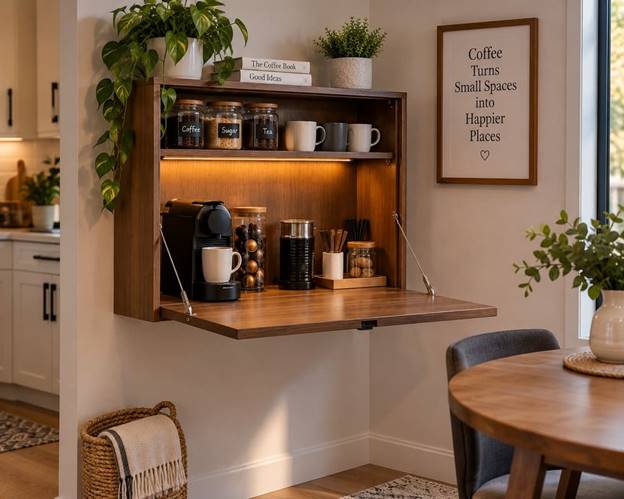
If there is no room for another table or cart, look up. A sturdy floating shelf can provide space for mugs, coffee containers, and smaller equipment. Keep heavier appliances on a properly supported surface unless the shelf is specifically designed to hold their weight. This creates a simple vertical coffee station without taking up valuable floor space. Small-space tip: Use the wall shelf for lighter items and keep the heavier equipment on a sturdy surface when possible.
Before drilling: Check the wall type, shelf load rating and suitable fixings; place heavier mugs low and avoid positioning a shelf where it can be bumped. If your rental does not permit drilling, use a narrow freestanding organizer for cups and filters instead.
9. Create a Two-Person Balcony Coffee Corner
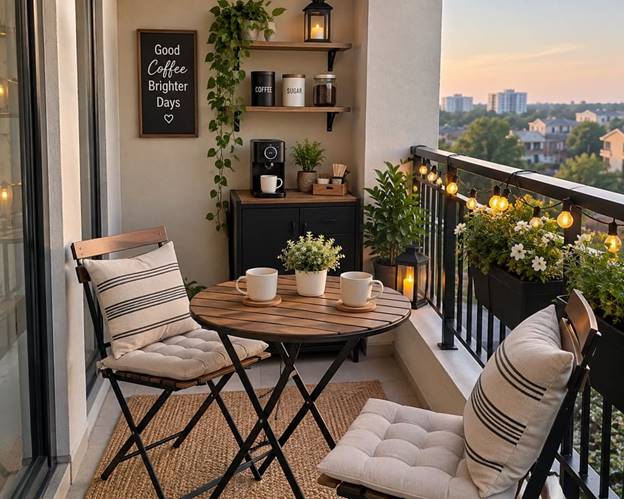
A small balcony can still work for two people. Choose a compact round table and two small chairs, then keep the styling simple with two mugs, a small tray, and one plant or other outdoor detail. Skip a full patio dining set and choose low-profile furniture instead. The result can feel like a tiny outdoor cafe without taking over the balcony.
Two-person layout test: Mark the table and chair footprints with paper or tape, then sit in both seats and open the balcony door. If either chair blocks the exit or requires climbing around furniture, choose folding seats or a smaller table. Brew indoors and carry drinks outside.
10. Put a Coffee Corner Beside a Reading Chair
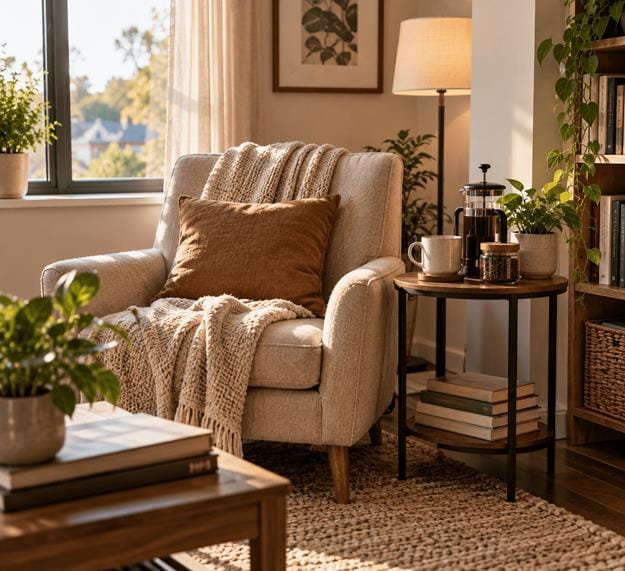
A chair-side coffee spot works best as a place to enjoy coffee, not operate a hot machine. Brew in the kitchen and bring a lidded mug or small thermal carafe to a stable side table away from upholstery edges, trailing cords and children’s reach. Add one book or lamp rather than filling the table with equipment. For styling a compact seating area, see these mirror wall decor ideas for a small living room.
11. Turn a Narrow Sideboard Into a Coffee Station
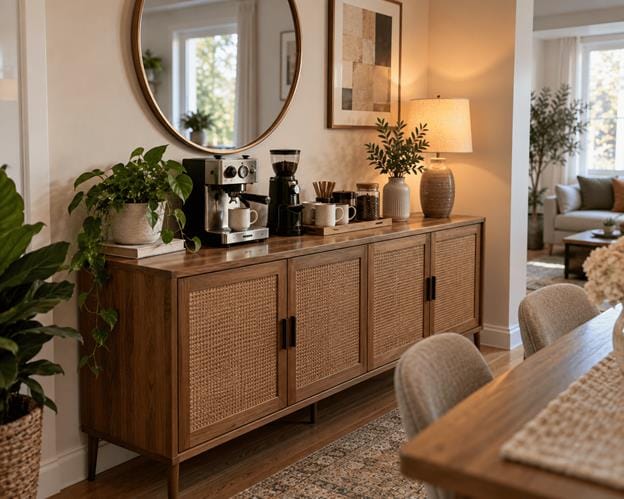
A narrow sideboard can make a coffee station feel like part of an open-plan living room rather than an extra kitchen counter. Reserve its stable, heat-resistant top for the brewer and one wipe-clean tray; put spare mugs, filters and packets behind the doors. Match one container or finish to the nearby furniture, but prioritize a usable refill route and a surface that tolerates occasional drips.
Before buying a sideboard: Measure the top surface, the brewer with its lid raised, and the distance to the outlet. Confirm the furniture is stable, that the manufacturer permits the appliance’s placement and ventilation, and that spills can be wiped away without damaging the finish.
12. Create a Coffee Corner With Almost No Counter Space
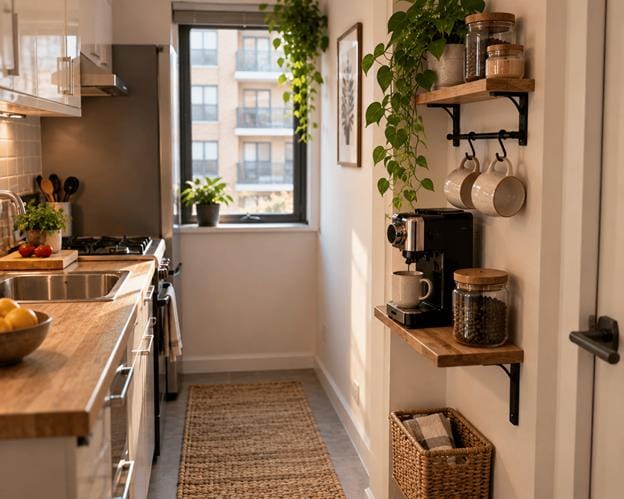
With almost no spare counter space, separate what must stay near the brewer from what can be stored elsewhere. Keep the machine on a suitable stable surface with room to open its lid, then move mugs, filters and backup supplies into a drawer, cupboard or properly supported shelf. A washable tray can define the active area without spreading accessories across the worktop. If there is no safe place to operate a hot appliance, create a serving nook and brew elsewhere. For wider storage fixes, see these small-space organization hacks.
13. Use a Small Breakfast Nook as a Coffee Corner
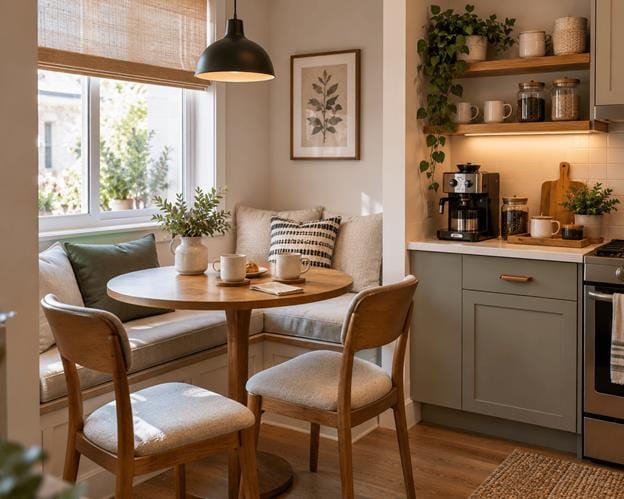
In a small breakfast nook, let the table be the place to drink coffee rather than another place to operate the machine. Brew in the kitchen, carry cups on a tray, and return the tray afterward so the table stays available for meals. Choose a compact table and chairs that still allow people to get past when someone is seated. One small plant or washable placemat can make the nook feel intentional without crowding the eating surface.
Breakfast-nook fit test: Pull both chairs out as if people are seated, then carry a filled mug along the usual route from the kitchen. If you have to squeeze past someone or reach across a hot cup, move the serving tray or choose a smaller table. Keep the walkway clear and use a stable, wipe-clean tray. If your apartment has no separate dining area, see these small-apartment dining layout ideas.
14. Create a Seasonal Outdoor Coffee Corner
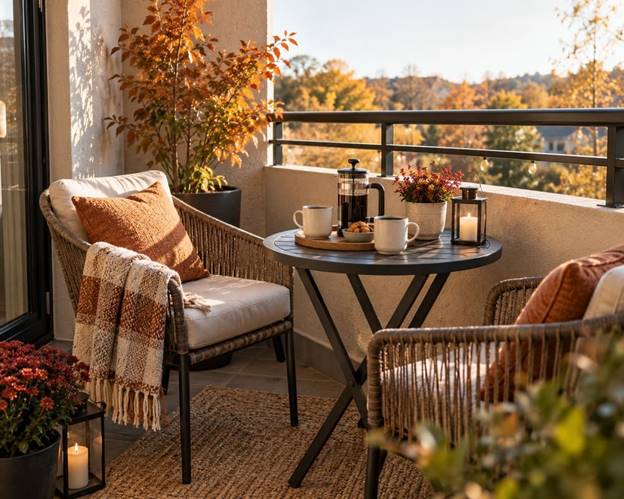
Refresh a balcony coffee nook without buying new furniture each season. Keep the same compact table and chairs, then swap one removable detail: a washable outdoor cushion in warmer months or a weather-suitable throw for cooler mornings. Store textiles indoors when damp, check that the door still opens fully, and keep the serving tray easy to bring back inside after each drink.
Outdoor reality check: Choose weather-resistant furniture and bring cushions inside after use. Make coffee indoors and take out the finished cup or a thermal carafe; do not route an indoor appliance cord through a doorway or rely on an extension lead to power a balcony setup.
15. Build a Café-Like Coffee Corner Without a Dedicated Coffee Bar
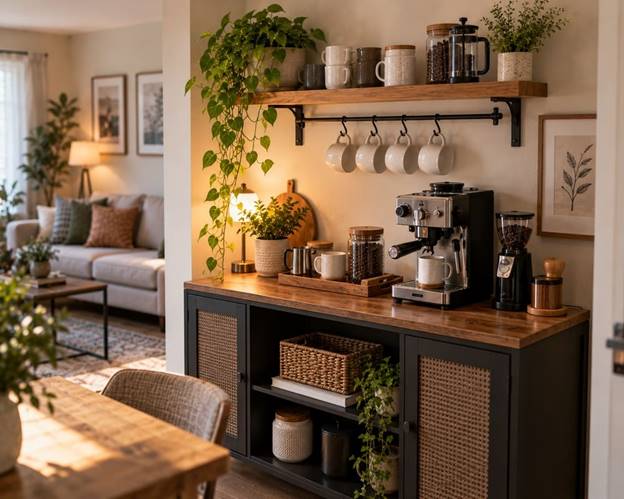
For a café-like feel, group the everyday brewer, two favourite mugs and one coffee container on a wipe-clean surface, then put spare equipment out of sight. Repeat a material already in the room—such as wood or matte ceramic—and add one small framed print or plant away from heat and steam. Leave the water tank and drip tray accessible so the setup is as easy to reset as it is to photograph.
Seven-day usability check: Try the station for one week before buying more decor. If you repeatedly walk away for filters, water or mugs, move those items closer. For a wider reset, use our small apartment organization checklist.
Build a Coffee Corner on a Budget: Three Practical Levels
Before buying a coffee cart or cabinet, decide which part of your daily routine needs improving. These are spending levels rather than price promises: costs vary by location, and a setup you already own may work best.
- Use what you have: Keep the brewer on a suitable existing counter, place one mug on a washable tray, and put filters or pods in a nearby drawer. Try the arrangement for a week before shopping.
- One small upgrade: If mugs are the problem, add a properly supported shelf or drawer divider for lightweight supplies, not another powered appliance.
- Furniture upgrade: Consider a stable sideboard only after measuring the machine, lid opening, outlet distance, steam clearance and remaining walking route. Follow the manufacturers’ instructions.
No Nearby Outlet? Make a Coffee Serving Nook
A favorite chair or balcony can still be a coffee corner without housing the coffee machine. Prepare the drink at a suitable kitchen outlet, then carry it in a secure lidded mug or thermal carafe to a stable side table. Keep the serving spot clear of trailing cords and away from edges where a hot drink could be knocked over. Do not run an extension lead through a doorway to make a distant coffee station work; the U.S. Fire Administration warns against extension cords for cooking appliances. Follow the coffee maker’s outlet requirements.
A Simple Coffee Corner Cleaning and Moisture Check
After making coffee, put used grounds or pods where they belong, wipe drips from the tray and surrounding surface, and check that no water has reached a socket or cord. Let hot equipment cool before moving it; follow the manufacturer’s instructions for unplugging, cleaning and descaling. Once a week, inspect the wall or shelf above the brewer for condensation or discoloration and confirm that the machine still has its required ventilation space. If moisture collects under a shelf, move the brewer to a more open position rather than covering the problem with decoration.
How to Choose the Right Spot for Your Coffee Corner in a Small Space
Choose a spot that keeps brewing simple without stealing your main work surface. Start with an underused area near a practical outlet and, when possible, reasonably close to water. Measure the width, depth, walking clearance, and appliance height before buying furniture or shelves.
Measure the Space First
Measure the usable surface width and depth, then place paper templates for the brewer, mug and tray. Open the appliance lid and remove its water tank as during a normal refill; check the manufacturer’s clearance requirements and leave a clear, dry route to the sink. A station that fits while switched off may still be too cramped to use safely.
Before ordering a cabinet or cart, mark its footprint on the floor with painter’s tape. Walk past it, open nearby doors and drawers, and check the brewer’s lid and water-tank clearance. A piece that fits the wall on paper may still block the kitchen when someone is using it.
Check the Nearest Outlet
Choose a position where the coffee maker’s own cord reaches a suitable wall outlet without crossing the sink, a doorway or a walking route. Keep the plug area dry, avoid overloading the outlet and follow the appliance manual rather than improvising with a trailing extension lead.
The U.S. Fire Administration’s appliance-safety guidance recommends unplugging small appliances when they are not in use, avoiding overloaded outlets, and replacing appliances with damaged cords. Follow the coffee maker’s manual for placement, cleaning and electrical requirements.
Think About Your Water Routine
Keep the station reasonably close to water if possible, but never arrange it so refilling drips across an outlet or cord. In a rental without a nearby sink, fill a small jug in the kitchen and refill the machine on a dry surface; wipe spills before using electrical equipment. Choose convenience without sacrificing a clear walking route.
You do not want a beautiful coffee corner that makes every cup unnecessarily difficult to prepare.
Keep Your Routine Together
Think about what you actually use.
Keep only the supplies used for your regular drink within reach: a mug, beans or pods, and filters for a machine; or a kettle-safe preparation area and coffee container for a French press. Put backup mugs and seasonal syrups in closed storage. If you repeatedly cross the room for water or cleanup, reposition the station before adding decorations.
Do Not Sacrifice Your Main Work Surface
A coffee corner should make your kitchen easier to use, not take away the counter space you need for cooking.
If the main counter is crowded, store mugs and filters in a cabinet, wall shelf or rolling cart while keeping the hot brewer on a stable, heat-resistant fixed surface. A sideboard can work if the appliance manual permits it and outlet, ventilation and walking clearances are suitable. Avoid turning a movable cart or lightweight shelf into a powered brewing surface by default.
How to Make a Small Coffee Corner Look Cozy and Stylish
To make a small coffee corner look cozy without adding clutter, combine one functional anchor, one storage solution, and one decorative detail. Repeating a material or finish already used in the room can help the station feel intentional rather than visually separate.
A simple formula is:
One functional anchor + one storage solution + one decorative detail.
For example:
Coffee maker + small tray + plant
or:
French press + floating shelf + framed print
or:
Coffee cart + mug storage + small vase
You do not need ten decorative objects to make the corner feel cozy. In a small area, a few carefully selected pieces usually have more visual impact and are easier to keep organized.
Small Coffee Corner Ideas: Mistakes to Avoid
Choosing Furniture That Is Too Deep
Mark the proposed cabinet depth on the floor, then walk past it while nearby doors and drawers are open. If people have to turn sideways or the fridge cannot open properly, choose a shallower unit or move supplies into existing wall or drawer storage. Keep the main kitchen route and exits clear.
Displaying Everything
Coffee beans, syrups, mugs, filters, spoons, appliances, and accessories can quickly become visual clutter.
Keep the items you use most often accessible and store the rest.
Ignoring Outlet Placement
A beautiful coffee station is not useful if the appliance cannot be positioned safely. For electrical guidance, see U.S. Fire Administration cooking-appliance safety advice on plugging appliances directly into wall outlets.
Using Too Many Appliances
List the drinks you actually make during a normal week. Keep the brewer and tools used for those drinks within reach; store rarely used grinders, syrups or duplicate machines elsewhere. If an accessory does not save time or improve the drink you regularly make, it probably does not need permanent counter space.
Forgetting About Cleaning
Choose a heat-resistant, wipeable surface and a removable tray for drips and loose grounds. Leave enough room to lift out the drip tray, empty pods or grounds, and wipe around the machine without moving other objects. Check the wall or shelf above for condensation, and keep fabrics away from hot steam.
Making the Station Beautiful but Inconvenient
This is perhaps the biggest mistake.
If making coffee requires walking across the room several times or searching through different cabinets for basic supplies, the setup will quickly become frustrating.
A good coffee corner should look good, fit the space, and make your daily routine easier.
Frequently Asked Questions About Coffee Corners in Small Spaces
How do you make a coffee corner in a small space?
Choose a small, stable, heat-resistant surface for the brewer, ideally near a suitable outlet and water source. Keep the machine’s refill and steam clearances open, store lightweight mugs and filters on a shelf or cart, and test the walking route before buying anything. A cart can organize supplies, but it is not automatically a safe place to operate a hot coffee maker.
What can I use for a coffee corner if I have no counter space?
Use a slim cart or floating shelf for mugs, beans, filters and a serving tray, then brew on an existing stable kitchen surface. A sturdy sideboard can hold a machine only when its load rating, heat resistance, nearby outlet and the appliance’s clearance requirements allow it. If no suitable brewing surface exists, keep the coffee corner as a seating or serving nook instead of improvising with unstable furniture.
How do I keep a small coffee corner from looking cluttered?
Limit the visible setup to the equipment and supplies you use regularly. Store extra mugs, beans, filters, and seasonal accessories in drawers, baskets, or cabinets, and use one tray or shelf to give the coffee corner a clear visual boundary.
Final Thoughts
The most useful coffee corner ideas for small spaces separate safe brewing from convenient storage and comfortable seating. Start with the daily routine: where will you fill the machine, plug it in, make the drink, set down the hot mug and clean up? Then choose the smallest setup that supports those steps without blocking a walkway.
For a tiny kitchen, keep the brewer on a fixed counter and move supplies to a drawer. For a rental, try a sturdy sideboard and removable mug storage. For a balcony or reading nook, brew indoors and carry the finished drink outside or to your chair. A cart is most useful for storage when it can roll out of the way after use.
Measure first, test the setup for seven days, and add only the decor that survives the daily routine. A tidy tray, one plant or a matching mug rack is usually enough to make a functional coffee spot feel intentional.
Sometimes, the smallest corner can become your favorite place for the first cup of the day.