
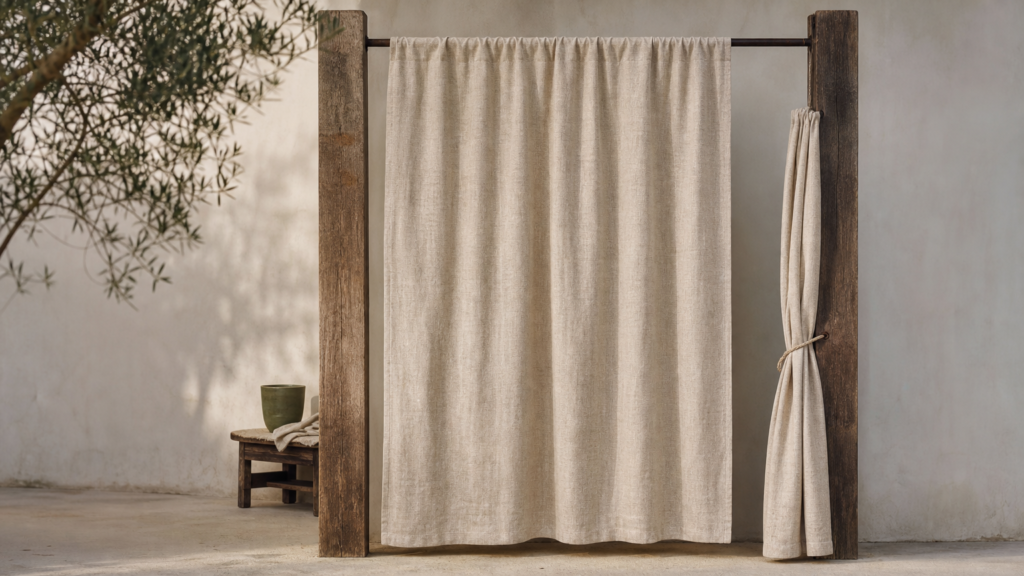
The best apartment balcony privacy ideas solve the view that bothers you without taking over your outdoor space. For renters, outdoor curtains offer flexible side coverage, privacy mesh can screen an open railing, and a freestanding divider may work when attachments are restricted. Tall plants add a softer look. The right choice depends on your sightline, the weather, and your building’s rules.
Many balcony makeover ideas assume you can drill into a wall or install permanent fencing. That is not realistic for many apartments. A better starting point is to sit where you usually sit, work out exactly where people can see you, and choose one removable solution that addresses that angle.
Below are ten ideas with practical setup steps, approximate US budget ranges, and reasons to choose or skip each one. Before buying materials, read your lease or building rules and check whether your proposed screen is permitted. Never obstruct an exit, emergency access, drainage, sprinklers or required railing openings, and do not attach anything that could fall or overload a balcony. If you’re unsure about wind loads, railings, or structural capacity, ask building management or a qualified professional.
Find your best balcony privacy solution
| Where you need privacy | Start with | Budget level |
|---|---|---|
| Neighbor looking in from the side | Outdoor curtains or an approved freestanding screen | Low to high |
| People seeing through an open railing | Approved privacy mesh or greenery panels | Low to moderate |
| Windows directly across from you | Outdoor roller shade or curtains | Moderate |
| View from an apartment above | Building-approved overhead shade or umbrella | Moderate to high |
| Glass doors or permitted glass panels | Removable privacy film suited to that glass | Low |
| Want a softer, natural look | Tall potted grasses or other suitable plants | Moderate |
Prices throughout this guide are rough US shopping estimates, not current retailer quotes. Size, fabric quality, hardware and local availability affect the cost.
1. Outdoor curtains on a tension or clamp-on rod
How it works
Outdoor curtains are especially useful when another balcony faces yours from the side. Open the fabric when you want a breeze and close it when you need privacy. A purpose-rated tension rod can span a short gap between sturdy surfaces, while an approved clamp-on rod may suit a covered balcony’s structure. Choose outdoor-rated, mildew-resistant fabric and hardware designed for the actual span and conditions.
Wind can turn loose fabric into a hazard. Use the manufacturer’s recommended tiebacks or fastening system, secure the panel when not in use, and remove or fully retract it before high winds or storms. Do not rely on an improvised cord tied to a safety railing unless your building permits the arrangement.
Who it suits
Best for: side-facing sightlines, covered balconies, and renters who want control over privacy and daylight. Skip if: there is no secure mounting surface, your floor is extremely windy, or exterior fabric is prohibited.
Approximate cost and setup
Budget approximately $30–$120 per curtain panel, plus around $15–$50 for appropriate hardware.
- Measure the exposed side, leaving enough overlap to reduce gaps.
- Confirm that your proposed mounting method is allowed and properly rated.
- Hang the panel clear of floor drains, doors and heat sources.
- Test its movement in calm conditions and secure it whenever windy weather approaches.
2. Privacy mesh attached to an approved railing
How it works
A woven or perforated privacy mesh screens the lower portion of an open balcony railing while letting some air pass through. It can help if the main problem is people looking up from the street or across from an adjacent building. A relatively open weave generally offers less wind resistance than a solid sheet, but even mesh can catch substantial wind.
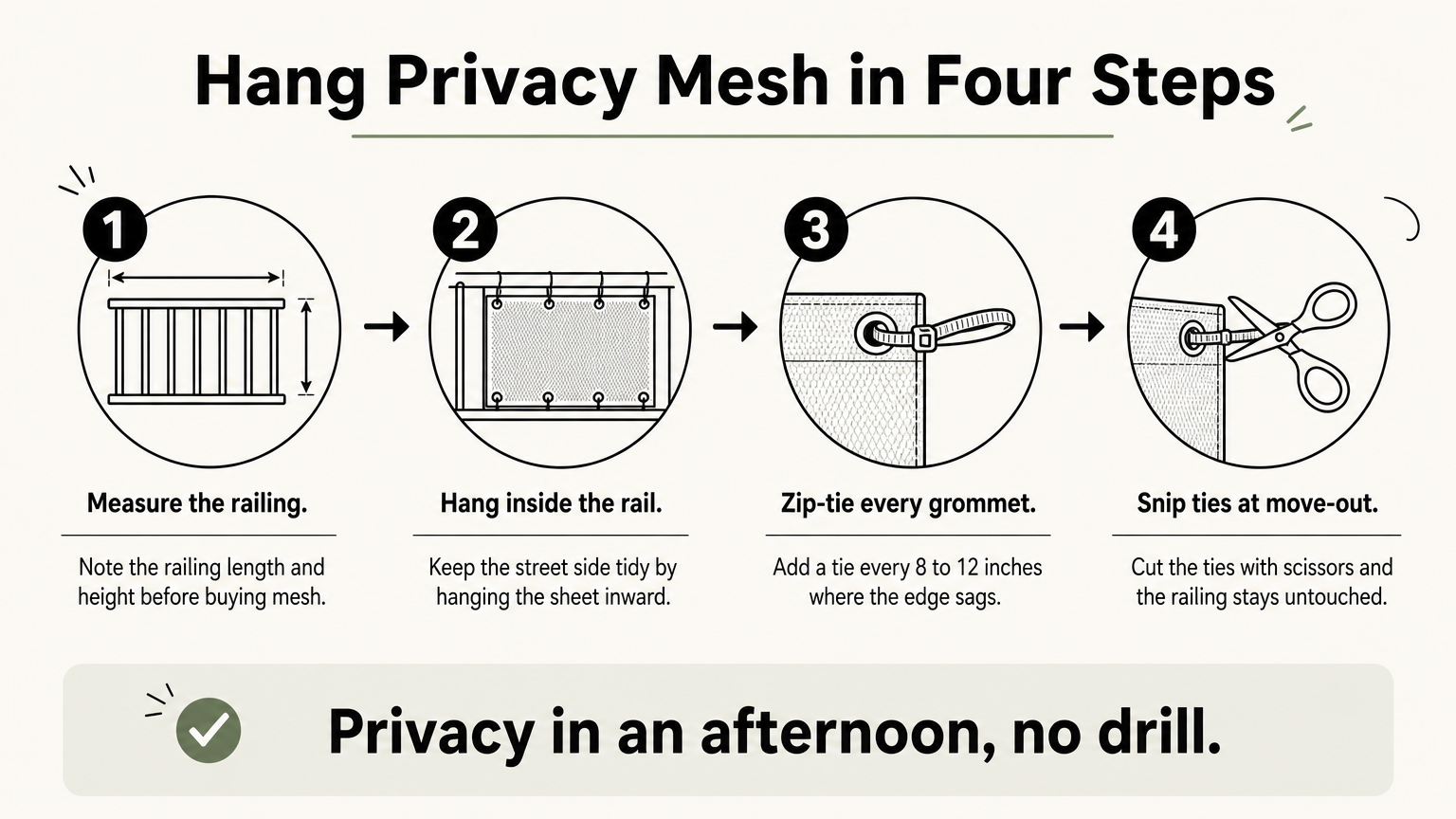
Only use railing-mounted mesh if the building expressly allows it and the product is approved for your location. Balcony guardrails are safety-critical; avoid altering, weakening or drilling into them. Don’t assume zip ties alone make a screen wind-safe. Follow building and product installation guidance.
Who it suits
Best for: approved open-bar railings and privacy through the lower half of a balcony. Skip if: you need overhead screening, or railing coverings are prohibited.
Approximate cost and setup
Small rolls can cost around $15–$50. The supplied infographic illustrates a common removable fitting method, but it is not a substitute for building approval or wind-load guidance.
- Measure the width and height of the permitted area.
- Position the fabric on the inside, if the building allows this installation.
- Secure it only with fittings approved for the railing and the mesh product.
- Check it regularly and remove it before severe weather or when required by building management.
3. Faux ivy and greenery panels
How it works
Artificial greenery panels create a leafy appearance without watering or waiting for plants to grow. These plastic-leaf mats often have a mesh backing and can help obscure a view through a suitable railing or form part of a permitted screen. Choose outdoor-rated, UV-resistant material; cheap plastic can fade or become brittle.
Thick foliage looks more natural and screens better than sparse panels, but it can also catch wind. Check panels from both sides before buying, and make sure the material, attachment points and exterior appearance comply with your building’s rules.
Who it suits
Best for: people who want immediate greenery without plant care. Skip if: exterior railing coverings are banned or your balcony is exposed to strong winds.
Approximate cost and setup
Allow roughly $20–$70 for a small railing’s worth of panels.
- Measure the part of the railing that may legally be covered.
- Join panels using their designed clips, following product instructions.
- Use only permitted, wind-appropriate fixings.
- Leave drains and required openings clear, and periodically check for loose sections.
4. A freestanding folding privacy screen
How it works
A folding outdoor screen can block a particular side view without being permanently fixed to the apartment. Metal, composite and treated-wood screens handle outdoor conditions better than indoor particleboard dividers. Slatted or perforated versions allow more airflow than solid panels.
Freestanding does not mean windproof. A tall screen can tip or blow off an elevated balcony. Use it only if your building permits it and the manufacturer provides an appropriate stable installation. An improvised heavy planter against the feet is not necessarily a safe substitute for an engineered base.
Who it suits
Best for: sheltered balconies with room to position a rated screen clear of doors and paths. Skip if: the balcony is narrow, high, or very windy and you cannot secure the unit in an approved way.
Approximate cost and setup
Outdoor-ready screens often cost around $60–$250.
- Check the rules for freestanding screens and their permitted height.
- Place the screen to intercept your main sightline.
- Follow the manufacturer’s approved stabilization instructions.
- Keep it clear of the balcony door, drains and emergency access.
5. Roll-up bamboo or outdoor roller shades
How it works
An outdoor roller shade lowers from a suitable overhead support and can screen the building opposite while reducing glare. Outdoor-rated bamboo, woven materials or polyester are better choices than indoor blinds. Shades are particularly useful on covered balconies with an existing approved fixing point.
A broad lowered shade can behave like a sail. Follow the shade maker’s maximum wind guidance, retract it when unattended or in strong winds, and confirm that mounting into any roof frame or railing is allowed. Where children may use the balcony, choose a cordless shade and follow the manufacturer’s child-safety instructions.
Who it suits
Best for: covered balconies and views from directly ahead. Skip if: there is no approved top fixing or wind exposure is severe.
Approximate cost and setup
Many small outdoor shades cost roughly $30–$100; wider models and professional hardware may cost more.
- Measure the opening at several points.
- Choose a shade with hardware rated for outdoor use.
- Use only building-approved mounting points and attachments.
- Retract the shade whenever wind conditions exceed its product limits.
6. Tall potted plants for a natural privacy screen
How it works
Plants can soften a balcony while obscuring selected sightlines at seated eye level. Depending on the climate, clumping bamboo, tall ornamental grasses or compact evergreen varieties can provide height without sprawling across the floor. Ask a local nursery which plants suit your daylight, exposure and container size. Avoid invasive running bamboo.
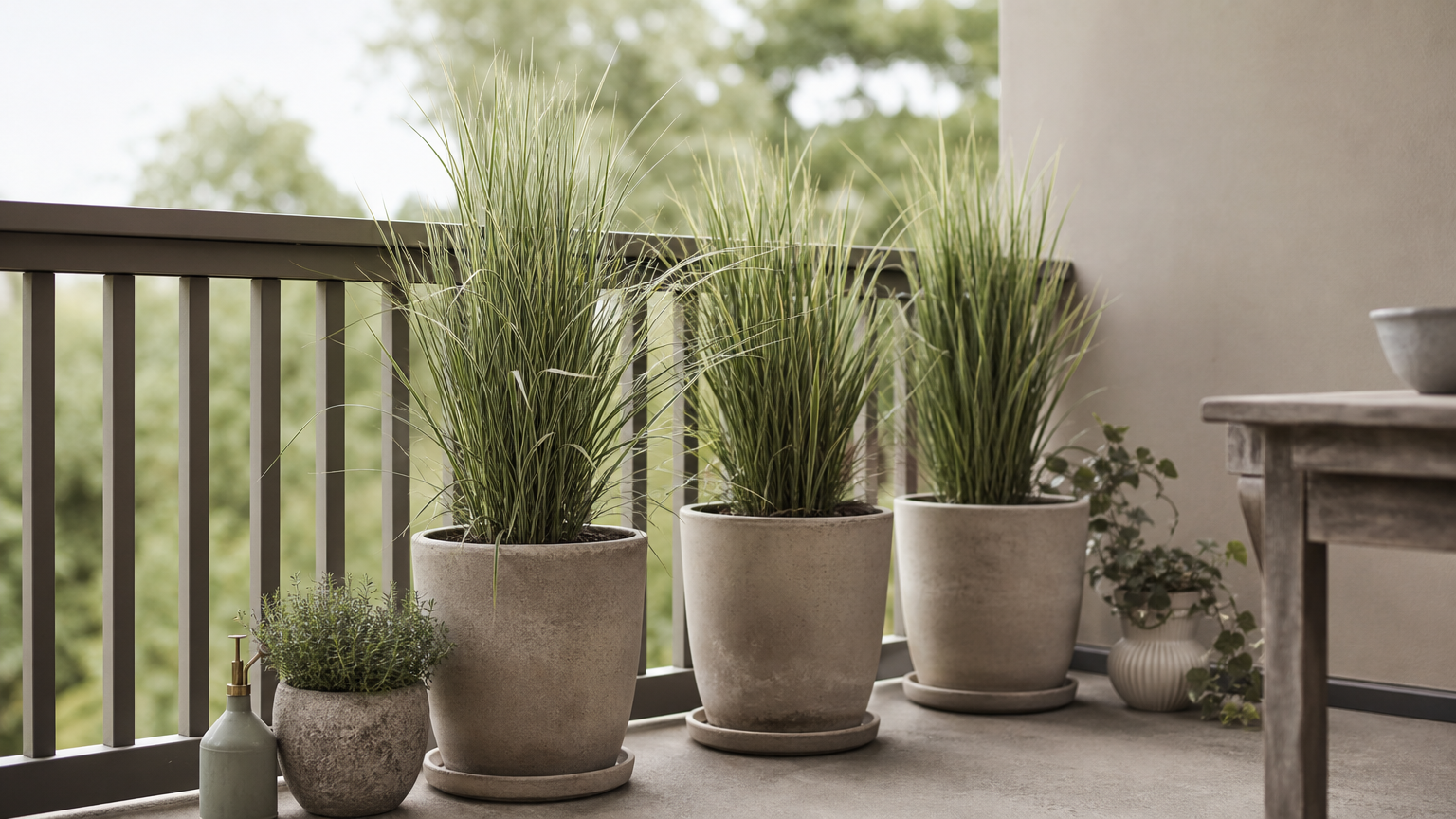
Planters filled with wet soil can be extremely heavy, especially in groups. Check the balcony’s permitted loads and keep tall pots safely inside the railing, away from ledges or areas where they could fall. Use saucers or other drainage arrangements that do not send water onto neighbors below.
Who it suits
Best for: plant lovers, sheltered outdoor corners and longer-term renters. Skip if: there is inadequate light, an unsuitable climate, or uncertainty about balcony weight limits.
Approximate cost and setup
Three suitable plants with containers could cost around $50–$200, depending on their size.
- Check weight restrictions before choosing large containers.
- Choose plants suited to your local climate and available sunlight.
- Place tall plants well inside the guardrail and preserve a clear walkway.
- Water according to the species and inspect pots for stability after storms.
7. An outdoor shelf as a plant and storage divider
How it works
An open outdoor shelving unit can hold plants, a watering can and small baskets while screening a side view. Choose weather-resistant powder-coated metal or sealed wood rather than indoor particleboard. An airy design generally places less load on the wind than a full sheet of backing.
Tall outdoor shelving is particularly vulnerable to toppling. Only consider this where the manufacturer and building rules allow a stable setup; high-rise balconies without an approved anchoring solution may not be suitable. Store heavier items low and never allow pots or loose objects to fall beyond the railing.
Who it suits
Best for: sheltered and sufficiently deep balconies where storage and privacy are both useful. Skip if: securing the unit safely would be impossible.
Approximate cost and setup
Outdoor-ready shelving might cost around $60–$200.
- Measure the floor space without blocking the balcony door.
- Verify that the selected unit is designed for outdoor use and permitted by management.
- Install and stabilize it as the manufacturer specifies.
- Put heavier, break-resistant items on lower shelves.
8. DIY lattice or slat privacy screen
How it works
A lattice or slatted panel can soften an exposed view and serve as a support for an appropriately sized potted climber. Vinyl, wood and composite materials offer different upkeep requirements. The open pattern lets some light and wind through, though tall panels still need careful engineering.
A weighted planter base may work on a ground-floor patio if stable and permitted, but a tall DIY panel can be dangerous on an elevated balcony. Do not assume pavers or soil alone make a homemade screen wind-safe. Seek building approval and choose a proven outdoor system where necessary.
Who it suits
Best for: ground-floor patios, sheltered balconies with explicit approval, and renters who enjoy DIY. Skip if: your balcony is high or wind-exposed and the panel cannot be secured to a rated support.
Approximate cost and setup
Basic materials can cost around $40–$120, excluding any professional mounting or extra safety hardware.
- Measure the area and check approved screen sizes.
- Select an outdoor-rated frame and installation method.
- Finish cut edges carefully and follow product installation directions.
- Check that no part can topple, detach or block drainage and exits.
9. An approved offset umbrella for overhead views
How it works
A cantilever or offset umbrella positions its canopy over seating without a central pole in the middle of the floor. Tilted appropriately, it can reduce sun and some views from upper windows. It does not offer much privacy from the sides.
Many apartment buildings prohibit umbrellas on balconies because a gust can lift or tip them. Choose an umbrella only where building rules allow it, use a base specifically rated by the manufacturer, and keep it closed when unattended or whenever wind picks up. Do not improvise a base or leave the canopy open overnight.
Who it suits
Best for: sheltered, sufficiently large balconies with permission for an umbrella. Skip if: your balcony is narrow, high and windy, or management bans umbrellas.
Approximate cost and setup
Basic umbrellas may cost around $80–$250, often excluding the required base.
- Ask building management whether umbrellas are permitted.
- Choose an outdoor product and its specified weighted base.
- Position it without obstructing doors or adjacent homes.
- Close and secure it when not actively in use.
10. Removable frosted film for suitable glass
How it works
Frosted film on compatible glass can blur views while letting daylight through. Static-cling products may be removable without permanent adhesive, making them attractive to renters. This option is most practical on a permitted sliding glass door or other suitable glazing—not necessarily on every structural balcony guard.
Some buildings restrict films on exterior glass or railings for appearance, heat-performance or glazing-warranty reasons. Check that the exact film is suitable for the glass type and obtain permission before applying it. Frosted film also won’t fully hide a backlit silhouette after dark.
Who it suits
Best for: permitted glass doors and compatible panels where preserving daylight matters. Skip if: the building prohibits film or the glass manufacturer advises against it.
Approximate cost and setup
A small roll may cost around $10–$35.
- Check building and glass-maker guidance before applying any film.
- Clean the permitted glass as instructed by the film manufacturer.
- Apply using the recommended method, usually with water and a soft squeegee.
- Test privacy in daylight and again after dark.
How to pick the right apartment balcony privacy idea
Start with the sightline, not the product
Sit in your favorite chair and identify the exact angle that feels exposed. If the view comes through a railing, a permitted low screen may help. If it comes from next door, look to a side curtain or approved divider. For an upstairs view, explore building-approved overhead shading rather than blocking an entire balcony with opaque panels.
Check the lease, building design and budget
Rules may control visible fabric, material colors, railing attachments, umbrellas, plant placement and total load. A completely removable item can still violate building rules or become a wind hazard. Get permission in writing where needed and never block a fire escape, doorway, drain or sprinkler.
As an approximate guide, mesh and static-cling film can be lower-cost choices under $40; smaller curtains, greenery panels and shades often sit in the $40–$120 range; freestanding screens, large planters and umbrella systems may cost substantially more. Safe mounting hardware can add to any budget.
Test privacy twice
A balcony that feels screened in daylight may still reveal silhouettes after dark. Check the view from the relevant angle at different times, then inspect the setup after the first period of ordinary weather. If a fixing loosens or a panel moves in a breeze, remove it rather than adding improvised attachments.
Common questions
Can renters put a privacy screen on a balcony?
Often yes, but permission depends on the lease, building policies and local safety rules. Even a freestanding screen may require approval or a rated stabilization method.
What is the cheapest way to make a balcony private?
If the building allows it, an appropriately fitted privacy mesh can be relatively inexpensive for an open railing. A suitable removable glass film may be cheaper on an approved glass surface.
Which option is best for a windy balcony?
There is no universal wind-safe solution. Smaller permitted screens and lower-profile planting may be more practical than large fabrics or tall panels, but use only materials and mounting methods approved for your building and the actual wind exposure.
Start with one well-placed layer
The best apartment balcony privacy ideas fit the angle of exposure, your rental rules and the actual weather. Start with one permitted solution, check its stability and see how the space feels before buying a second. A comfortable balcony does not need a complicated makeover.
For more renter-friendly inspiration, explore our bedroom ideas for renters, cozy coffee corner ideas and small-apartment organization checklist. Each offers practical ways to make a compact home more comfortable without a major renovation.