
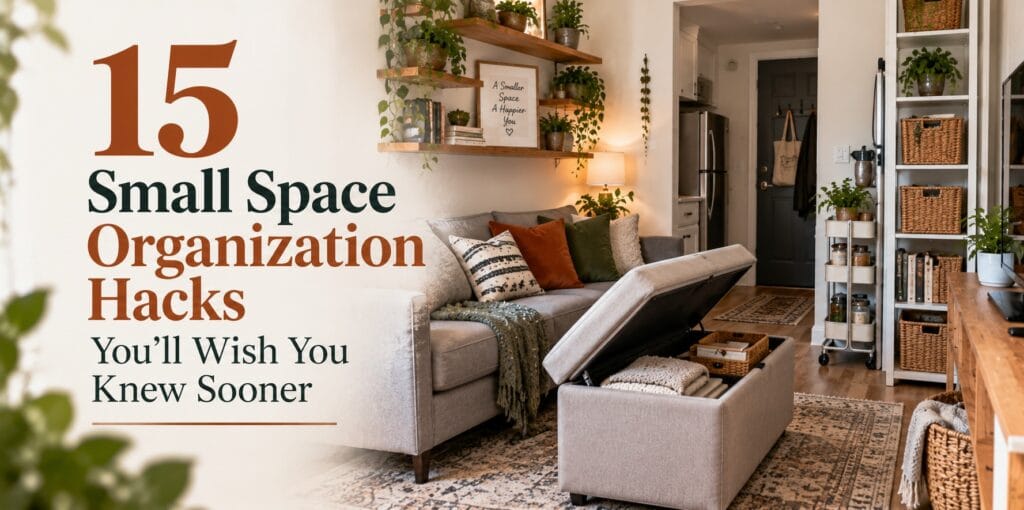
Living in a small home or apartment can make organization feel challenging, but limited square footage does not have to mean constant clutter. In fact, some of the most effective organization solutions come from simply using overlooked spaces more intentionally.
The secret is to think vertically, choose multifunctional furniture, create clear storage zones, and make sure everything has a designated place. Whether you are organizing a tiny bedroom, compact kitchen, small bathroom, or apartment living room, these small space organization hacks can help your home feel calmer, cleaner, and much easier to use. If you prefer a room-by-room approach, use this small apartment organization checklist to work through each space in order. If excess stuff is the first problem, start with our free whole-home declutter checklist printable before choosing new storage.
Quick Takeaway: How to Organize a Small Space
Start by decluttering, then use vertical space, hidden storage, narrow gaps and clearly defined storage zones. Keep everyday items easy to reach and choose furniture that serves more than one purpose. These ideas work especially well for apartments, small bedrooms, compact kitchens and family homes where storage has to earn its space.
Small space organization means arranging limited square footage so every useful item has a clear home without crowding the room. Use this three-step rule: first remove what you do not use, second assign each remaining category one practical home, and only then add storage where a real gap remains. This keeps organizers from becoming extra clutter and makes the system easier to maintain.
15 Practical Small Space Organization Hacks
1. Use Vertical Space Instead of Floor Space
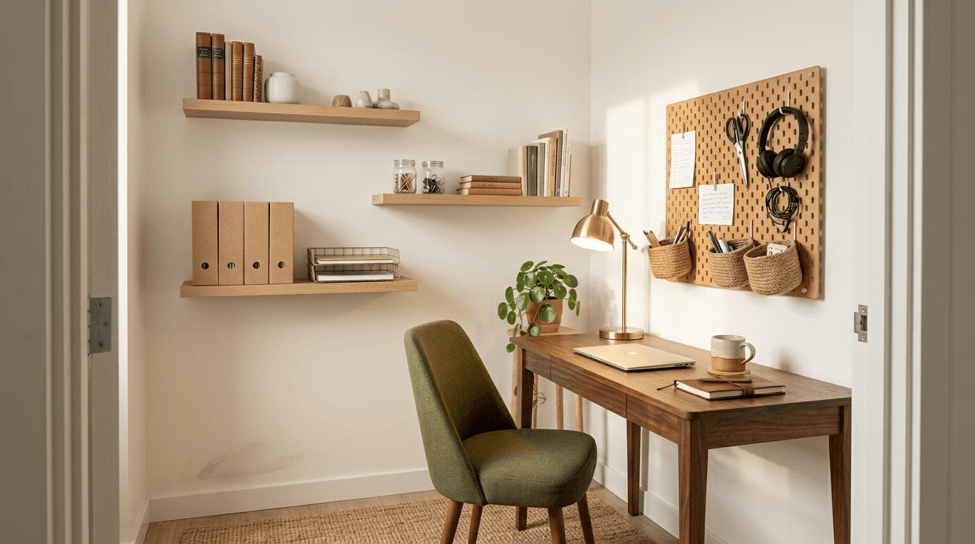
Use the wall before buying another floor cabinet. Sketch where doors, switches and furniture sit, then choose a shelf or hook only if it can be mounted safely without narrowing the walkway.
Floating shelves, tall bookcases, wall-mounted baskets, pegboards, and hooks can create useful storage without taking away valuable walking space. This strategy works particularly well in small bedrooms, kitchens, home offices, and entryways. If your kitchen and dining area share one compact footprint, these open plan kitchen and dining room ideas show how to keep the connected space functional without crowding the floor.
Try keeping heavier or frequently used items lower and placing decorative or rarely used belongings higher up.
2. Choose Furniture With Hidden Storage
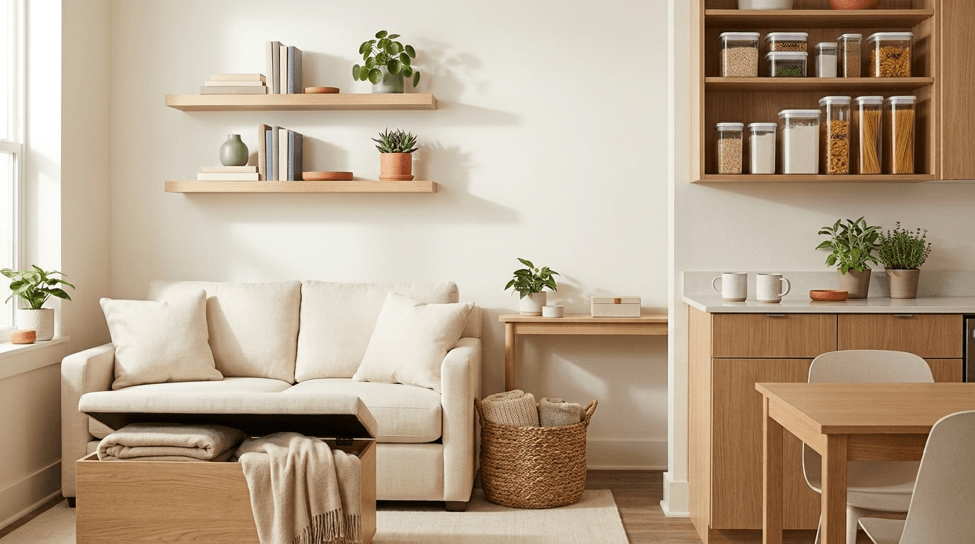
Before buying storage furniture, list the items it would hold and check how you would reach them. A lift-top table is less useful if opening it forces everyone to move away from the sofa.
A storage ottoman, lift-top coffee table, bench with hidden compartments, or bed with built-in drawers can keep everyday clutter out of sight without adding another cabinet to the room.
Look for pieces that serve at least two purposes whenever possible. For more practical ways to make a compact home work harder, see our living room decor ideas for a cozy and stylish home.
3. Make Use of Under-Bed Storage
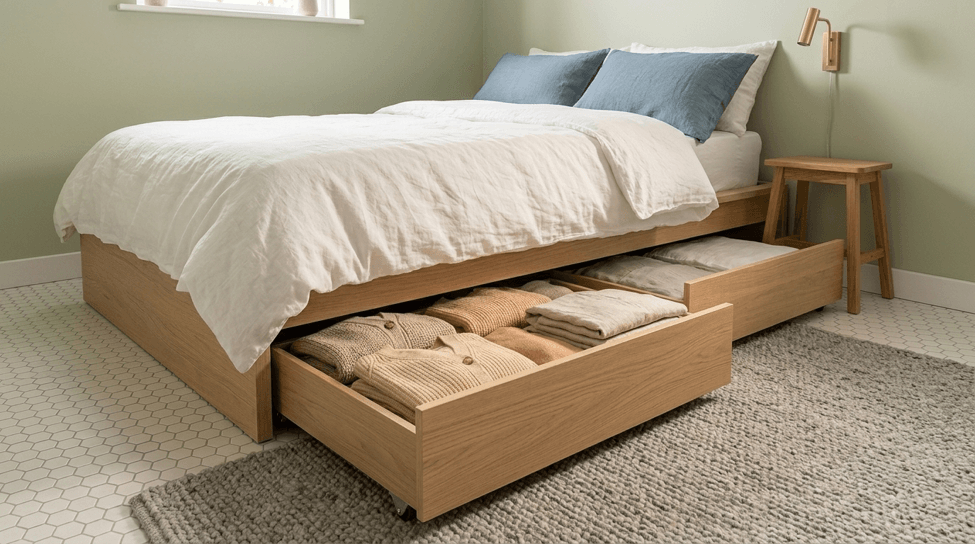
Measure from the floor to the lowest part of the bed frame before choosing a container. Leave room to grip and pull the bin out; a perfect fit on paper can be awkward to use every week.
Use low rolling containers, fabric storage bags, baskets, or built-in drawers for seasonal clothes, extra bedding, shoes, and rarely used items.
Choose containers that fit the measured space and are easy to pull out; matching colours are optional.
4. Add Storage Behind Doors
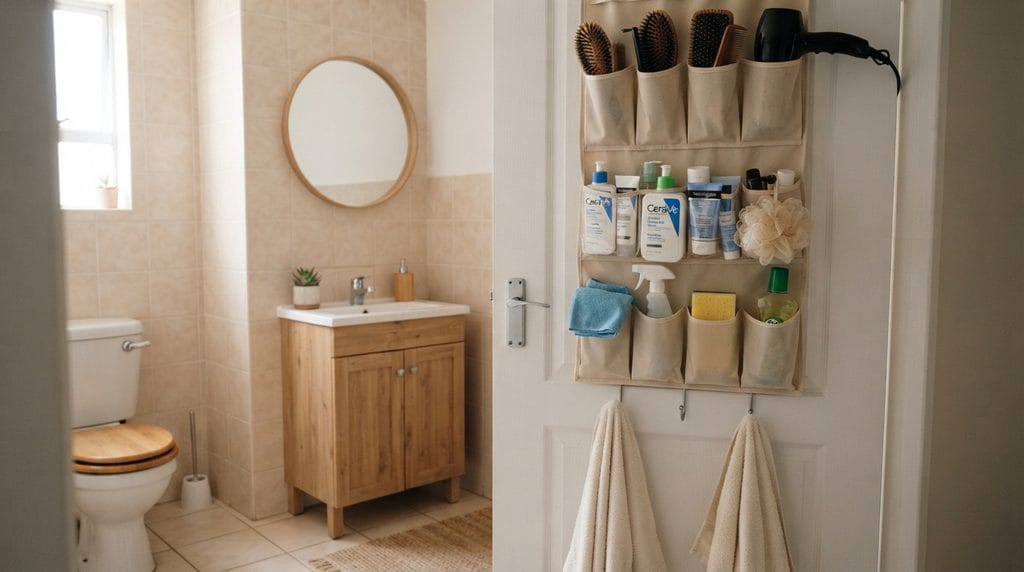
The backs of doors are often completely wasted.
Over-the-door racks and hooks can hold towels, light bags, shoes and accessories without taking floor space. Before using one, check the door’s clearance, hinge movement, hardware and weight limit; do not obstruct an exit, latch or lock. In rentals, follow the lease and choose a door-compatible organizer rather than assuming every door can support one.
5. Divide Drawers Into Categories
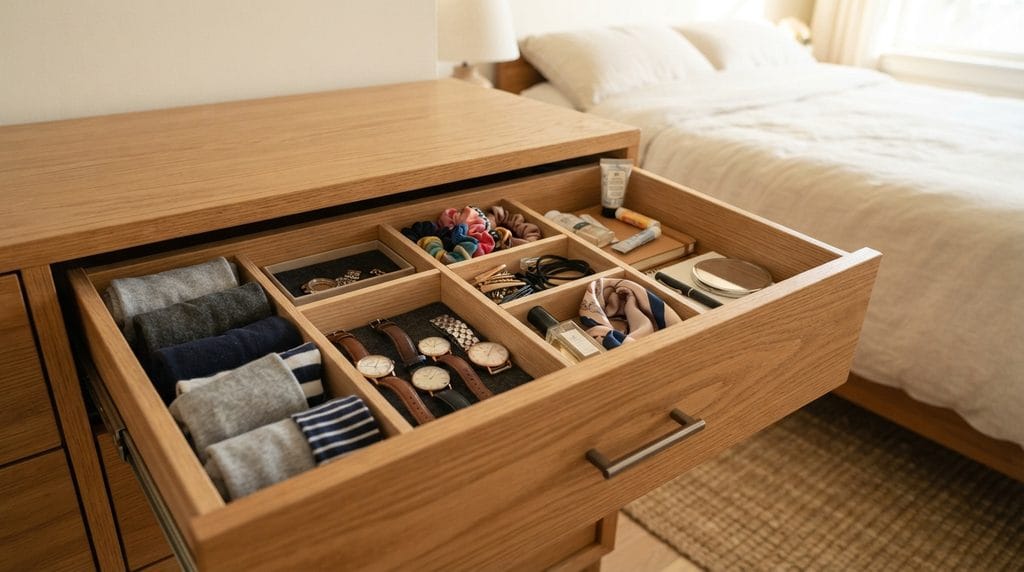
Take everything out of the drawer, group items by task and return only what belongs there. Test inexpensive dividers or reused small boxes for a week before paying for a custom insert.
Drawer dividers give small items designated spaces and make it easier to see what you already own. Use them for cutlery, makeup, socks, office supplies, accessories, or household tools.
6. Use Clear Containers in Cabinets
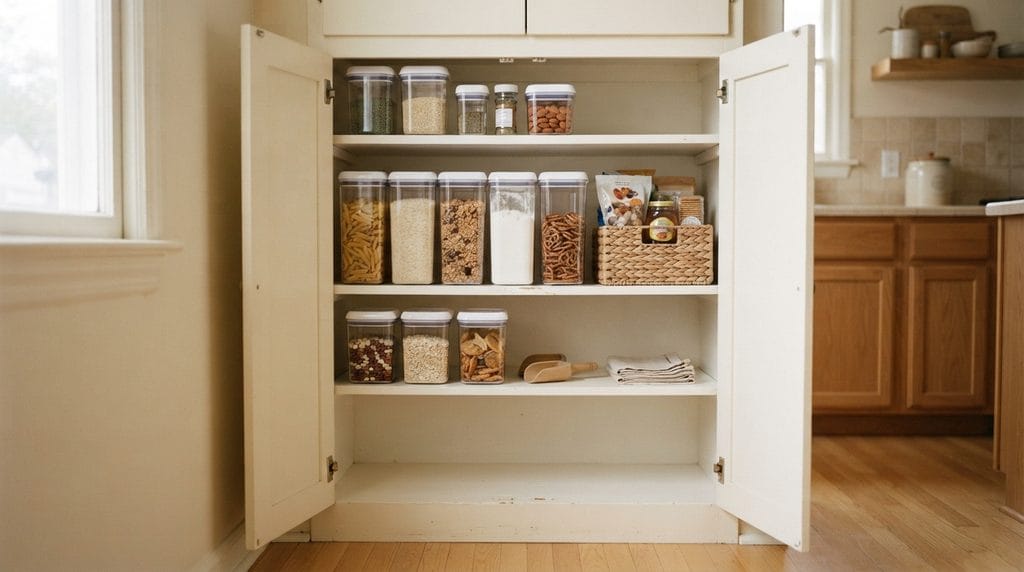
Choose clear containers where seeing the contents saves time, such as a pantry or craft shelf. Group similar items, but keep household chemicals in their original labeled containers and securely away from children.
They work especially well in pantries, refrigerators, bathroom cabinets, closets, and craft areas. Group similar items together and use labels only when they genuinely make the system easier to maintain.
7. Turn Awkward Corners Into Useful Storage
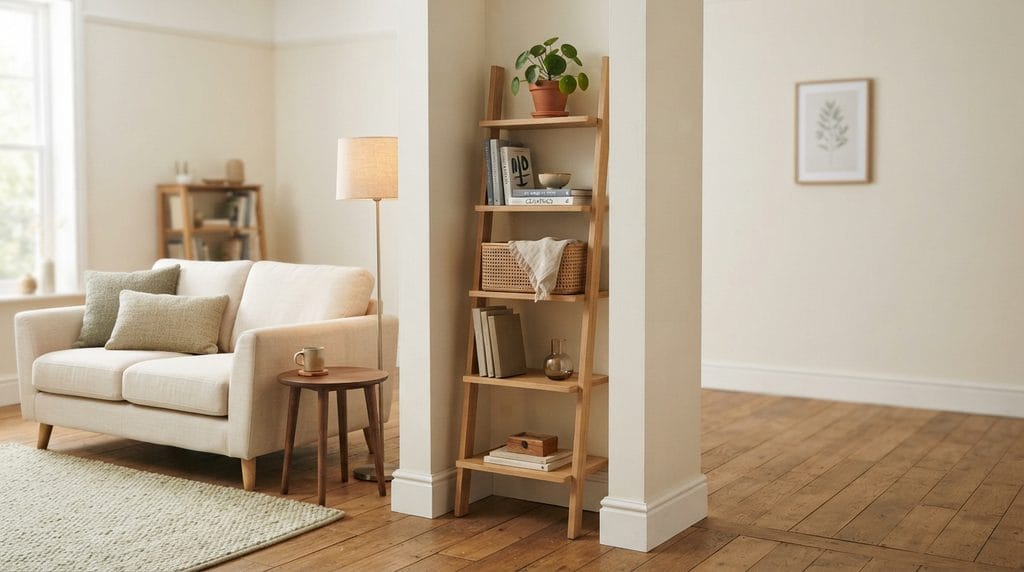
Before filling a corner, check the actual footprint with a cardboard template and open nearby doors. A low freestanding unit may work better than a tall ladder shelf if the corner is narrow or used by children.
Try a corner shelf, narrow ladder unit, triangular cabinet, or a stack of baskets. These solutions work well in bedrooms, hallways, living rooms, and even bathrooms. Small corners can also become decorative features, especially when paired with the right furniture and wall treatments. See our mirror wall decor ideas for a small living room for another way to make a small room feel more considered.
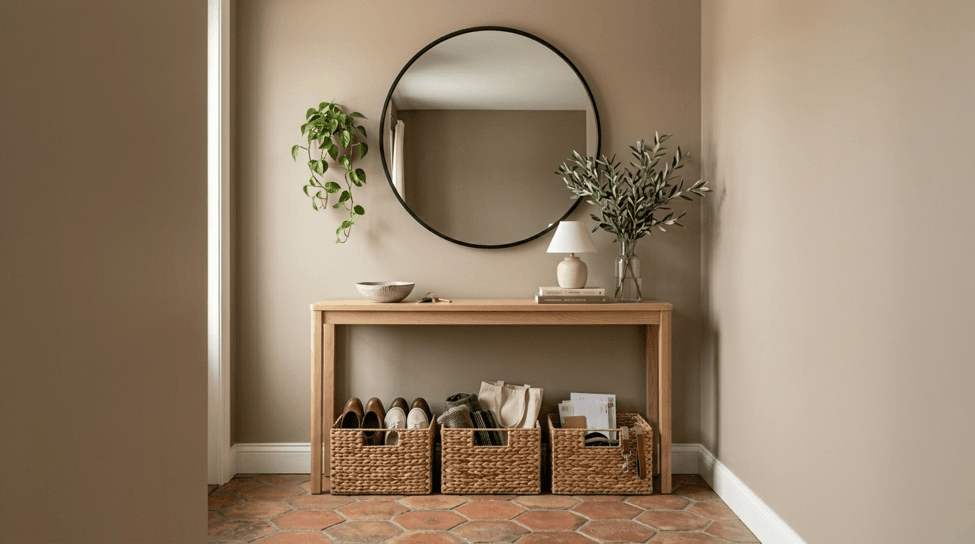
8. Use Baskets to Hide Everyday Clutter
Baskets are one of the easiest ways to combine storage and decor.
Place baskets underneath consoles, inside shelves or beside sofas for blankets, toys, magazines and pet supplies. Avoid storing heavy items on top of wardrobes where they could fall. Keep unplugged charging cables and adapters in a separate dry container; charge phones and other devices on a clear, ventilated surface rather than inside a fabric basket or beneath blankets.
9. Create Storage Zones Inside Cabinets
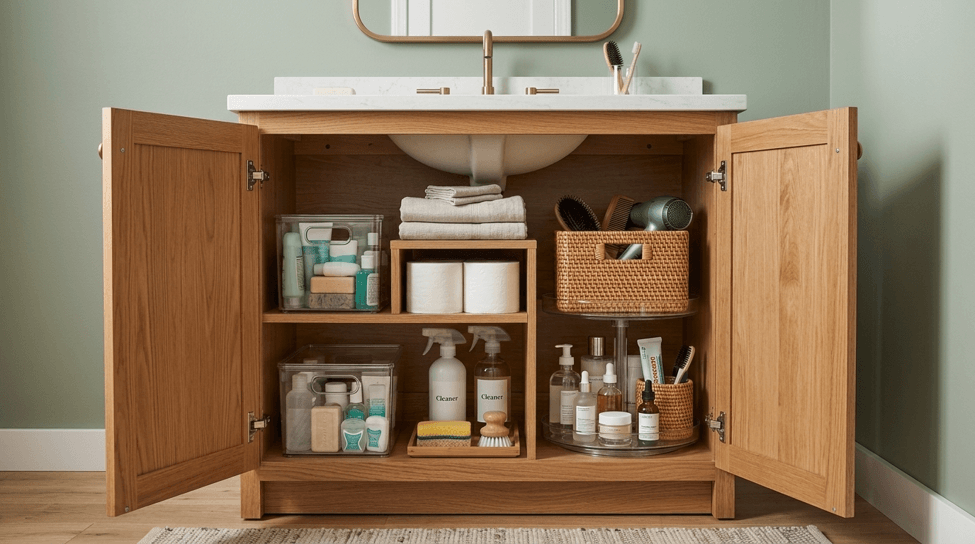
Sort cabinet contents into everyday items, backups and occasional-use supplies. Keep frequently used items near the front, and make sure each container can be lifted out easily.
Shelf risers, small bins, lazy Susans, baskets, and stackable organizers can divide cabinets into practical categories. This makes everything easier to find and reduces the temptation to simply push clutter toward the back.
10. Use Slim Storage in Narrow Gaps
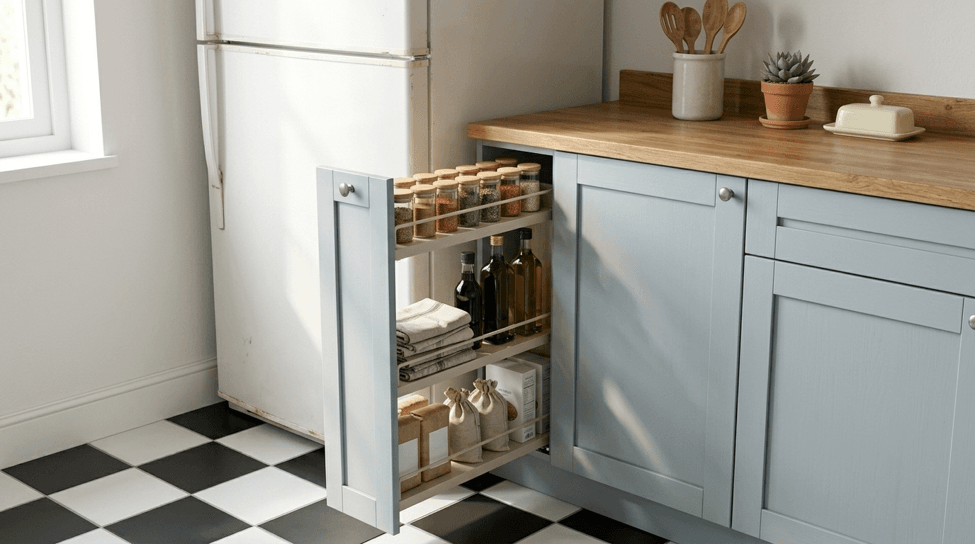
Tiny gaps beside appliances and furniture can hold more than you might expect.
A slim rolling cart or narrow shelf can make use of a gap beside a wardrobe or cabinet. For gaps near a refrigerator, washer or other appliance, check the manufacturer’s ventilation, service-access and clearance instructions before adding storage. Never obstruct vents, plugs, shut-off valves or a walking route just to fit a cart.
11. Make the Coffee Table Work Harder
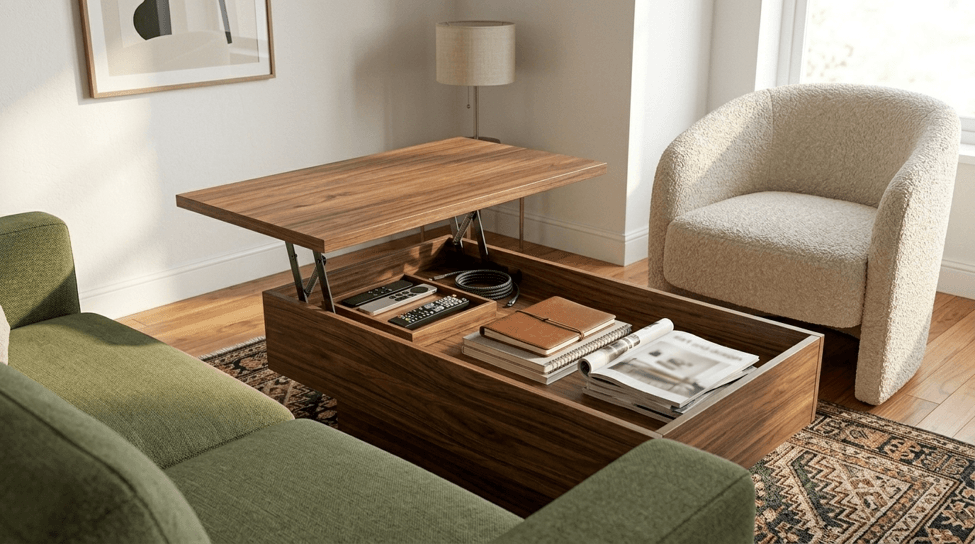
Check what collects on your current coffee table before replacing it. If the problem is remotes and game controllers, a shallow drawer may help; if it is paperwork, a nearby labeled folder may be simpler.
Choose one with drawers, a lower shelf, hidden compartments, or a lift-top design. Store chargers, remotes, magazines, games, and other living room essentials inside.
12. Store Similar Items Together
Organization becomes much easier when every category has one designated home.
Instead of keeping chargers in several rooms or cleaning products in multiple cabinets, group similar items together. This simple system makes it easier to find things and even easier to put them away.
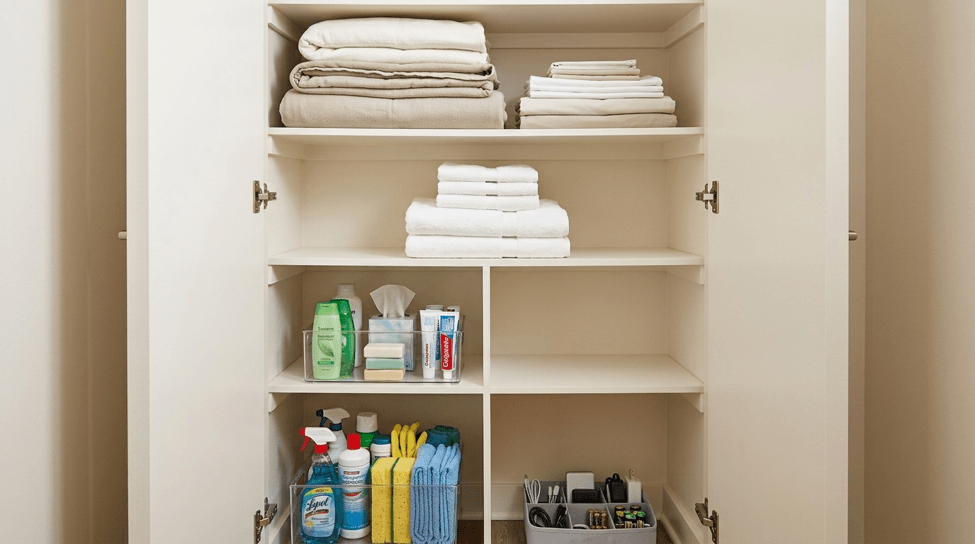
13. Label Hidden Storage Areas
Label only containers whose contents are hard to recognize. Use plain words such as ‘spare cables’ or ‘winter hats’, and picture labels where helpful; a label should make returning an item easier, not create extra work.
You do not need to label everything in sight. Focus on boxes, baskets, and containers where the contents are not obvious.
This can also make it easier for everyone in the household to maintain the system.
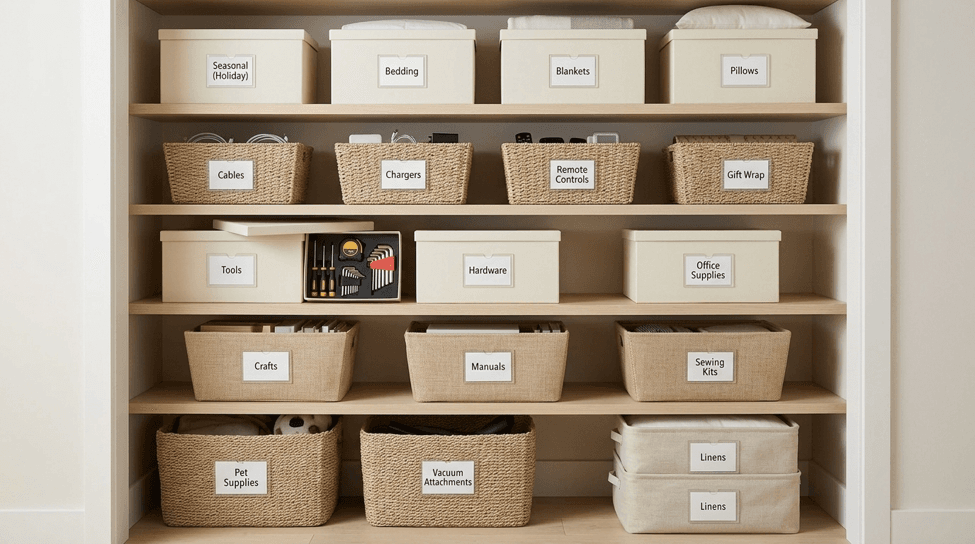
14. Keep Frequently Used Items Easy to Reach
Good organization should make daily life easier, not just make shelves look beautiful.
Store frequently used belongings at eye level or within easy reach. Rarely used items can go on upper shelves, under furniture, or toward the back of cabinets.
Arrange your home around how you actually live.
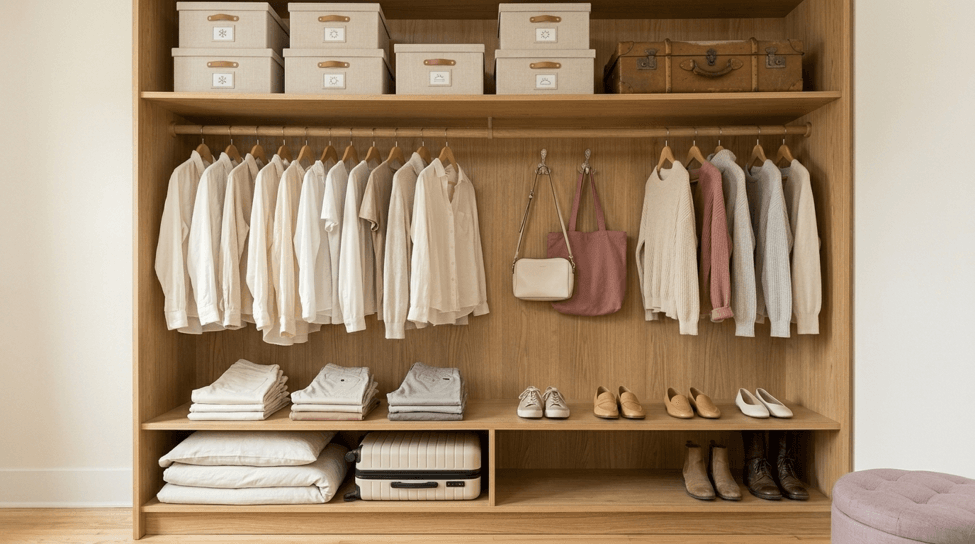
15. Declutter Before Buying More Storage
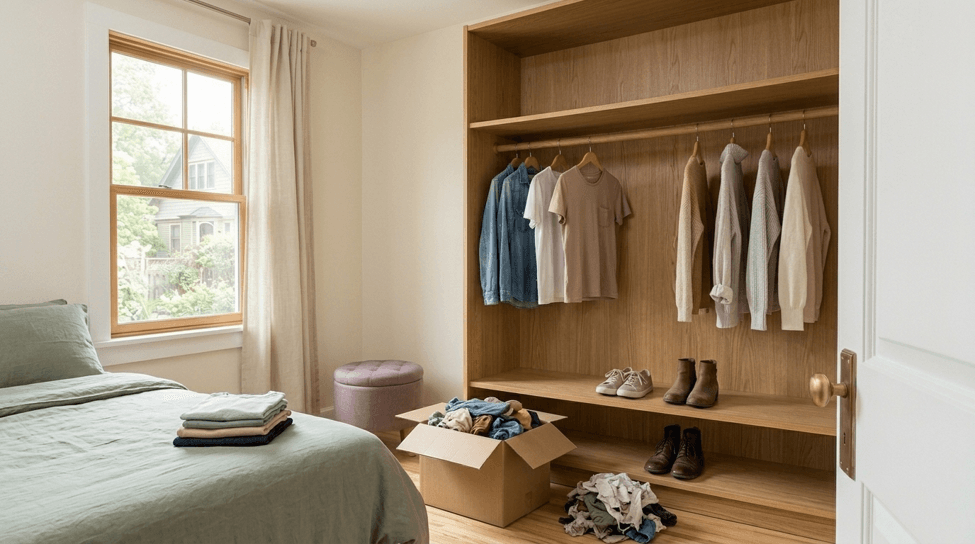
Pick one category, such as shoes or mugs, and sort it before shopping for bins. Keep what is useful and has a practical home; donate or recycle suitable extras when possible, then reassess storage after a week.
Before purchasing new baskets, organizers, or shelving, review what you already have. Remove broken items, duplicates, things you never use, and belongings that no longer suit your life.
Once unnecessary items are gone, you may discover that you already have enough storage. Before buying more organizers, you can also try inexpensive ways to refresh what you already own with these cheap DIY home decor ideas.
Real-Life Examples: Which Storage Hack Fits Your Home?
Studio apartment or rental: Start with one portable entryway basket, under-bed bins for seasonal items and a slim freestanding shelf only where the walkway stays clear. Check your lease before attaching anything to a wall, and test removable hooks against their stated surface and weight limits.
Small family home: Give each child one reachable basket for everyday toys or school supplies, keep shared chargers and paperwork in a labeled cabinet zone, and place occasional items higher only where adults can retrieve them safely. Secure tip-prone furniture rather than relying on baskets to make it stable.
Shared home or limited mobility: Keep the items used every day within comfortable reach, leave clear routes to doors and seating, and choose lightweight pull-out organizers over storage that requires kneeling, climbing or moving heavy furniture. Test the arrangement for a week before purchasing more.
Before You Buy Storage: A Five-Step Fit Check
Measure the space and the items first; buy only what solves a specific daily problem. A narrow shelf that blocks a door or a bin that cannot slide out is not useful storage, however tidy it looks online.
- Choose one trouble spot: photograph or sketch the cluttered area and list what actually belongs there.
- Measure the usable space: note width, depth, height, door swing, drawer clearance and room to pull a container out.
- Check what you already own: reuse a basket, tray or divider before purchasing another organizer.
- Choose a safe solution: check weight limits, wall type, ventilation around appliances and whether children or pets could tip furniture.
- Test for seven days: if everyday items are still hard to reach or put away, adjust the system before buying more.
Example: In a rental with a 20 cm gap beside a cabinet, measure the full depth and the space needed to pull a cart out. If the gap is beside a refrigerator, check the appliance manual for required ventilation and service clearance instead of assuming the entire gap is usable.
Which Small-Space Storage Fix Should You Try First?
Start with the storage change that solves your most frequent problem. A cluttered entryway needs a place for keys, bags and shoes; a crowded kitchen needs better cabinet zones; and a small bedroom may need under-bed storage more than another dresser.
| Problem | First fix | Check before starting |
|---|---|---|
| Cluttered entryway | Hooks and a small basket | Keep the door swing and walkway clear. |
| Overfilled kitchen cabinet | Group items and use a shelf riser | Measure first; keep daily items within reach. |
| Bedroom with few drawers | Under-bed bins for seasonal items | Check bed clearance and container access. |
| Rental with little floor space | Narrow freestanding storage or suitable removable hooks | Check lease rules, surface suitability and weight limits. |
For more professional organizer perspectives, compare Hunker’s small-space organization advice and Martha Stewart’s small-space storage ideas. Both cover making better use of vertical space and multifunctional furniture.
How Do You Organize a Small Space Without a Closet?
Short answer: Keep daily belongings in one accessible, clearly defined zone; use under-bed storage for occasional items and low, stable freestanding furniture for anything that needs a permanent home. You do not need a full closet to make a small bedroom, entryway or studio work.
- At the entrance: Put keys and mail in one small tray, limit shoes to the pairs used this week, and keep the door and exit route clear.
- For clothes: Sort daily clothes into an existing drawer or stable freestanding unit; reserve under-bed bins for spare bedding and out-of-season items.
- For bags and accessories: Use a light portable basket or a door-compatible organizer only when the hardware, load rating and door swing allow it.
- For shared belongings: Assign one labeled container to each category so the same items do not end up scattered across the room.
Example: In a studio with no hall closet, a small tray near the door, one basket for reusable bags and a low storage bench can create an entry zone without adding a wardrobe. Before choosing a bench, measure the remaining walkway and check that the door opens fully. This is a sample layout to test, not a promise that the same furniture will fit every apartment.
How Can a Shared Small Home Stay Organized?
Start with shared rules, not more containers. Give frequently used household items a predictable return spot, make that spot reachable for everyone who uses it, and decide who will reset each high-traffic area. A system that depends on one person remembering where everything belongs is difficult to maintain.
- One shared landing zone: Choose a tray or basket for keys, incoming papers and other everyday items rather than leaving them on several surfaces.
- One home per category: Keep chargers, cleaning tools or craft supplies together; use plain-language or picture labels when different ages share the space.
- One short daily reset: Spend five minutes returning items to their homes, then adjust any category that keeps piling up in the wrong place.
For instance, if three people share one small living room, keep the common charging cables in a single reachable box and give each person’s personal items a separate portable caddy. After a week, check whether people actually return things without reminders. If not, move the storage closer to where the items are used instead of buying another organizer.
A 20-Minute Small-Home Reset
- Minutes 1–5: Choose one trouble spot; remove trash, duplicates and misplaced items.
- Minutes 6–10: Group what remains by use and frequency.
- Minutes 11–15: Give daily items a reachable home and move occasional items to hidden storage.
- Minutes 16–20: Label only unclear containers, clear the walkway and check whether the system will be easy to maintain.
Safety and accessibility: Secure tall or heavy furniture according to its instructions; the U.S. Consumer Product Safety Commission’s Anchor It! guidance explains how anchoring helps prevent tip-over injuries. Avoid overloading wall storage, and keep sharp objects and cleaning products away from children. Put everyday essentials where household members can reach them safely, including seated users where relevant.
Troubleshoot Storage That Keeps Getting Messy
If your small-space organization system stops working after a week, do not immediately buy another organizer. Watch where belongings collect for three ordinary days. A recurring pile usually points to an inconvenient location, an overfilled category or a container that is awkward to open.
Keys and bags miss their basket? Move the drop zone nearer the entrance and remove unnecessary lids. Drawers overflow? Separate daily items from backups and remove duplicates. Children or seated users cannot return items? Lower the storage, add picture labels where helpful, and keep dangerous supplies securely inaccessible to children. A cart blocks a walkway? Remove it and use an existing cupboard instead of sacrificing access.
Seven-day test: Change one storage location, then check whether household members can put items away without reminders. If the same pile returns, reduce the category or simplify the return step before spending money.
Safety Checks Before Adding More Storage
More shelves do not always mean a more usable room. Open nearby doors fully, walk the usual route and check the manufacturer’s load and installation guidance before fitting a shelf, door rack or rolling cart. The U.S. Fire Administration’s home escape advice recommends keeping doors and windows unobstructed. Extra storage should never block an exit.
Keep heavy items low and secure tip-prone furniture as directed; adhesive hooks are not a substitute for furniture anchoring. Leave appliance vents, plugs and shut-off points accessible, and check moisture resistance for bathroom organizers. Renters should confirm drilling permissions, while households with children or mobility needs should test the setup with the people who use it.
Example: A slim cart may appear to fit a 20 cm gap beside a refrigerator, but it is unsuitable if the appliance needs that clearance for ventilation or servicing. Check the appliance manual first, then choose a safer location if necessary.
Frequently Asked Questions About Small Space Organization
How do you organize a small space with too much stuff?
Start by removing duplicates, broken items, and belongings you no longer use. Then group what remains by category and give each category one clear home. Use vertical storage, under-bed space, cabinet interiors, hooks, and multifunctional furniture before adding more freestanding storage.
What should I organize first in a small apartment?
Begin with the area that causes the most daily friction, such as the entryway, kitchen counter, bedroom floor, or bathroom storage. Fixing one high-use zone first creates an immediate improvement and makes it easier to continue room by room.
How can I make a small room feel less cluttered?
Keep frequently used items easy to reach, move rarely used items higher or lower, reduce the number of objects left on open surfaces, and use consistent, easy-to-return storage zones where practical. Clear walking paths and consistent storage zones usually make the room feel calmer without adding more furniture.
How can renters organize a small apartment without drilling?
Use freestanding shelves, over-the-door organizers that fit the door, under-bed containers and portable storage caddies. Check your lease and any adhesive hook instructions before installation; never block a door, ventilation opening or required access point.
How do you keep a small family home organized with children?
Create one easy-to-reach return spot for each daily category, such as toys, school supplies and shoes. Use simple picture or word labels where helpful, reset the busiest zone for five minutes each evening, and secure tall storage furniture according to the manufacturer’s instructions.
Final Thoughts
Small space organization is not about filling every available inch with storage containers. It is about making your home easier to use.
Start by decluttering, then look for unused vertical space, hidden areas beneath furniture, narrow gaps, cabinet interiors, and multifunctional pieces. Group similar belongings together and keep the things you use most often within easy reach.
Even implementing three or four of these small space organization hacks can make a compact home feel noticeably calmer and more spacious.
The best organization system is not necessarily the prettiest or most complicated one. It is the system that fits naturally into your daily routine and is simple enough to maintain. To keep the system working, spend a few minutes returning daily-use items to their designated places rather than buying more containers each time clutter builds up.