
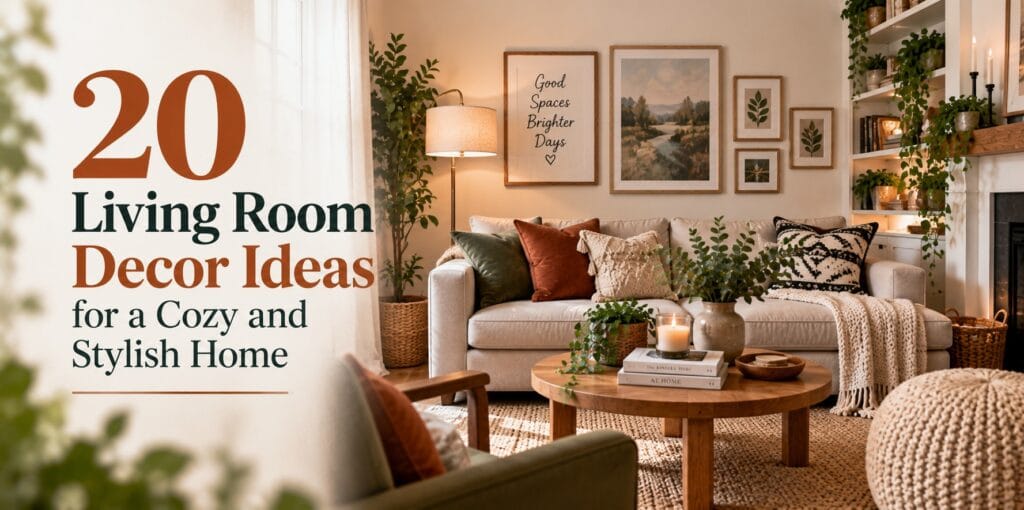
The most useful living room decor ideas solve an everyday problem before adding decoration: awkward seating, poor lighting, clutter, or a room that feels impersonal. Whether you have a narrow rental, a busy family living room, or a larger space, start by checking how people sit, move and use the room. Then choose a colour, texture or focal point that makes the space feel like yours.
Living room decor ideas are practical ways to improve how a sitting room looks and works through furniture placement, lighting, colour, textiles, storage and personal objects. The best changes mix comfort with personality: a room can have bold colour, vintage pieces and dramatic lighting while remaining easy to move through, clean and use every day.
If your living room feels plain, unfinished, or too predictable, these ideas will help you create a space with more character. Some are simple weekend updates, while others can inspire a bigger makeover.
Quick Takeaway: How to Make a Living Room Cozy and Stylish
Start with one strong focal point, then layer comfort around it. A rug, reading corner, statement lamp, art ledge, or bold color can give the room personality; soft lighting, useful furniture, texture, and clear walking space keep it comfortable. You do not need to use all 20 ideas—choose the two or three that solve the biggest problems in your room first.
Choose the Right Living Room Decor Idea for Your Space
Start with the room’s biggest problem. Choose a practical update that suits the people who use the room. In a rental, test movable lamps and textiles before permanent fixtures. In a family room, prioritize stable furniture, washable surfaces and safe storage. If someone uses a mobility aid, needs clear visual cues or is sensitive to glare, test the walking route, reach and lighting with that person before buying. A photograph can look balanced even when the arrangement is hard to use. Use this comparison before spending money on more accessories.
| Room or goal | Best first change | What to avoid |
|---|---|---|
| Small or narrow room | Use movable side tables and clear walking routes. | Bulky furniture that blocks circulation |
| Rental | Try rugs, lamps, and removable textiles. | Unapproved drilling or unstable displays |
| Family room | Choose washable fabrics and anchored storage. | Tip-over hazards and trailing cables |
| Dark room | Layer a floor lamp and task lighting. | Glare or crowded surfaces |
Five-minute layout check: Measure the main walkway, photograph the room from the doorway, and use painter’s tape to test the footprint of any new table, chair, or cabinet. Try moving an existing lamp or rug first. Buy only after the arrangement works for everyday movement and cleaning.
20 Practical Living Room Decor Ideas
1. Create a Color-Drenched Reading Corner
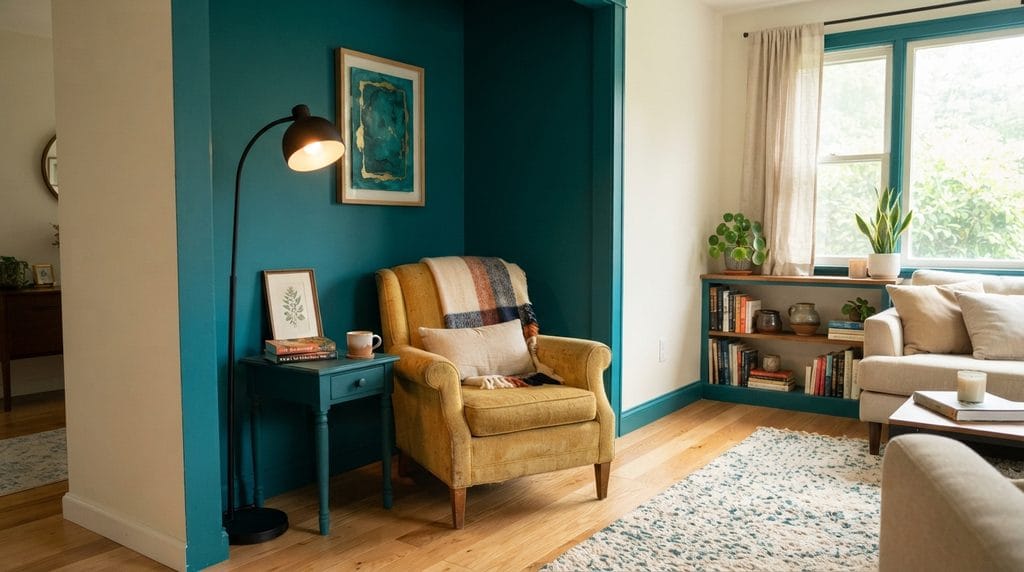
Instead of painting the whole living room, choose one corner and turn it into a bold reading nook.
Paint the corner in a rich color such as deep teal, burgundy, aubergine, or forest green. Use the same color on the wall behind the chair and, if possible, on a small shelf or side table.
Add a comfortable chair in a contrasting shade. A mustard-yellow chair against a deep teal wall, for example, creates much more personality than another beige corner.
Finish the area with a floor lamp, a small stack of books, and one piece of artwork.
This works especially well in rooms that have an awkward empty corner. Before buying a chair, mark its footprint on the floor and check that you can reach the lamp and walk around the seat. In a rental, use a freestanding lamp and textiles rather than painting without permission.
2. Build a Low Art Ledge Behind the Sofa
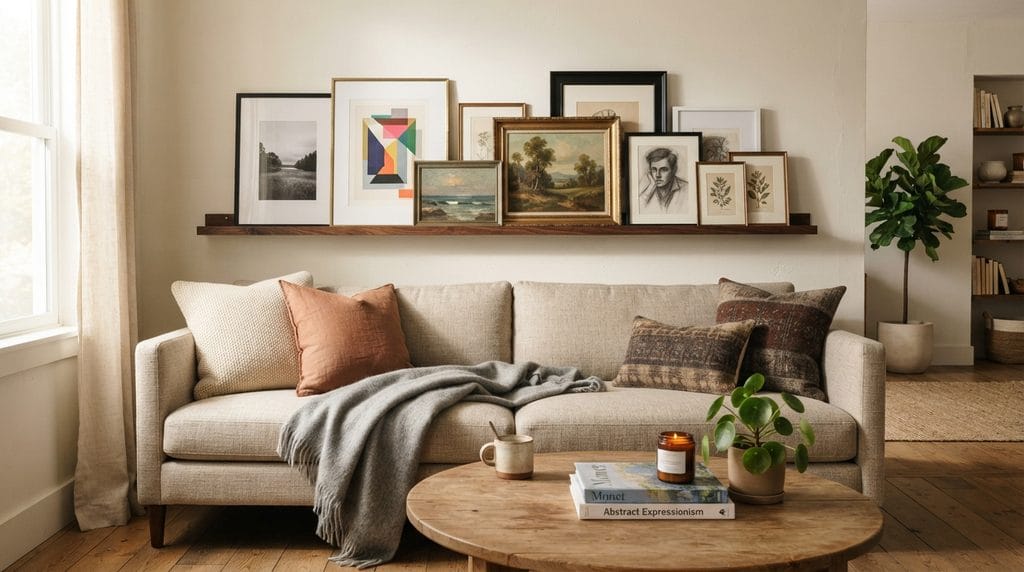
A gallery wall is beautiful, but a long art ledge can feel fresher and easier to change.
Use a slim picture ledge only where the wall and fixings can safely support it. Measure the available width, locate suitable fixing points, and arrange lightweight framed prints before drilling. In a rental, an existing shelf or a freestanding display beside the sofa may be a better option than new holes above seating.
The key is to overlap the frames slightly so the arrangement feels collected rather than perfectly planned.
You can also change the art seasonally without making new holes in the wall.
Try black-and-white photographs alongside one colourful print, leaving space between frames so each can be seen. Avoid placing heavy or unsecured glass above people’s heads, and check the manufacturer’s fixing and load instructions. If the ledge cannot be installed safely, place the art on a stable, secured bookcase away from the seating area.
3. Use a Bold Vintage-Style Rug as the Starting Point

Instead of choosing the rug at the end, choose it first.
A colorful vintage-style rug can guide the entire room. Look for a design with red, navy, rust, olive, ochre, or faded pink.
Then pull two or three colors from the rug into the rest of the room through cushions, artwork, lamps, or small furniture.
This approach makes a living room feel layered and intentional without needing lots of decorative objects.
If you already own a neutral sofa, a rug can add colour without replacing large furniture. Choose a size that fits the seating arrangement, check door clearance, and keep edges flat with a suitable non-slip backing where needed. In a home with mobility aids or young children, test the rug for catching or slipping before committing. For more ways to create a polished room with a strong focal point, see these stunning home decor ideas.
4. Paint the Ceiling Instead of Another Wall
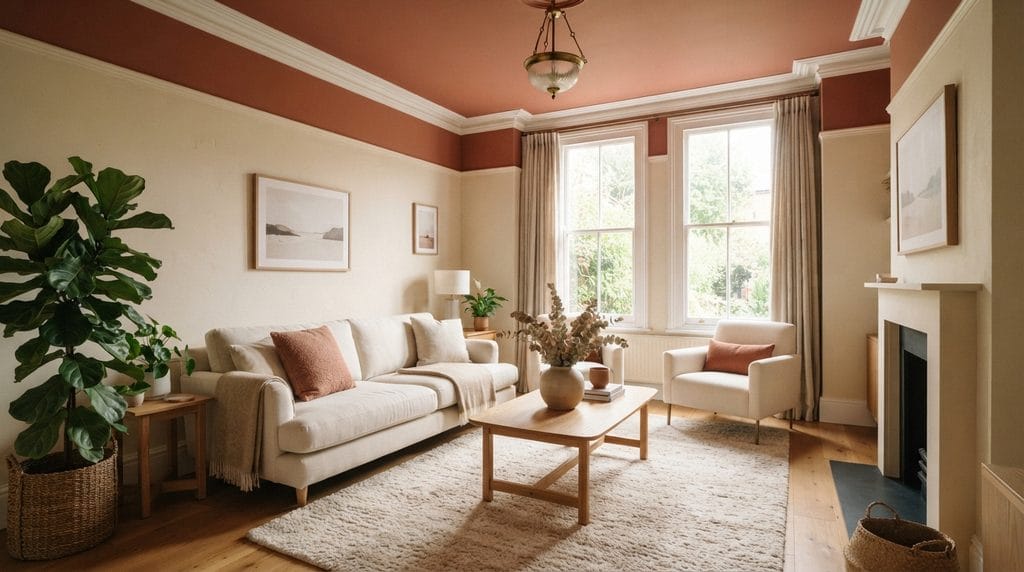
A colored ceiling can completely change a living room without using more furniture or accessories.
Keep the walls fairly simple and paint the ceiling a stronger color, such as dusty terracotta, deep blue, olive, or muted plum.
The color above creates a cozy, enclosed feeling and makes the room look much more designed.
This works especially well in rooms with high ceilings, decorative molding, or lots of natural light.
If a fully painted ceiling feels too bold, paint only the ceiling border or molding. Test a small paint sample in both daylight and lamplight before choosing a colour. Check for damp or peeling paint first and address the cause rather than painting over it. Follow the paint maker’s instructions for surface preparation, ventilation and drying time; use a stable, purpose-made access platform for overhead work, or hire a qualified professional for a high ceiling. Never stand on chairs or other furniture to reach the ceiling. In a rental, get permission before painting and protect furniture, fixtures and flooring while you work.
5. Turn a Window Into a Built-In Lounge Spot
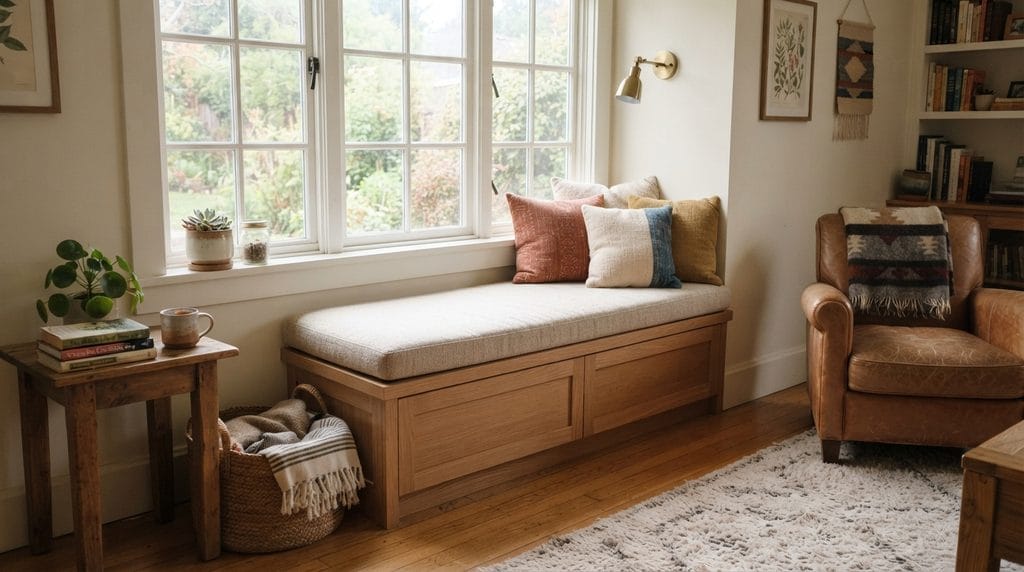
If your living room has a deep window or unused wall beneath a window, turn it into seating.
A simple storage bench under the window can provide both a place to sit and hidden storage.
Add a thick seat cushion, two or three colorful pillows, and a small wall-mounted reading light.
The space can be used for reading, relaxing, or extra seating when guests visit.
This is one of the most useful living room decor ideas for small homes because it gives one area two jobs. Before adding a window bench, check radiator airflow, window operation, and the load capacity of any proposed seat. A freestanding bench can be a reversible alternative to an improvised built-in. For more ways to make limited floor space work harder, explore these small space organization hacks.
6. Give Your Bookcase a Contrasting Back Color
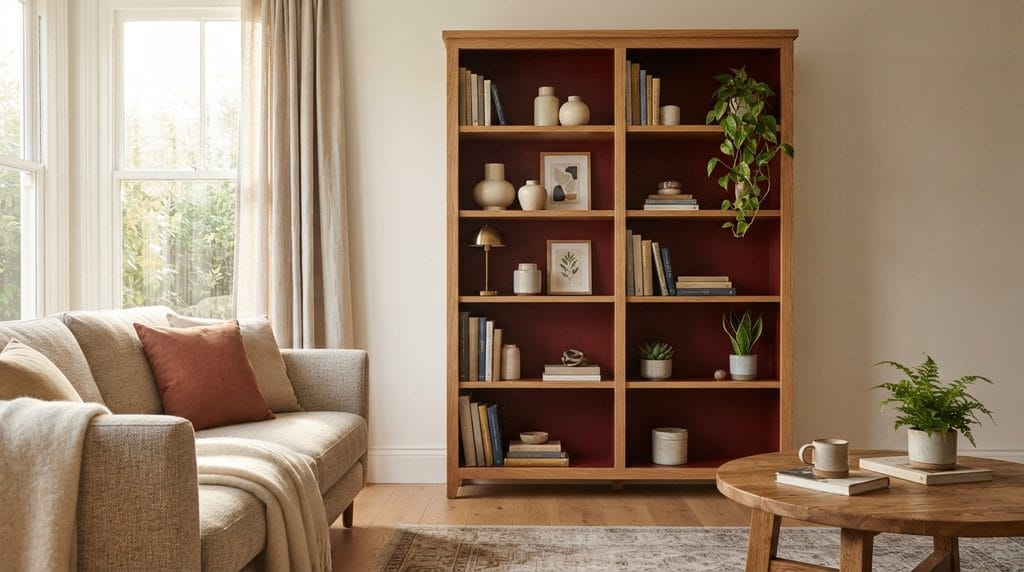
A plain bookcase can become a focal point with only paint.
Paint the inside back panel of the shelves in a contrasting color while leaving the outer frame neutral or natural wood.
For example, use a dark cherry-red background with an oak shelf or cobalt blue behind a cream bookcase.
The color makes books, ceramics, and small objects stand out much more clearly.
Leave some shelves open so the contrasting colour stays visible. Put heavier books and everyday objects on lower shelves, keep fragile items out of reach, and secure tall furniture according to its instructions. Renters can test the look with a removable backing panel or coloured paper rather than repainting a landlord-owned bookcase.
7. Replace One Large Coffee Table With Two Different Tables
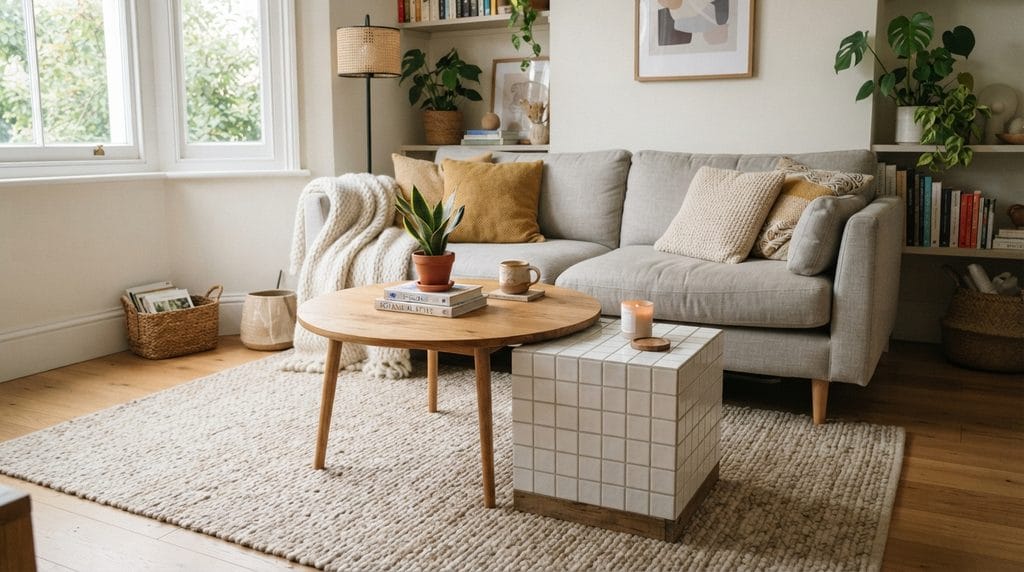
A single large coffee table is not always the most flexible option.
Try combining two smaller tables of different shapes and heights. For example, pair a round wooden table with a smaller tiled cube or a metal side table.
You can move them around when guests arrive or separate them when you need more floor space.
Using two different materials also adds more visual interest.
This works especially well in small or narrow living rooms. Mark the table footprints on the floor with painter’s tape, then walk around the sofa to check clearance. Choose stable tables with edges that suit how the room is used. In a long, narrow room, try one table beside the sofa and move the second only when guests arrive. If you cannot open a door comfortably or walk past a seated person, the tables are too large for that layout. If a staircase shares the space, see our small living room with stairs layout guide for ways to protect the walking route.
8. Create a Fabric Wall Panel Behind the Sofa
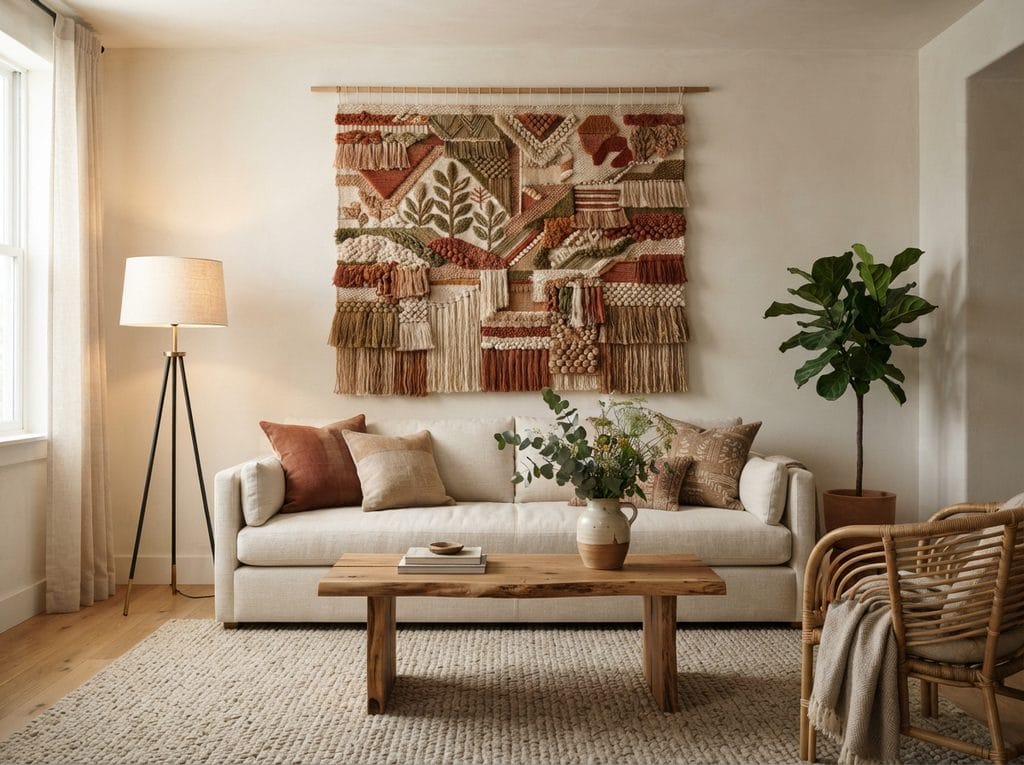
Instead of standard framed artwork, create a large textile focal point.
Hang a vintage quilt, woven wall hanging, patterned fabric panel, or large piece of embroidered cloth behind the sofa.
Fabric adds softness and can make the room feel warmer, especially if the walls are plain.
Choose something with visible texture and color rather than a mass-produced print.
This is also useful for renters because a lightweight textile can often be hung with fewer wall fixings. You can also find more inspiration for adding warmth and personality with these wood wall decor ideas. Choose a washable textile if the room is used by children or pets, and keep the fabric clear of heaters, lamps, and sockets. Test the hanging method on the actual wall surface rather than assuming every removable hook will hold.
9. Make the TV Wall Look Like Furniture
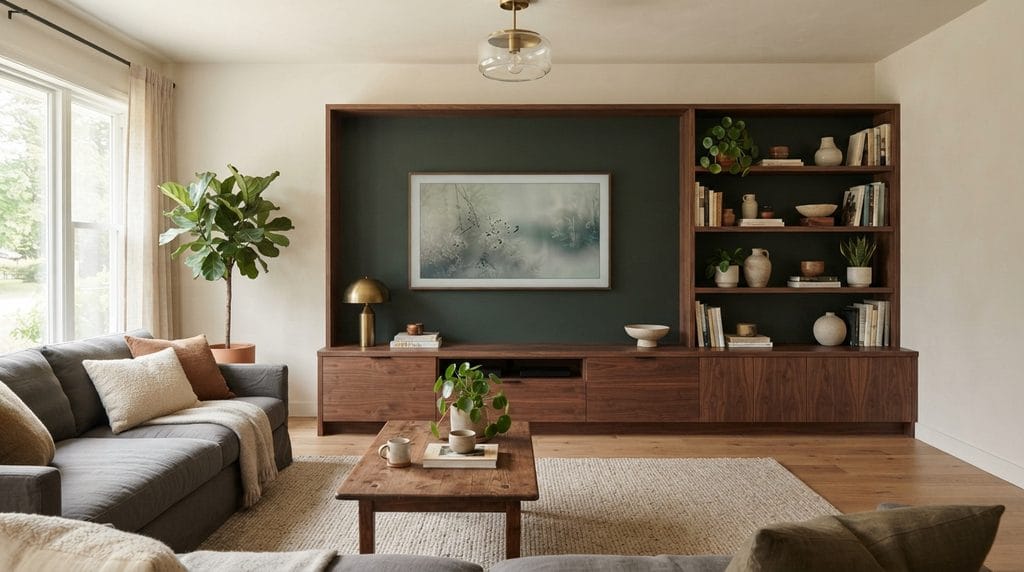
Instead of mounting a television on a completely empty wall, build the area into the room.
Use a long low cabinet beneath the TV and extend the visual line with shelves, artwork, or storage on one side.
Several matching low cabinets can create a built-in look without custom joinery, but they must be stable and suitable for the equipment they hold. Measure the TV base, cabinet load rating, ventilation gaps and door clearance; do not balance a television across furniture that was not designed to support it.
Choose a cabinet color that works with your room instead of automatically choosing white.
Dark green, walnut, charcoal, or even muted red can make a TV wall look much more intentional. Anchor the television and tall storage according to the manufacturer’s instructions, keep ventilation openings clear, and route cables away from walking paths.
10. Add a Sculptural Lamp Instead of More Decor
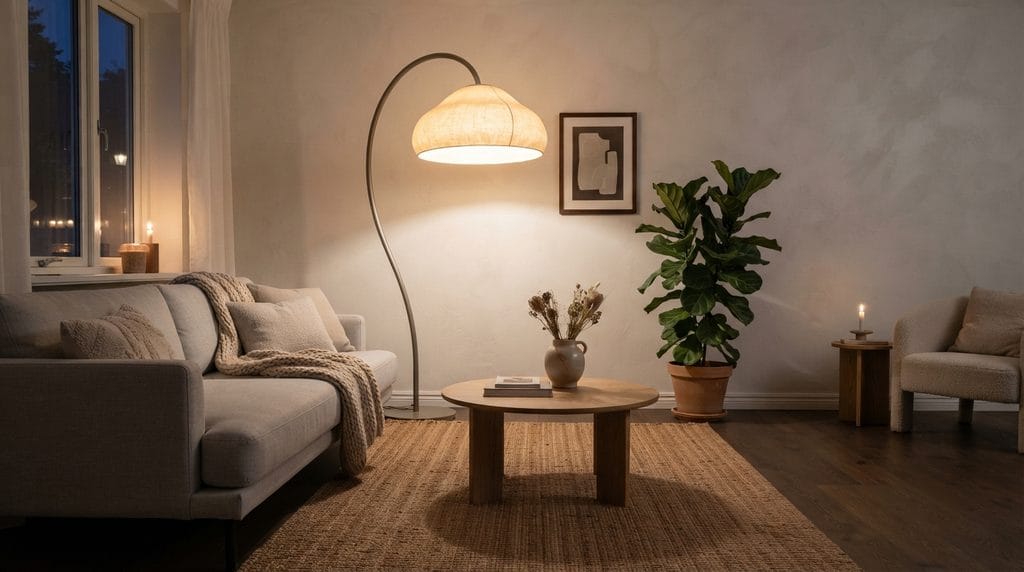
Sometimes the room does not need another vase, cushion, or picture.
A distinctive lamp can work as both lighting and decoration.
Look for an unusual floor lamp, mushroom lamp, pleated shade, oversized paper lamp, colored glass lamp, or curved metal design.
Place it somewhere visible instead of hiding it behind the sofa.
Test the lamp after dark from the seats you use most. Check whether it lights a book without shining into someone’s eyes or reflecting strongly on the TV. Choose a stable base, keep cables out of walkways, and follow the fitting’s bulb type, wattage and dimmer-compatibility instructions before buying a decorative shade.
11. Use Curtains to Create a Full Wall of Softness

Curtains do not have to cover only the exact width of a window.
Run a curtain track across most or all of the wall and use full-length fabric from ceiling to floor.
This can hide uneven windows, soften a plain wall, and make the room feel taller.
For more personality, move beyond plain beige. Try olive linen, deep rust, dusty blue, warm ochre, or a subtle stripe.
Before ordering curtains, measure the rail width and finished drop, including any radiator or furniture below. Check the fixings can carry the fabric, keep panels clear of heaters and busy walkways, and avoid dangling cords within children’s reach. In a rental, use an approved existing rail where possible; a washable fabric is often more practical in a shared family room.
12. Create a Conversation Zone With Chairs Facing Each Other
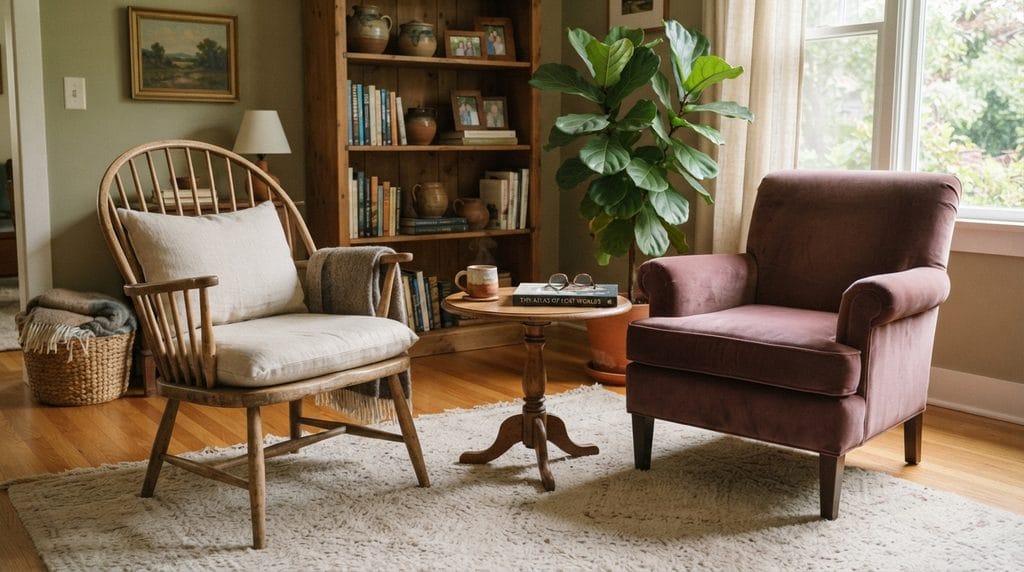
Many living rooms are arranged only around the television.
For a more welcoming layout, create a small conversation area.
Place two distinctive chairs slightly angled toward each other with a small table between them. They do not need to match.
For example, pair a wooden spindle chair with a plum upholstered chair.
This creates a place for coffee, reading, or talking without requiring a second sofa. For additional guidance on arranging furniture and creating clear zones, see this living room furniture arrangement guide from The Spruce. Try angling chairs toward each other using furniture you already own. Place the table within comfortable reach, then ask each person who uses the room to stand, turn and leave the seating area without shifting furniture. If someone uses a walker or wheelchair, check their actual turning and approach needs rather than relying on a photograph or generic measurement. A single compact chair may be better than a matching pair in a narrow room.
13. Turn an Awkward Alcove Into a Mini Library
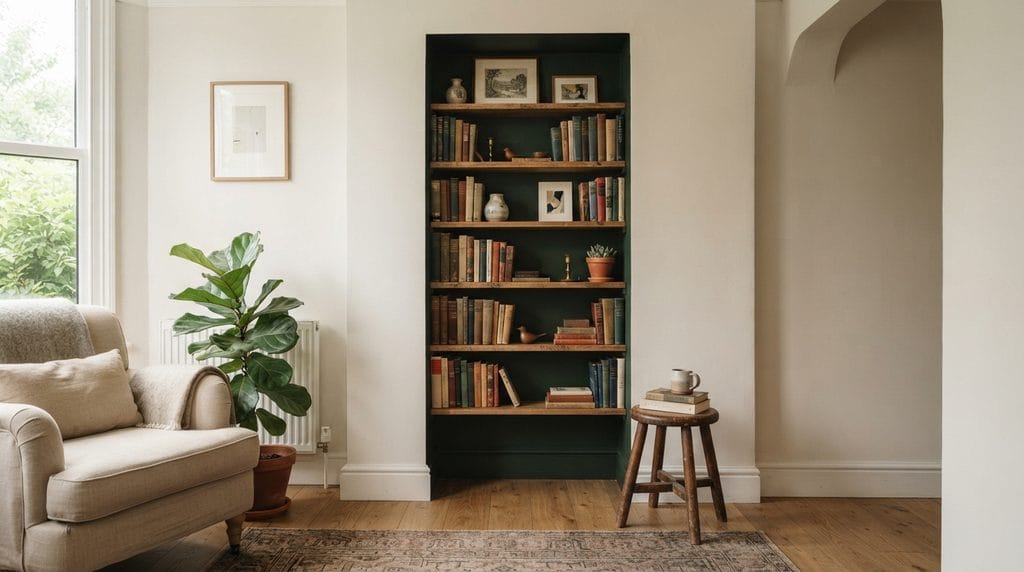
A narrow recess or awkward wall section can become one of the best features in the room.
Install simple shelves inside the alcove and paint the entire area a contrasting color.
Fill the shelves with books, a few framed pieces, and small objects.
Measure the alcove’s width, depth and any skirting before choosing shelves; leave room to reach books without moving a chair. Check wall type, shelf fixings and the weight of the books you plan to store. Renters can use a narrow freestanding bookcase if it fits, but tall units still need appropriate anti-tip protection. Put frequently read books where they are easy to reach rather than on the highest shelf.
14. Mix One Patterned Sofa With Quiet Surroundings
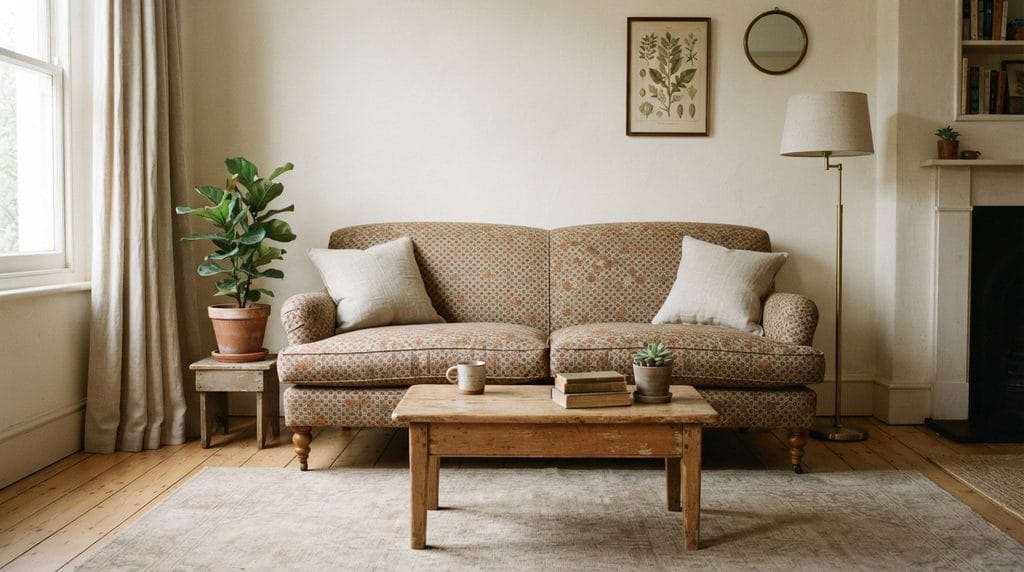
A patterned sofa can make the living room memorable without needing lots of accessories.
Try stripes, checks, subtle florals, or small geometric patterns.
Keep the rug and walls calmer so the sofa does not compete with everything else.
If a new sofa is outside your budget, test the pattern with two cushion covers or a fitted, washable slipcover first. Avoid loose throws that slide under seated people or trail across the floor.
For a balanced look, choose one colour from the pattern for a lamp, artwork or small accessory, then keep the larger rug and walls relatively quiet. Photograph the combination in daylight and evening light before committing to a more expensive upholstery change.
15. Add a Rolling Side Table for Flexible Living
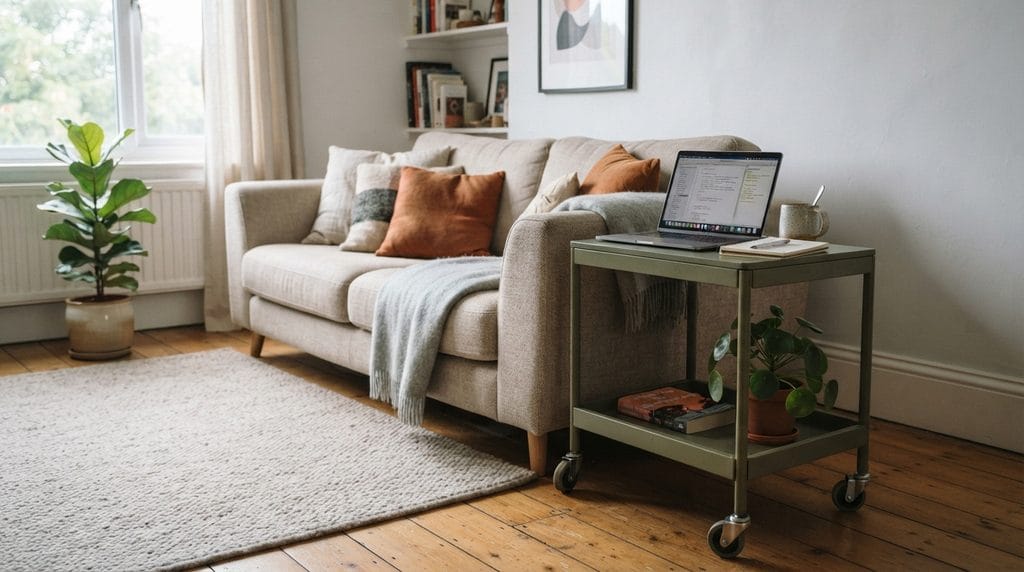
A small rolling table can be surprisingly useful in a living room.
Choose a compact trolley or cart that can move beside the sofa when you need a laptop table, drink station, craft surface, or extra storage.
If the cart is suitable for repainting, use a finish recommended for its material and keep paint away from wheels, locks and moving joints. A removable coloured tray can add personality without changing the trolley itself.
A dark red, cobalt blue, or olive rolling cart can act as both furniture and an accent.
This is especially useful in apartments where every piece needs to earn its space. Look for locking wheels if the trolley will hold drinks or equipment, and test whether the loaded cart stays steady on your floor. In a family room, keep sharp tools and breakables out of reach; use the lower shelf for light everyday items.
16. Use a Decorative Screen as a Living Room Feature
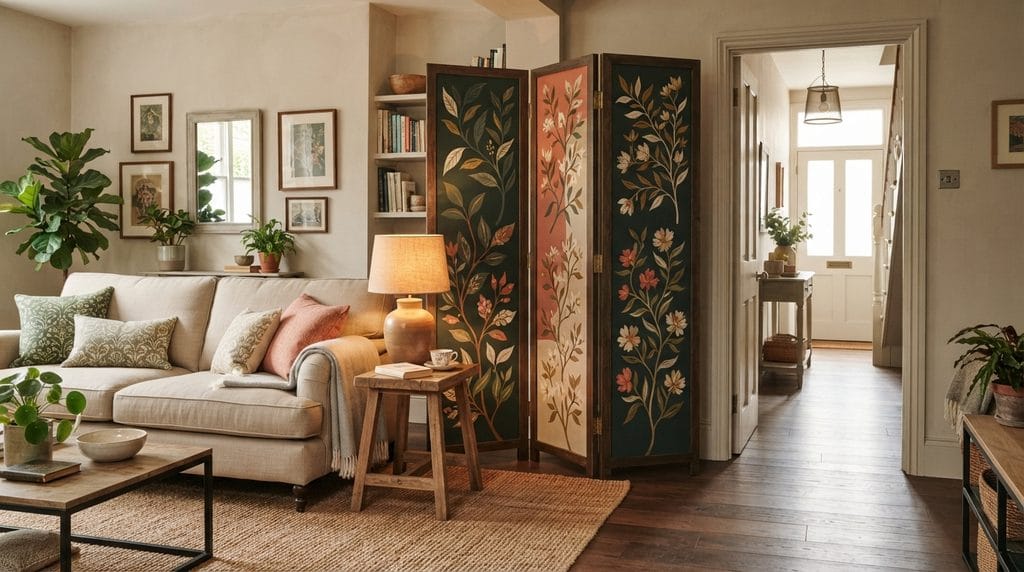
A folding screen can solve several problems at once.
Use one behind a chair, beside a sofa, or near an open doorway to add color, hide clutter, or separate part of an open-plan room.
Choose a screen with painted panels, a cane, patterned fabric, carved wood, or bold color.
Unlike permanent partitions, it can be moved whenever you want to change the room. Check that the screen stands securely and does not block exits, door swings or walkways; lightweight folding screens can tip if people brush past them. In a studio apartment, place the screen behind a reading chair rather than across the route to the door. Check its stability on the actual flooring and fold it away if children or pets could knock it over.
17. Paint a Wide Border Around a Doorway
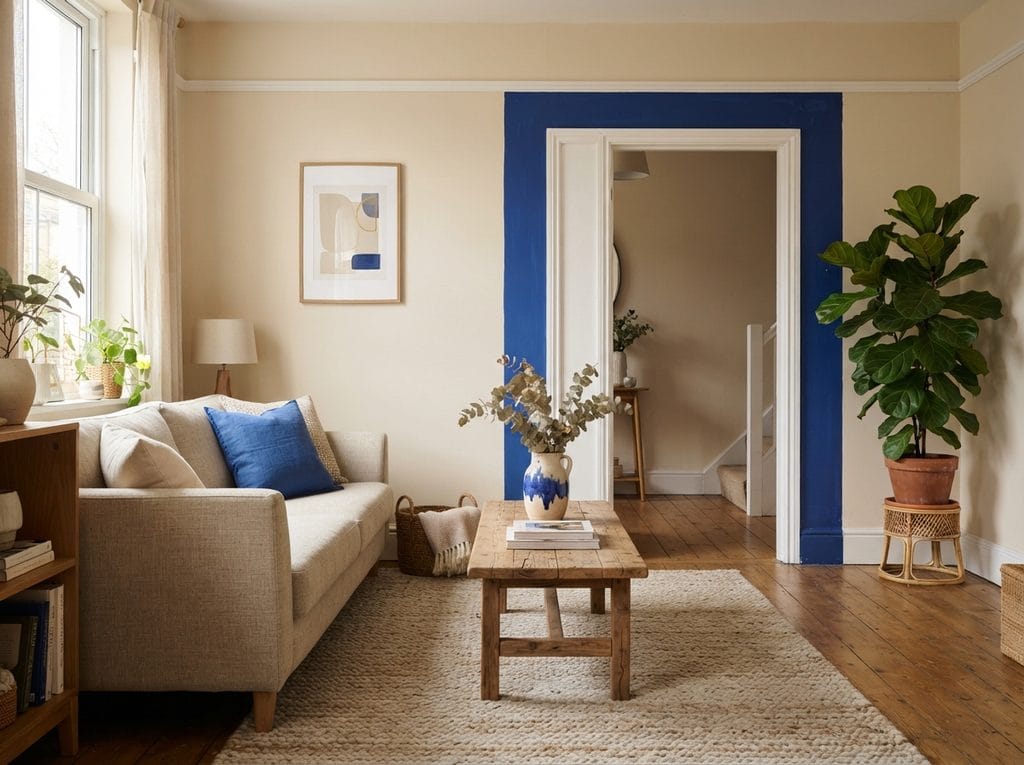
You do not need to paint a full wall to introduce strong color.
Paint a wide border around a doorway or open arch between the living room and another room.
A cobalt blue, burgundy, forest green, or ochre border can frame the view into the next space and make a simple room feel much more interesting.
Repeat the same color in one small object elsewhere in the room to tie everything together.
This can be a relatively low-cost change if you already have suitable paint and permission to use it. Test a removable colour sample first and repeat the shade in a cushion or artwork. Renters can frame the doorway with movable art or textiles instead of painting without approval. Keep the door swing, switches and walking route clear, and protect trim and flooring while painting.
18. Create a Floor-Level Display Instead of Hanging Everything
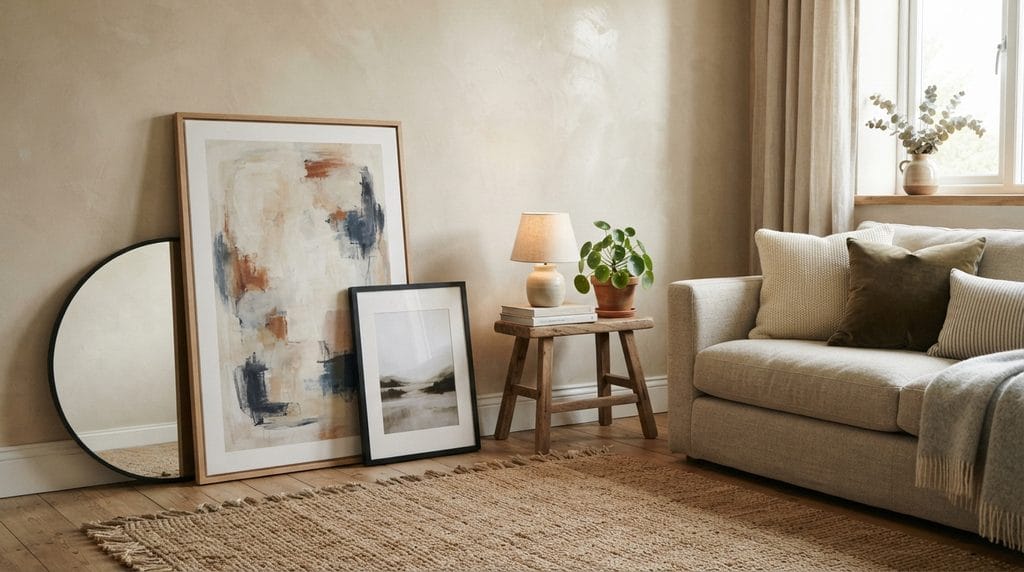
Artwork can look striking at a lower level, but the photograph is styling inspiration rather than an installation guide. A heavy leaning mirror can tip, particularly around children or pets. Secure large frames and mirrors with fixings appropriate for the wall, or choose lightweight framed prints on a stable low shelf instead.
For a simple arrangement, start with two lightweight prints at different heights and leave enough room to dust the shelf. Keep the display away from door swings and narrow walkways so it does not create another obstacle in a small room.
Add a low lamp, ceramic pot, or small stool nearby.
A secure, low display creates a relaxed studio-like feeling and is easy to restyle.
For renters, choose lightweight textiles and approved fixings rather than unstable displays. See our renter-friendly room ideas for more reversible styling options.
To make a low-level display feel intentional, group two lightweight frames of different sizes on a stable shelf, leave one side clear, and add a small object that repeats a colour from the artwork. Keep the arrangement out of the main walkway. If children or pets use the room, use secure fixings and avoid breakable pieces at floor level.
19. Organize Charging Cables Safely
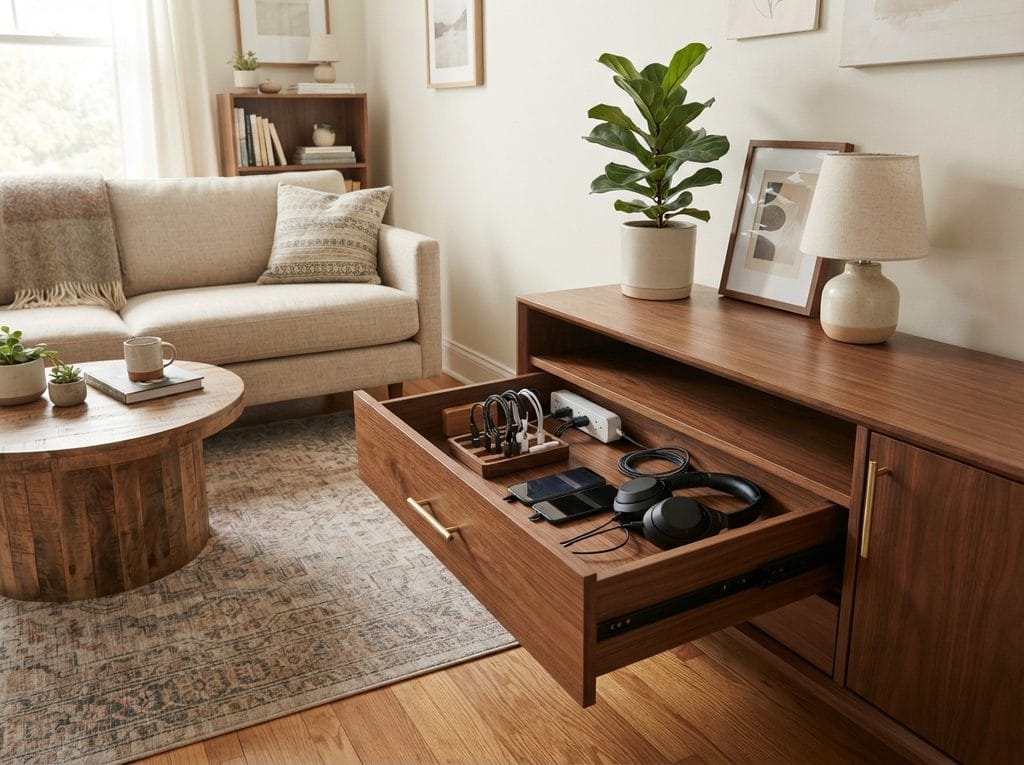
Image note: The drawer is shown for storage inspiration only. Do not charge devices in an enclosed drawer.
Good living room decor should also make daily life easier.
Use a side-table drawer to store unplugged charging cables and adapters, rather than charging devices inside a closed drawer.
Keep only unplugged accessories in the drawer. Charge phones and tablets on an open, hard surface with airflow, following the device maker’s instructions; avoid enclosed charging and hidden power strips.
Use labelled dividers or reusable cable ties to keep stored cords tidy. For battery precautions, see the U.S. Fire Administration’s battery safety guidance.
Keep the drawer attractive from the outside while storing accessories safely when they are not in use. For more practical storage ideas, see these organization ideas for small spaces.
20. Build the Room Around One Unexpected Color Combination
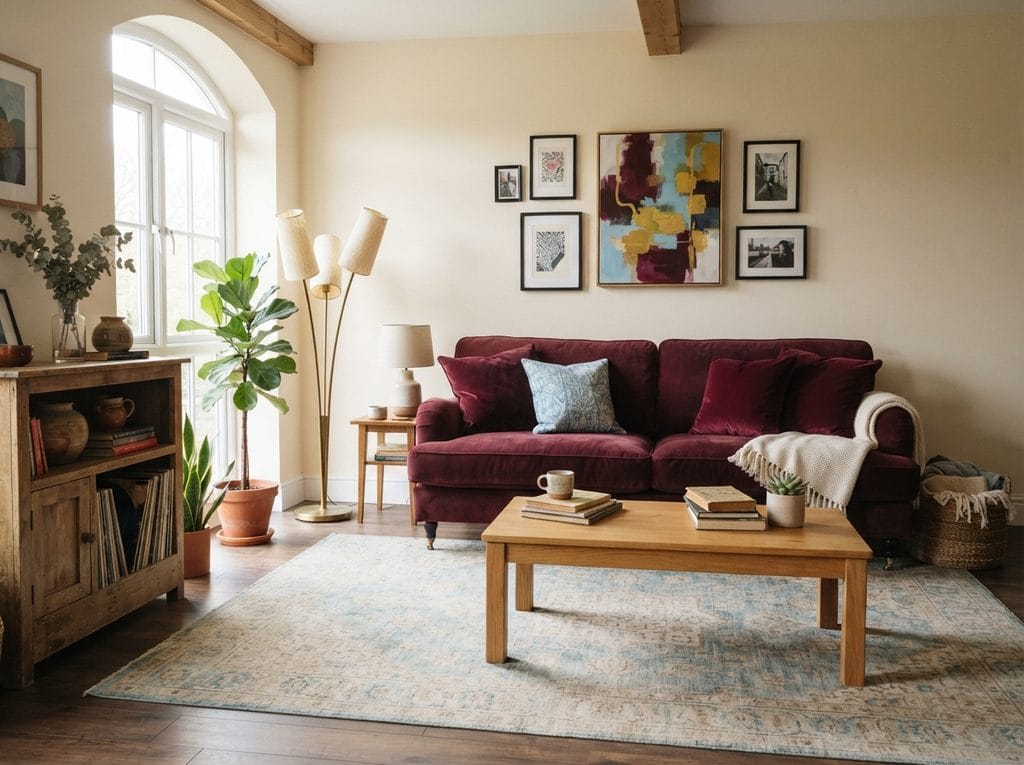
One of the easiest ways to avoid a boring living room is to choose a color combination you do not see everywhere.
Instead of automatically using beige, white, and sage, try combinations such as burgundy and sky blue, mustard and plum, forest green and coral, cobalt and rust, or chocolate brown and pale yellow.
Use one color on a larger item, such as a sofa or rug, and repeat the second color in smaller details.
Keep a few neutral surfaces between them so the room still feels balanced.
A strong color story can make simple furniture feel intentional. Before buying, group a cushion, throw and framed print in the two colours you want to test. View them in daylight and evening light. If the combination feels too intense, use one colour for the main accent and keep the other to a small, removable piece.
A Practical Living Room Lighting Plan
Use three kinds of light rather than relying on one ceiling fixture. Ambient lighting makes the room generally usable, task lighting helps with reading or crafts, and accent lighting draws attention to a bookcase or artwork. First test what you already own: move a floor lamp beside the sofa, add a reading lamp where hands and pages need light, and aim any decorative light away from seated eyes. Check the result after dark, not only in a daytime photograph.
Choose bulbs by brightness and appearance. Lumens describe light output, while the Kelvin (K) rating describes whether the light looks warm or cool. A warm-white bulb around 2700–3000 K is a common starting point for a cozy sitting area, but use brighter task lighting where needed. The U.S. Department of Energy’s light-bulb guidance explains lumens, colour temperature and compatibility. Always check the lamp’s maximum rating and whether an LED is suitable for an enclosed fitting or dimmer.
Example: In a narrow rented room with one harsh overhead light, try an existing shaded floor lamp beside the sofa and a compact task lamp near the reading chair before changing fixtures. Sit in both seats, check for screen glare and trailing cables, then keep only the lights that make ordinary evening activities easier.
Living Room Refresh Ideas by Time, Budget and Effort
Choose a change you can maintain, not just one that photographs well. Start with the least disruptive option and check whether it solves your real problem before purchasing furniture. The guide below compares relative effort rather than giving fixed prices, which vary by location, materials and what you already own.
| Your constraint | First project to try | Time and cost approach | Check before committing |
|---|---|---|---|
| Almost no budget | Move a lamp, swap cushions and restyle one shelf using existing pieces. | Under an hour; use what you own. | Does the room work better after dark? |
| One free afternoon | Rearrange seating and test two small tables instead of one large coffee table. | Half-day; borrow or reuse first. | Can people walk past the sofa and open doors? |
| Rental or temporary home | Add a washable rug, floor lamp or removable textile. | Low-commitment purchases; check tenancy rules. | Is the item stable and easy to take with you? |
| Family room with children or pets | Clear the main route, choose washable covers and secure heavy storage. | Prioritise safety work before styling purchases. | Are furniture, cords and sharp corners safe for everyday use? |
Example: In a narrow rented living room with a bulky coffee table, first remove the table and photograph the walkway. Try a compact side table beside the sofa for a week. If the room feels easier to use, choose a movable table that fits the measured space instead of buying a larger rug or new sofa. In a dark family room, try relocating an existing lamp before repainting; the right task light may solve the problem with less disruption.
A 30-Minute Living Room Layout Test Before You Buy
- Minutes 0–5: Write down the room’s main problem—poor lighting, blocked access, lack of storage or an unfinished focal point.
- Minutes 5–10: Photograph the room from the doorway and from the seat you use most. Note doors, windows, radiators, outlets and any cables.
- Minutes 10–15: Measure the furniture and mark the footprint of one proposed change with painter’s tape. Include room for drawers, chairs and doors to open.
- Minutes 15–25: Walk the normal route, sit down, reach for a drink and test the room in its usual lighting. Ask another household member to try it.
- Minutes 25–30: Keep the option that improves daily use. Record a short shopping list with exact dimensions, a spending limit and any safety or landlord checks.
Decision rule: If a change makes circulation, cleaning or access worse, do not keep it just because it looks stylish. For families, secure top-heavy furniture and TVs before adding decorative displays; the U.S. Consumer Product Safety Commission’s Anchor It guidance explains why tip-over prevention matters. A cozy living room is one that stays comfortable and practical on an ordinary weekday.
Three Real-World Living Room Layout Examples
Narrow rented living room: A sofa, coffee table and TV stand may leave only a tight route to the door. First remove the coffee table temporarily and mark the footprint of a smaller side table with tape. Try a floor lamp beside the sofa without crossing a walking path with its cord. If the room becomes easier to enter and clean, keep the simpler layout and add personality through cushions or one lightweight artwork piece. Ask permission before drilling or painting.
Family room used for play and relaxing: Keep one reachable basket for toys, move breakables away from the busiest route and choose washable cushion covers before buying new seating. Secure heavy bookcases and TVs according to their instructions. Test whether children can put away their own things without climbing or moving furniture. A colorful rug can define the play area only if it lies flat and does not create a trip hazard.
Shared living room with different mobility or sensory needs: Ask each person where they prefer to sit, what light feels comfortable and how they move through the space. Test the route with the actual mobility aid, if one is used; avoid blocking access with pouffes or decorative screens. Choose lamps that reduce glare, make switches reachable and use a stable table beside the most-used seat. Keep a visually calm corner while adding color elsewhere if strong patterns feel overwhelming.
Decision check: Photograph each test layout from the doorway, then use it for a normal evening before spending money. A successful makeover improves comfort, access and maintenance as well as appearance.
A Two-Day Living Room Refresh Plan
Day 1 — plan before buying: Photograph the room, identify one problem (clutter, poor lighting, awkward seating or lack of personality), and rearrange what you own. Check that doors and main walking routes remain clear.
Day 2 — make one change: Add one focal point, such as a rug, lamp, art ledge or reading corner. Repeat a colour in one smaller item, then check how the room feels in daylight and at night. For a narrow rental living room, try moving an existing lamp beside the sofa and using a compact table instead of a bulky coffee table. For a shared family room, test washable cushions and one reachable basket for games before adding more shelves. Ask everyone who uses the space whether the arrangement is easier to move through, sit in and tidy. Stop before the room becomes crowded; keep a change only if it works during a normal week.
Safety check: Secure heavy furniture, bookcases and TVs where needed, especially in homes with children. The CPSC Anchor It guidance explains how to reduce furniture and TV tip-over risks.
How to Make a Living Room Feel Cozy Without Making It Boring
A cozy living room does not have to mean beige walls, cream furniture, and neutral accessories everywhere.
Comfort can come from texture, lighting, furniture placement, and materials, while color gives the room personality.
Try combining one stronger feature with quieter pieces around it. A burgundy sofa can sit against a simple wall. A colorful rug can work with neutral furniture. A cobalt bookcase can become the focal point while the rest of the room stays calm.
The goal is balance.
You also do not need to use every idea at once. In many rooms, one unusual change can make a bigger difference than adding ten small decorations. For more affordable ways to refresh a living room, see these budget-friendly living room changes from The Spruce.
Living Room Decor Checklist
- Choose one focal point before buying extra accessories.
- Keep at least one clear walking route through the room.
- Use more than one light source for a softer evening atmosphere.
- Repeat two or three colours so the room feels connected.
- Mix texture through fabric, wood, glass, baskets, rugs, or plants.
- Give storage and flexible furniture priority in smaller rooms.
- Leave some shelves and surfaces intentionally empty.
- Secure heavy leaning art, mirrors, and unstable furniture where children or pets use the room.
Frequently Asked Questions
What makes a living room feel cozy?
Warm layered lighting, comfortable seating, tactile materials, a rug, curtains, and a layout that makes conversation easy usually create more coziness than simply adding more decorative objects.
How can I update a living room on a small budget?
Start with no-cost changes: rearrange seating, move a lamp, restyle books you own, or swap cushion covers between rooms. Choose one second-hand focal piece only after measuring its footprint. Painting can be effective if your budget and tenancy agreement allow it, but a clear walking route and comfortable light matter more than buying extra accessories.
Which living room decor idea should I try first?
Choose the idea that fixes your room’s clearest problem. If it feels flat, add colour or a focal point. If it feels cluttered, improve storage and spacing. If it feels cold, begin with lighting, textiles, and a rug.
How can I decorate a rented living room without drilling?
Start with a rug, floor lamp, cushion covers, curtains on an approved existing rail, and movable furniture. Check your tenancy rules before attaching anything to walls, and never leave heavy mirrors or tall furniture unsecured.
What light colour works best for a cozy living room?
Warm-white light around 2700–3000 K is a useful starting point for relaxed seating, but brightness, glare and personal preference matter too. Use a separate task lamp if someone reads or works there; compare bulbs in the actual room before replacing every light.
Final Thoughts
The best living room decor ideas make your home feel more interesting without making it less comfortable.
Instead of copying a perfectly styled room, look at the parts of your own living room that are not being used well. An empty corner might become a colorful reading nook. A plain bookcase could become a bold focal point. An awkward window could become extra seating. Even a doorway can become part of the decor with a clever paint treatment.
Use color confidently, mix new and older pieces, choose furniture that serves more than one purpose, and leave enough space for the room to breathe.
Start with one no-cost layout test this week: move a lamp, clear the main walking route or rearrange one chair, then see how the room works at night and during a normal busy day. Keep the change that makes everyday living easier. A cozy and stylish living room should be comfortable to use, not just attractive in photographs.