
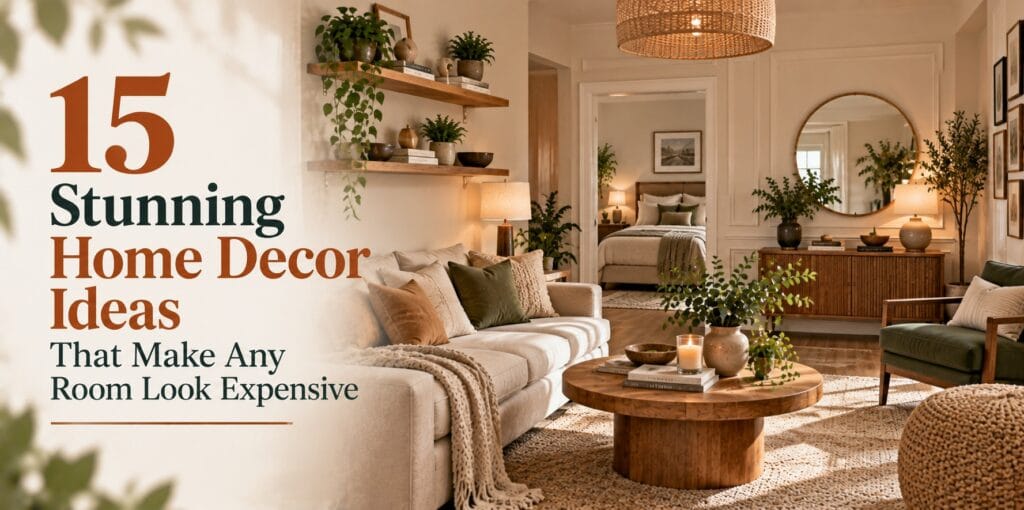
Making a room look expensive is usually about editing what you own, not buying luxury furniture. Start by clearing one visible surface, repeating a colour or material already in the room, and improving the light where people actually sit. The 15 ideas below include no-buy tests, renter-friendly options and checks for awkward small spaces.
Before choosing a trend, stand in the doorway and name the one thing that makes the room feel unfinished: clutter, a dark corner, unrelated accents or furniture that interrupts movement. Fix that first. A coordinated room can still be colourful; repeating an existing shade in two places often feels more intentional than replacing everything with neutral decor.
Whether you’re decorating a living room, bedroom, entryway or cosy corner, start with the changes that suit your space and daily routines. Renters and homeowners can both make rooms feel more considered without replacing everything.
Quick Takeaway: How to Make a Room Look More Expensive
Edit before you buy: clear visible clutter, choose one focal point, repeat two or three colours or materials, and add useful layered lighting. These changes often make existing furniture feel more cohesive without expensive renovations.
Which Decor Upgrade Should You Try First?
Choose a first step based on the room’s biggest problem, not a passing trend. This guide is useful for small homes, rentals and budget-conscious makeovers. For a small living room, clear one walking route before adding a lamp or rug; for a rental bedroom, coordinate existing bedding and lighting before buying furniture; for a narrow entryway, use a shallow key drop instead of a deep console. Make one change, live with it for a week, and only then decide whether another purchase is worthwhile.
| Room or need | First upgrade | Benefit | Watch out for |
|---|---|---|---|
| Cluttered living room | Clear surfaces and define a focal point | More visual breathing room | Blocked walkways |
| Dark bedroom | Add a bedside lamp and coordinated textiles | Warmth and usable light | Glare or poor task lighting |
| Narrow entryway | Use hooks, a shallow shelf and a mirror | Function without bulk | Unsecured heavy mirrors |
| Rental or tight budget | Rearrange furniture and style existing pieces | Reversible, low-cost improvement | Lease restrictions |
What Makes a Room Look More Expensive?
A polished room usually feels cohesive rather than crowded. Furniture has breathing room, colours repeat, lighting comes from several levels, and decorative objects look selected rather than accumulated. “Expensive-looking” does not mean copying a hotel or buying designer pieces; it means making the room feel deliberate and comfortable for the people who use it.
15 Home Decor Ideas That Make Any Room Look More Expensive
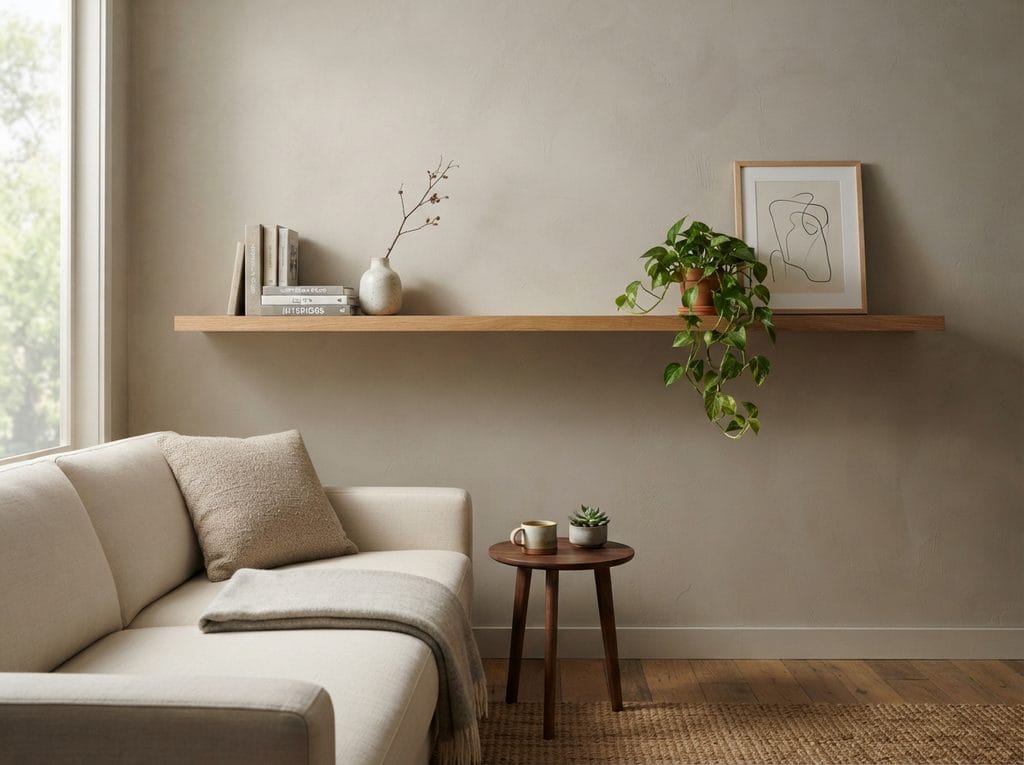
1. Style Floating Shelves Like a Designer
Floating shelves are one of the easiest ways to add personality and visual interest to a room. Rather than filling every shelf, create balanced arrangements using books, plants, decorative objects, and artwork. For more practical shelf styling inspiration, see these shelf decor ideas from The Spruce. The guide also recommends avoiding clutter and combining useful and decorative pieces.
Try a five-minute shelf edit: remove everything, return the objects you use, then add one taller item and one smaller piece for contrast. Leave part of the shelf empty. Check the manufacturer’s load rating and wall fixings before placing heavy books or ceramics overhead.
2. Add a Statement Mirror
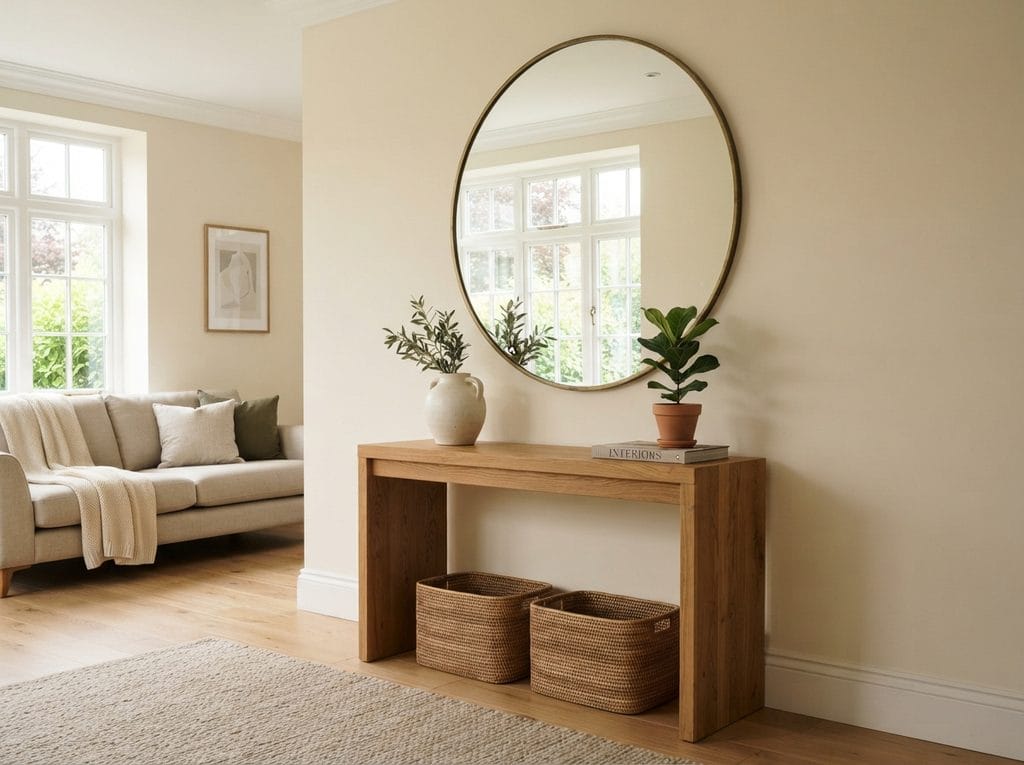
Place a mirror where it reflects daylight or a pleasing view rather than a cluttered corner. Check its scale against nearby furniture and mount it securely with hardware suitable for the wall. For more inspiration, explore these mirror wall decor ideas for a small living room.
Check the reflected view: hold a cardboard template where the mirror would hang, then look from the doorway and main seat. A smaller, securely mounted mirror in the right place may be more useful than a large one that narrows the route. In homes with children, avoid unstable leaning mirrors and follow the mounting instructions.
3. Create a Cozy Reading Nook
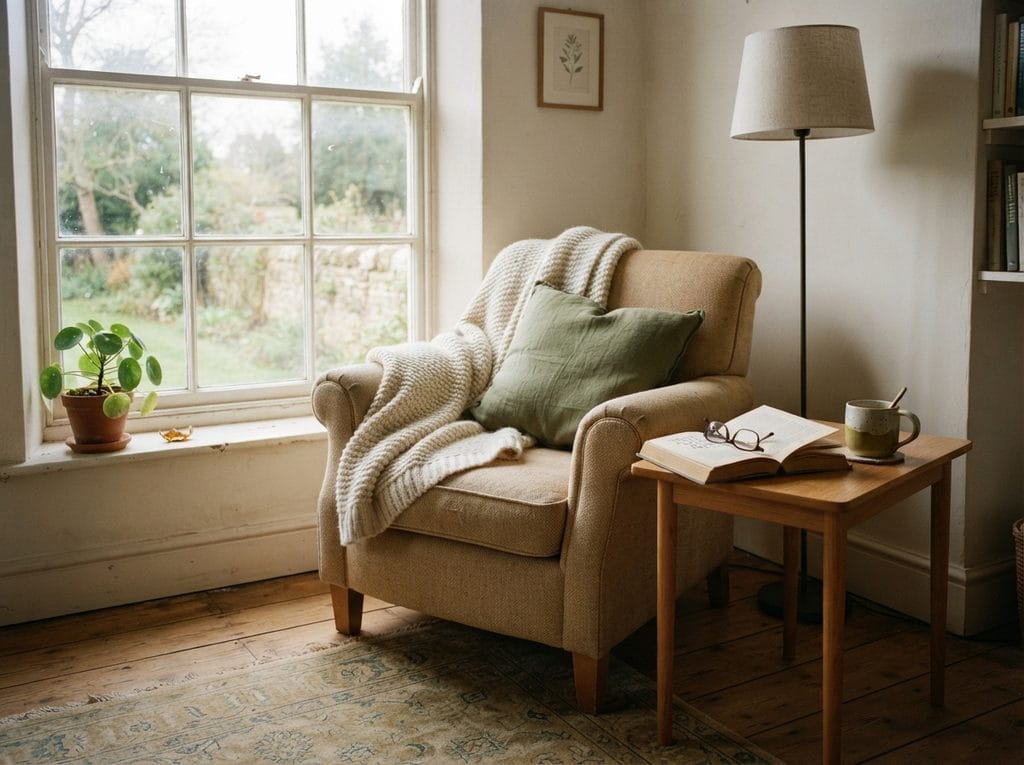
Test a reading nook with the chair you already own before shopping for a new one. Sit in it at the time of day you normally read, move an existing lamp until the page is well lit without glare, and make sure its cable does not cross the walking route. Keep a book and glasses in one reachable spot rather than adding a bulky side table. For more practical arrangements, see our living room decor ideas for a cozy and stylish home.
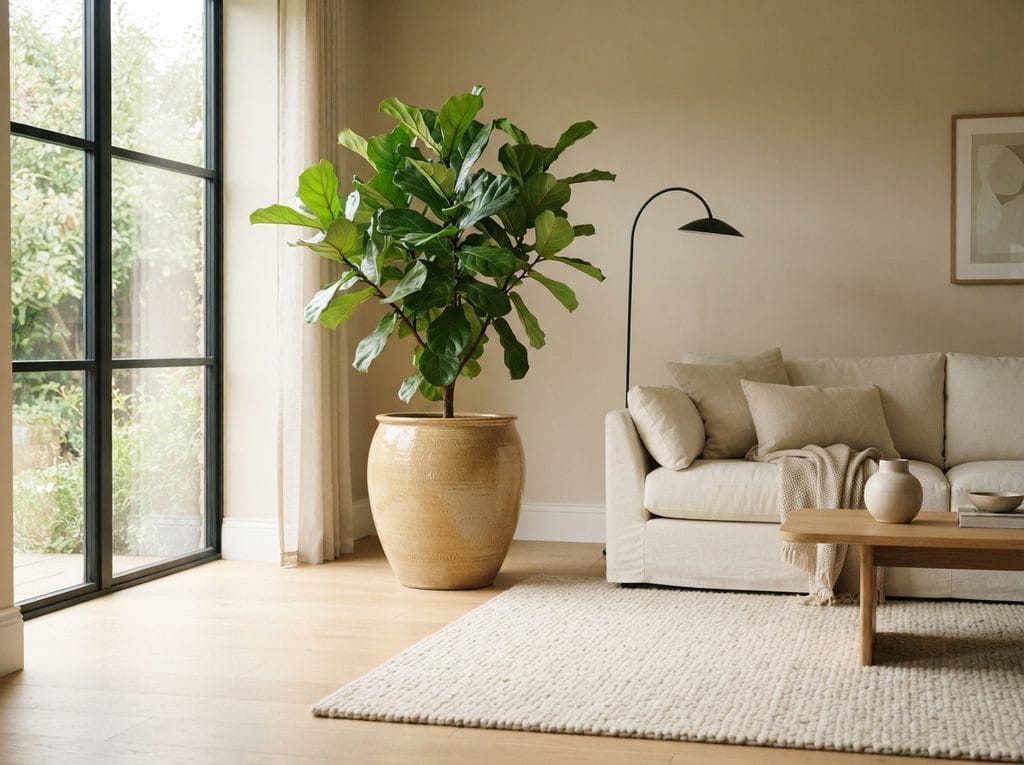
4. Decorate with Indoor Plants
Plants bring life, texture and freshness into a room. Choose them for the available light first, then use their scale as part of the design. One larger floor plant can look calmer and more deliberate than many tiny pots. Repeat similar planters or materials to keep the display cohesive, and avoid blocking walkways. Try this: photograph the corner at midday, check the plant’s light requirements, and use a watertight saucer to protect flooring. If children or pets share the room, check plant toxicity before choosing a species and keep heavy pots stable and out of the main route.
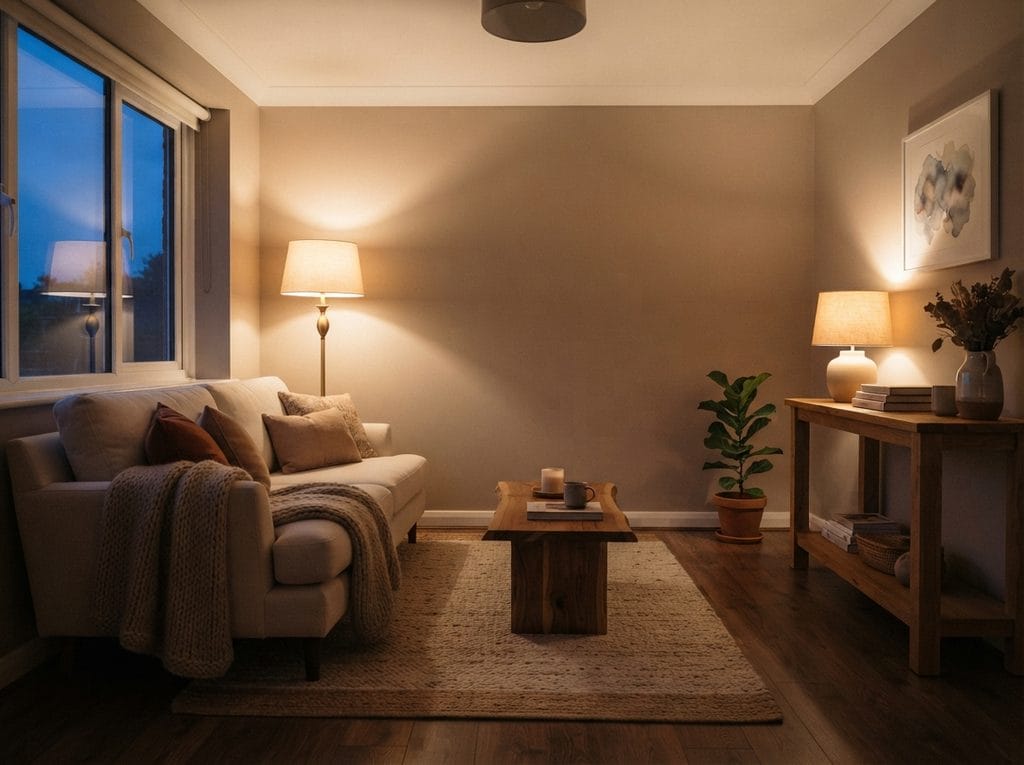
5. Use Warm Accent Lighting
Try a three-light test after sunset: use the room’s general light for safe movement, a task lamp where someone reads or works, and a softer accent lamp for depth. Turn each on separately to spot glare and dark areas before buying a new fixture. Nearby lamps can share a similar warm appearance, but keep task areas bright enough for their actual use. Place cords away from foot traffic and choose fittings and bulbs suited to the fixture.
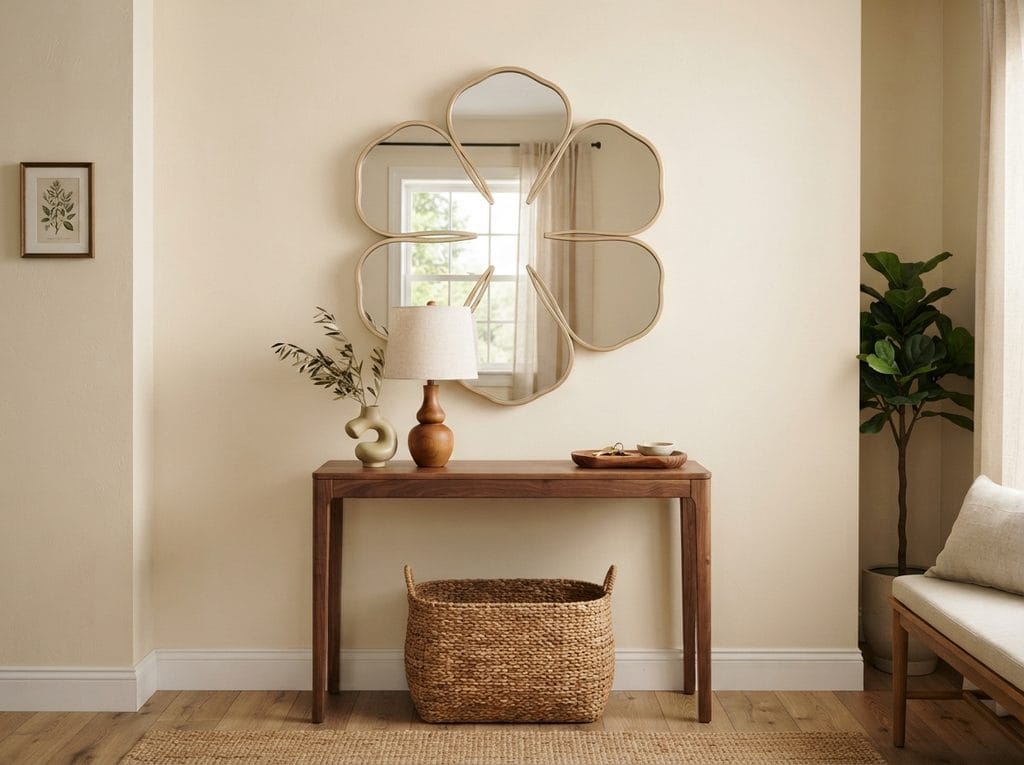
6. Create an Elegant Entryway
Give the entryway three clear jobs: a reliable place for keys, controlled storage for daily shoes or coats, and an unobstructed route through the door. In a narrow rental, a tray on existing furniture, a low shoe basket and one appropriately rated hook may work better than a new console. Open the door fully and walk through carrying a bag before committing to furniture. A mirror or vase should be the finishing touch, not an obstacle.
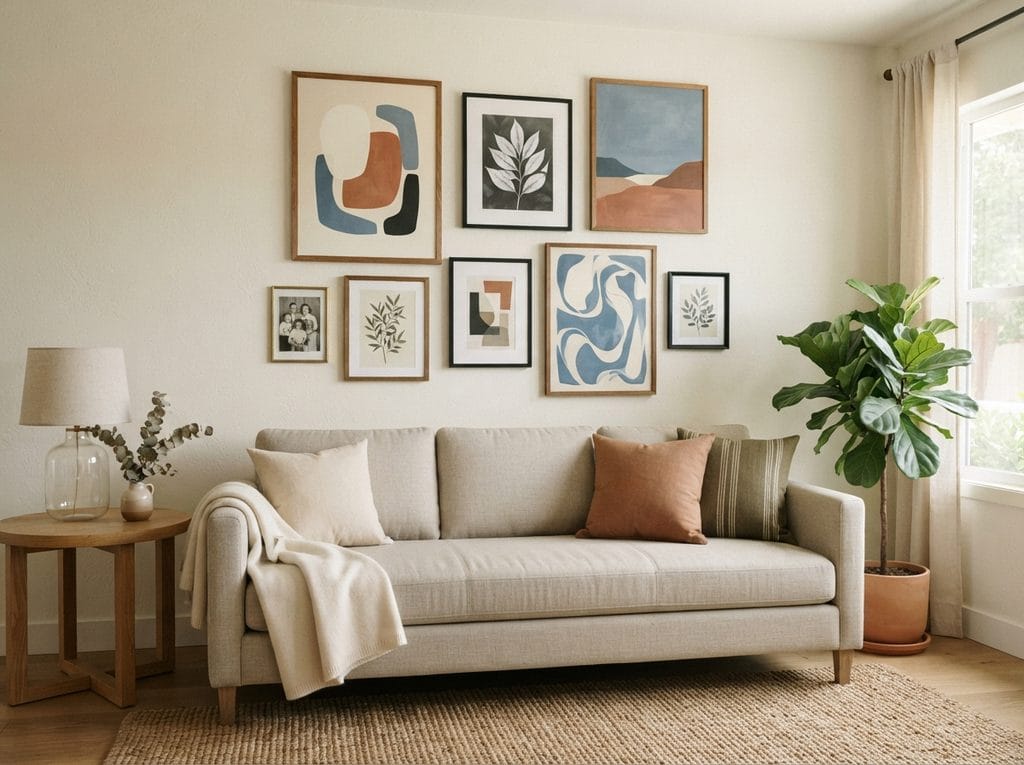
7. Design a Gallery Wall
Make a gallery wall feel deliberate by choosing one visual link between the frames: a repeated finish, a shared colour or a consistent subject. Arrange the pictures on the floor, then tape paper outlines to the wall and inspect them from the doorway and sofa before making holes. Leave breathing room around switches and furniture; use fixings suitable for the actual wall and frame weight. Renters can start with a smaller arrangement on an existing shelf instead of assuming adhesive strips will hold heavy glass.
8. Layer Rich Textures
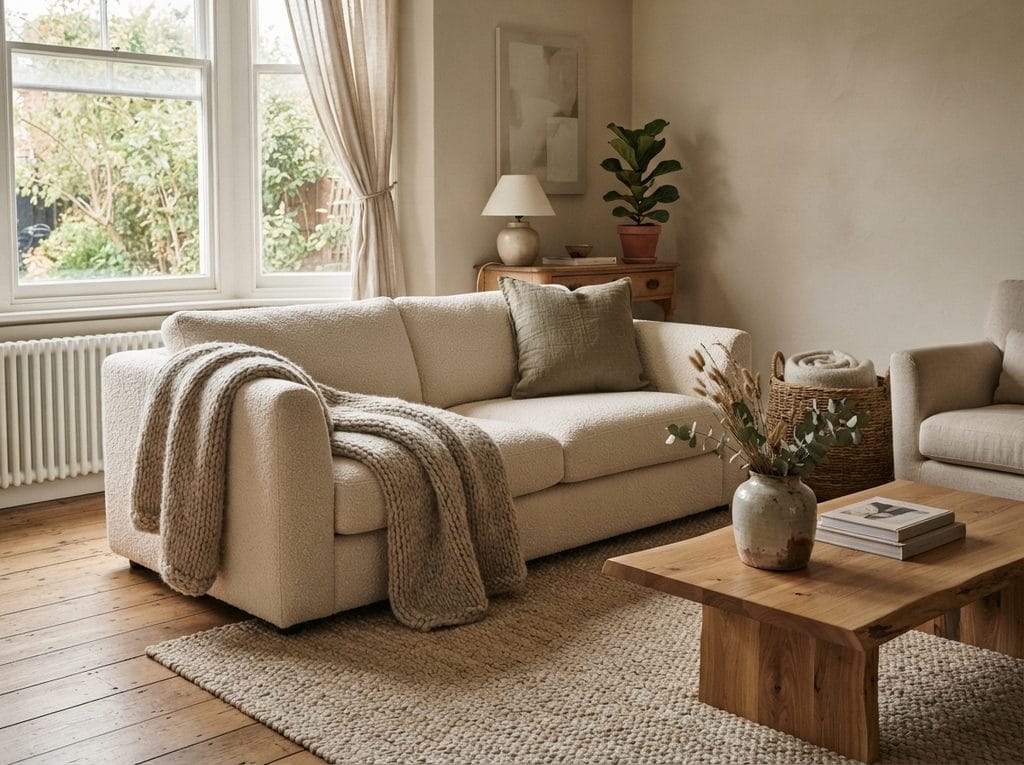
Combining multiple textures creates depth and sophistication. Layering natural materials, textiles and warm lighting can also contribute to a more refined look, as discussed in this quiet luxury interior design guide from Better Homes & Gardens. Practical formula: begin with one soft element (a washable throw or cushion), one natural texture (wood, wicker or linen), and one smooth finish (glass, ceramic or metal). Repeat a material in two places rather than buying five unrelated accessories. Compare the arrangement in daylight and lamplight; if it looks crowded, remove one piece before adding another.
9. Upgrade Empty Corners
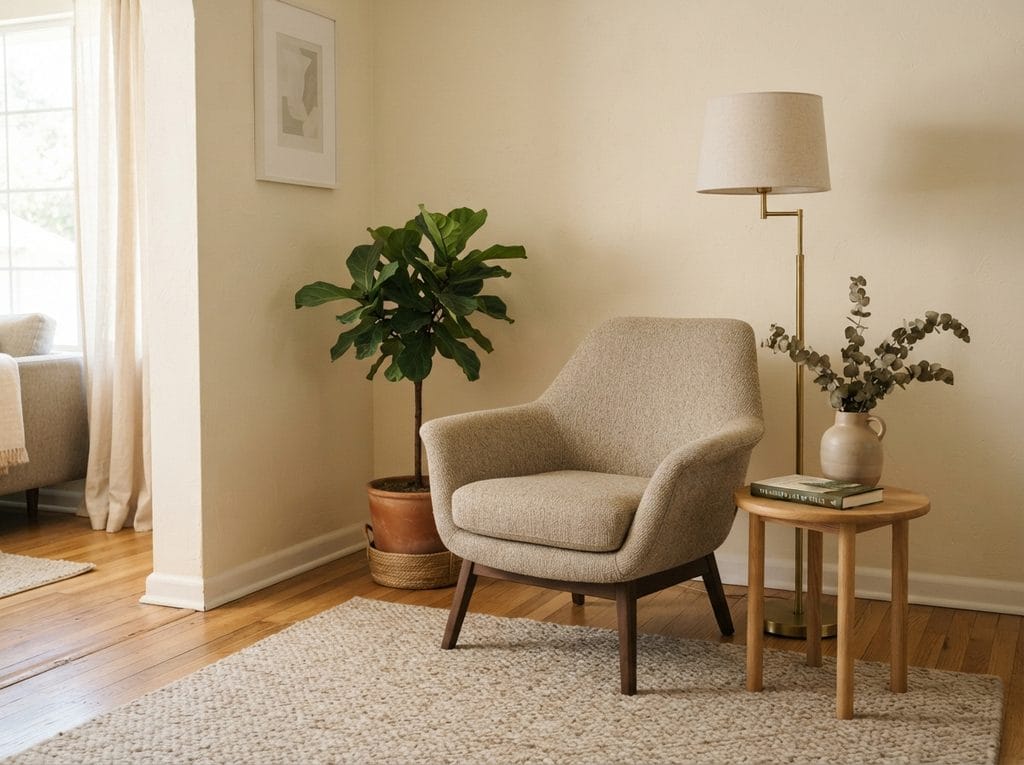
Decide what an empty corner needs to do before filling it. For reading, place an existing chair and switch on a nearby lamp; for storage, mark a cabinet’s footprint and test its door opening; for visual balance, try a plant only where its light needs and stability can be met. Photograph the corner from the doorway with and without the extra item. If the empty version feels calmer and works better, leave it open.
Try a one-week corner test: Move a chair or plant you already own into the space before buying anything. Check whether you can vacuum behind it, reach nearby windows and outlets, and walk past while carrying a laundry basket. Photograph the result after a week and keep the object only if it makes the room more useful or pleasant.
10. Add Decorative Wall Panels
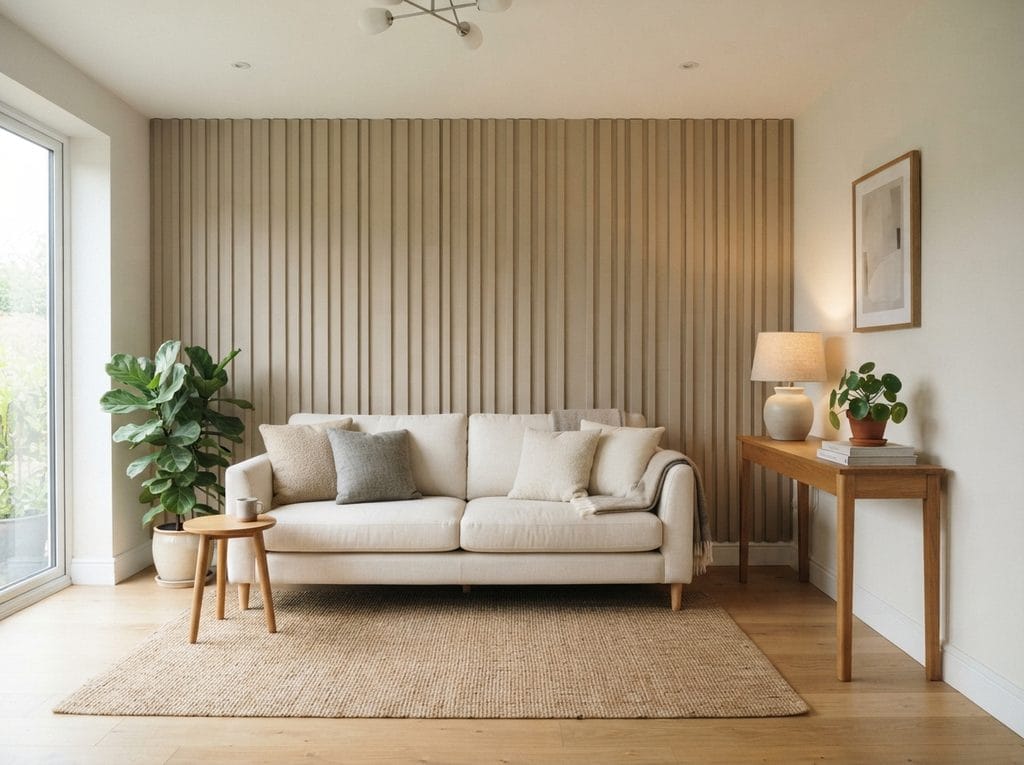
Wall panels can add texture, but first decide whether the room needs a permanent finish or simply a stronger focal point. Mark the proposed panel area with low-tack tape, then check outlets, switches, door clearance and any moisture exposure. In a rental, a framed textile or an existing textured cabinet may achieve a similar effect without attaching panels. Follow the product’s fixing and fire-safety instructions if installation is appropriate. For alternatives, compare these wood wall decor ideas.
11. Choose a Cohesive Colour Palette
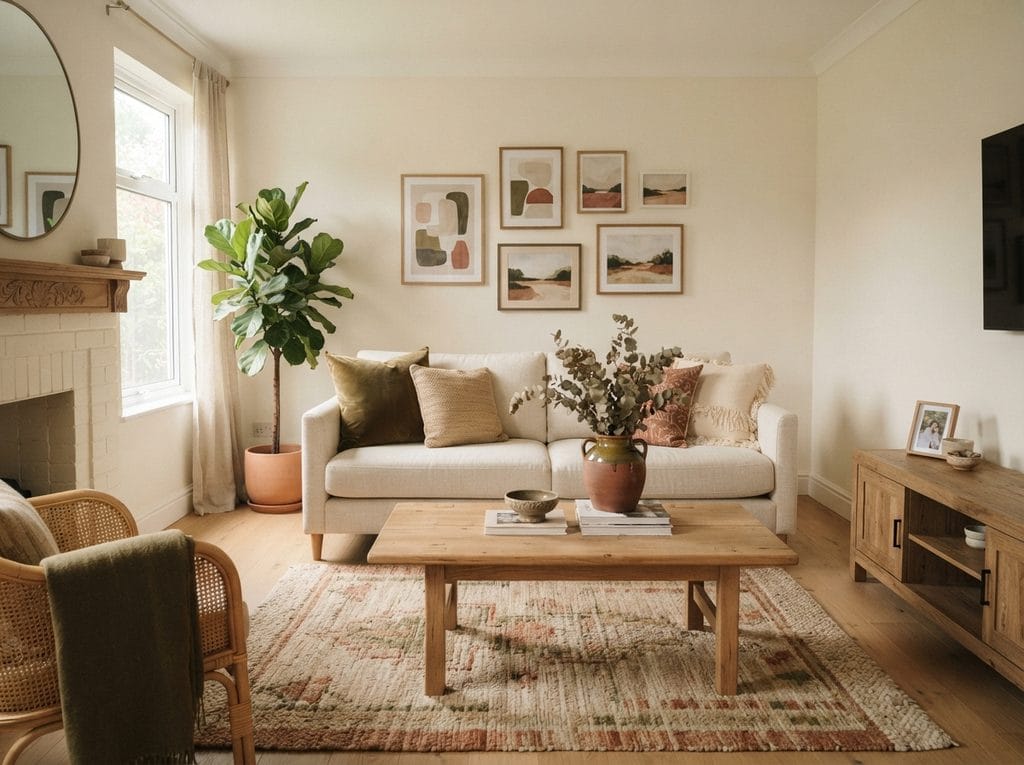
A cohesive palette makes a room feel professionally designed because the eye can connect finishes across the space. Pick two or three main colours, then repeat them in textiles, artwork and smaller accents. You do not need everything to match; a controlled mix of light, mid-tone and darker shades creates depth while keeping the room visually calm. Try it before spending: Photograph the room in daylight and identify the largest existing colour in the sofa, floor or curtains. Choose one supporting neutral and one accent already visible in artwork or textiles. Move two accessories in that accent into the room, then photograph the result again. If the space feels calmer, keep the scheme; if not, change one accent rather than replacing a whole set of furnishings. In a rental, test the effect with movable fabrics before considering paint.
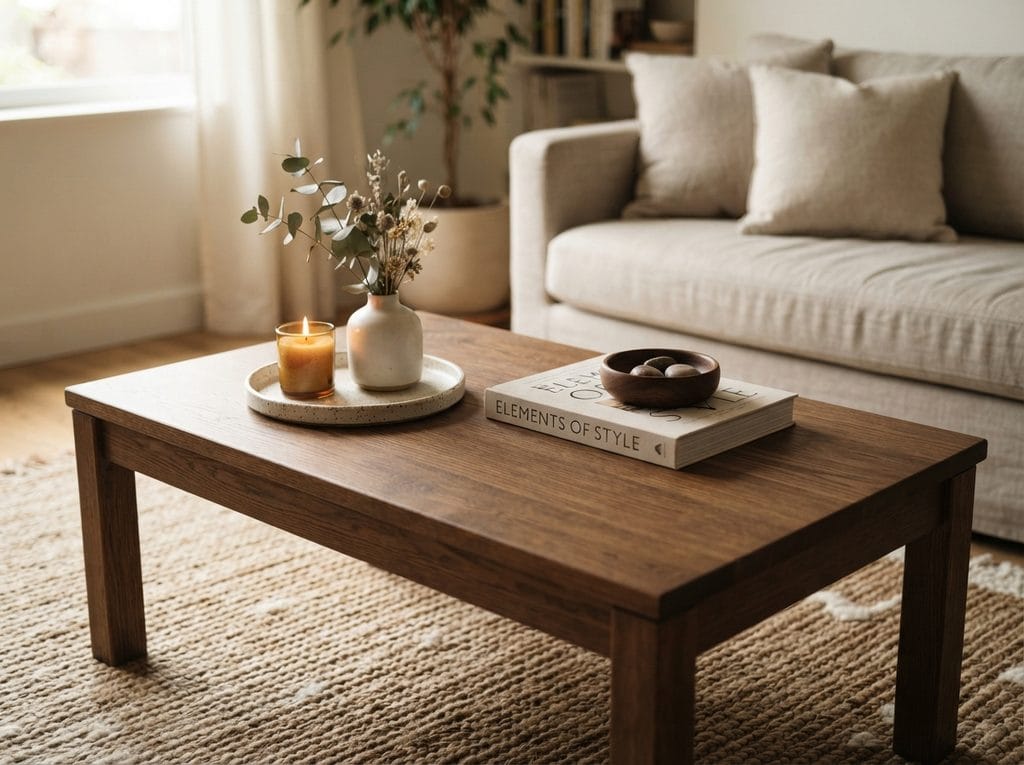
12. Style Your Coffee Table
Style a coffee table around what the household actually does there. First clear it, then reserve usable space for a drink, a book or a family game; place a small group of decorative objects on one movable tray instead of spreading them across the whole surface. Sit in the usual seats to check sightlines and reach. In homes with children, avoid unstable glass objects and keep hot drinks and fragile items safely managed. If the table still feels crowded, remove an item rather than buying a larger tray.
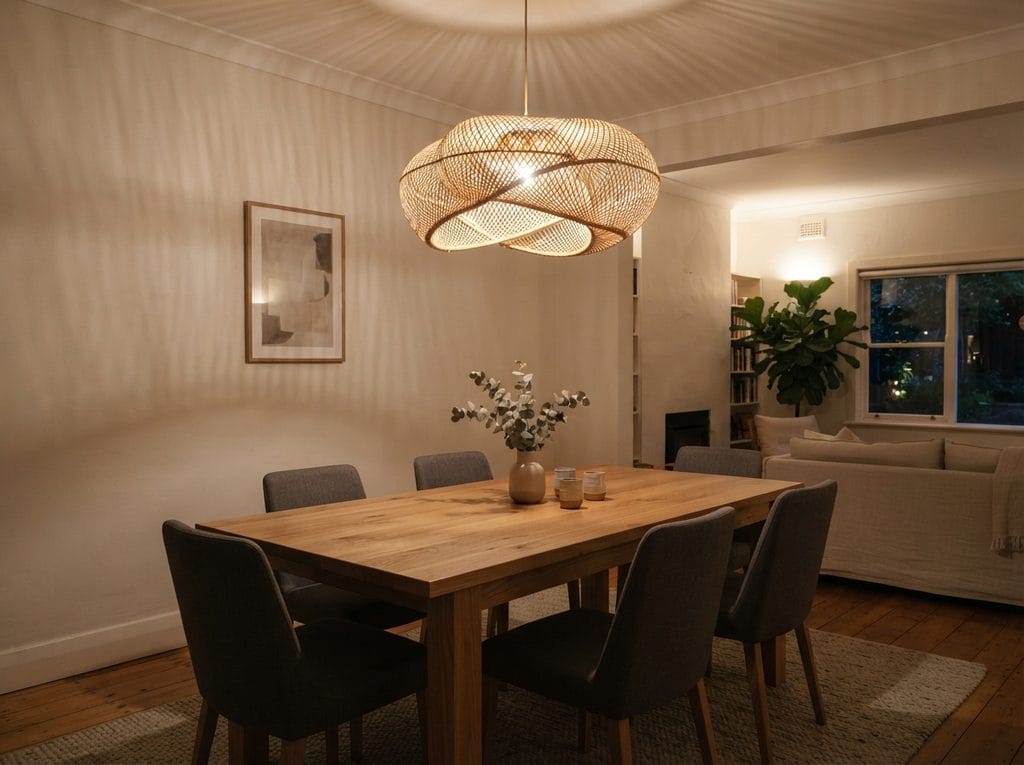
13. Use Statement Lighting
Statement lighting works best when it has a clear role as well as visual impact. Choose a pendant, chandelier or sculptural lamp that suits the room’s scale, then keep nearby decor quieter so the fixture can act as a focal point. Check that it gives useful light where people sit, eat or work rather than choosing shape alone. Before choosing a fixture: Make a paper outline at the proposed size and view it from the doorway and main seat. Check head clearance, door swings, glare and whether the light will reach the table or chair beneath it. If you cannot change a hardwired fitting, try an existing floor or table lamp in a new position first. Have any electrical installation carried out by a qualified professional in accordance with local requirements, and follow the manufacturer’s instructions.
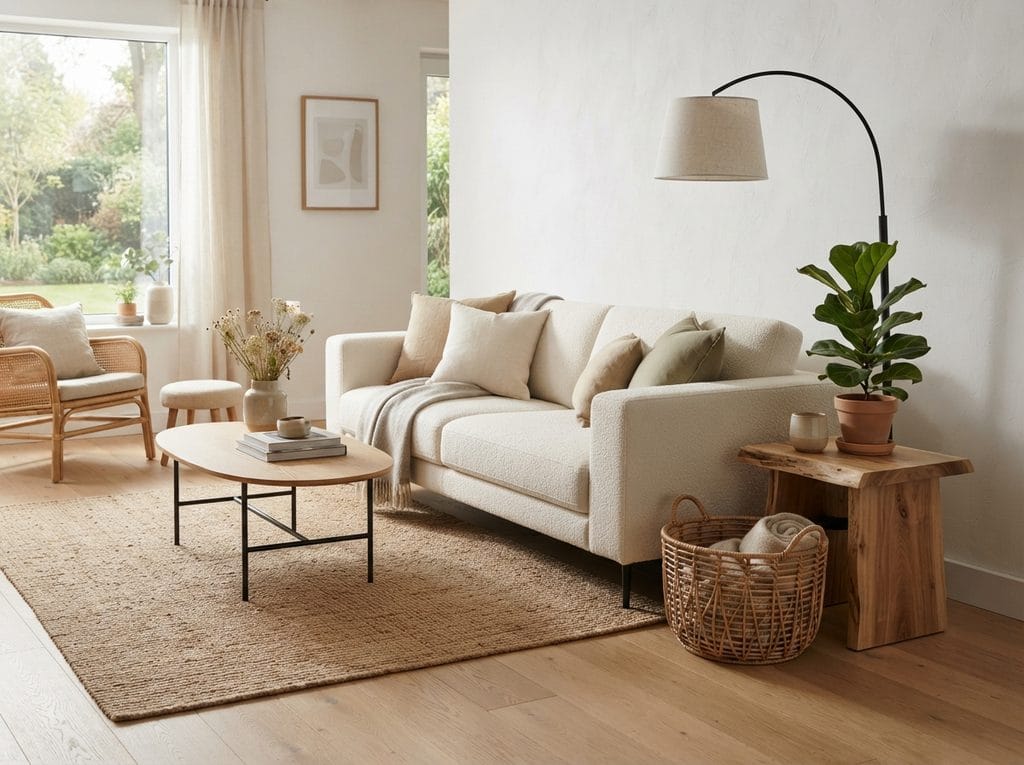
14. Mix Modern and Natural Elements
Mix clean-lined furniture with a small number of natural finishes rather than buying a whole matching set. For example, repeat the wood tone of an existing table in a picture frame and a bowl, then add one washable textile for softness. View the combination in daylight and under evening lamps; if the room looks busy, remove one competing finish. Choose materials that suit your cleaning routine and keep circulation and storage more important than the styling.
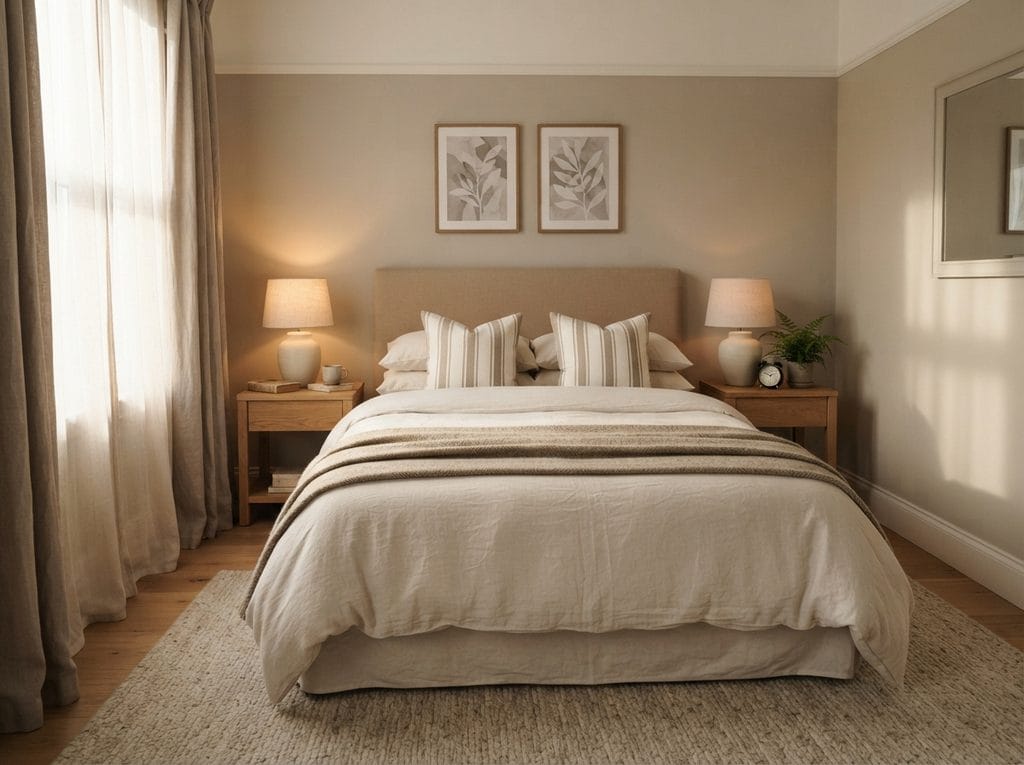
15. Create a Hotel-Inspired Bedroom
Luxury hotels create comfort through layers and consistency rather than decoration alone. Start with well-fitted bedding, add one or two tactile layers, keep bedside surfaces uncluttered and provide soft lighting on both sides of the bed where practical. A restrained palette and repeated finishes can make the bedroom feel calmer and more considered. Bedroom example: keep the existing bed and side tables, choose two coordinated pillow covers, repeat one accent colour in a throw, and move chargers and loose items into a tray. Check that the door, wardrobe and bedside route still work before adding a bench or chair. In a rental bedroom, coordinate existing bedding with a freestanding lamp and an accent; check lease rules before drilling or using adhesive wall products.
Three Room Refresh Plans Using What You Already Own
Small rental living room: Clear the coffee table and main walking route first. Move an existing lamp to the chair where someone actually reads, then repeat one cushion or artwork colour in another accessory. Mark the outline of any proposed mirror or shelf with paper before buying it. Check tenancy and mounting rules rather than assuming a removable hook can hold heavy glass.
Dark bedroom: Remove unused items from both bedside surfaces, straighten the bedding and test the light from the pillow before choosing new lamps. Use an existing throw or cushion to repeat one colour. If the room still feels flat, try a different lamp position and photograph the result at night; only buy something that fixes a specific remaining problem.
Narrow entryway: Remove shoes and bags from the door swing, designate a small tray for keys and use cardboard to mock up a shallow shelf before purchasing. A useful landing spot and a clear walkway usually matter more than extra decorative objects. Secure mirrors and wall storage with hardware appropriate to their weight and the wall.
How to choose: Start with the room that frustrates you most in daily use. Make one reversible change, photograph it from the doorway, and use the space for several days before deciding whether another purchase would help. These are examples to adapt, not fixed design rules.
Before You Buy: A Simple Decor Decision Test
Try moving what you already own before purchasing new decor. If a new item still seems useful, check its full footprint, maintenance, stability and cost against the room’s daily needs. The goal is a more comfortable space, not another purchase.
- No-cost refresh: edit shelves, reposition a lamp, repeat an existing colour and clear the walkway.
- Small addition: measure for one cushion cover, lampshade or stable tray that supports an everyday activity.
- Larger purchase: mark the mirror, cabinet or lighting footprint with tape and check safe fixing, access and upkeep before ordering.
A Practical 30-Minute Room Refresh
- Minutes 0–5: Remove stray items and decide what the room needs to do.
- Minutes 5–10: Check the walking route and move anything obstructing it.
- Minutes 10–15: Pick one focal point, such as artwork, a mirror or the sofa.
- Minutes 15–20: Group accessories by colour or material and store the extras.
- Minutes 20–25: Adjust lamps or curtains to improve useful light.
- Minutes 25–30: Take a photo from the doorway and identify one remaining change worth paying for.
Example for renters: A cleared coffee table, a repositioned floor lamp and coordinated cushion covers may do more than another side table. For affordable follow-ups, explore these cheap DIY home decor ideas.
Quick Room Upgrade Checklist
- Keep the main walking route clear.
- Choose one obvious focal point.
- Repeat key colours, metals or wood tones.
- Use more than one level of lighting where practical.
- Leave some shelves and surfaces partially empty.
- Mix smooth and tactile materials for depth.
- Hide everyday clutter before buying decorative storage.
- Secure heavy mirrors and tall furniture appropriately, especially around children or pets.
Furniture safety: Secure tall dressers, bookcases and other tip-prone furniture using suitable wall anchors, especially in homes with children. The U.S. Consumer Product Safety Commission’s Anchor It! guidance explains furniture tip-over prevention. Follow the manufacturer’s instructions and use fixings appropriate for the wall.
Frequently Asked Questions
How can I make my home look expensive on a small budget?
Start by decluttering, rearranging furniture for clearer circulation, improving lamp placement and repeating a simple colour palette. Then spend selectively on one high-impact item such as a mirror, rug, light fixture or artwork.
What colours make a room look luxurious?
There is no single luxury colour. Cohesion matters more than choosing beige or dark tones. A limited palette with repeated colours and consistent finishes usually looks more intentional than many unrelated shades.
How do I make a small room look polished rather than crowded?
Protect the main walking path, use furniture that suits the room’s scale, keep some surfaces clear and avoid filling every wall. A mirror can help reflect light, but it should reflect an attractive, uncluttered view. Before buying a new piece, mark its footprint with painter’s tape, open nearby doors and drawers, and walk through the room as you normally would. If movement becomes awkward, choose a shallower piece or rearrange what you already own.
Can I make a room look more expensive without buying anything?
Yes. Start by clearing one visible surface, removing duplicate accessories, repositioning an existing lamp and repeating a colour already present in the room. Leave enough space around furniture for everyday movement, then photograph the room from the doorway. If it feels more balanced, keep the change for a week before spending money. The goal is a more useful, coherent space—not an expensive-looking room at the cost of comfort.
Conclusion
A room looks more considered when its layout, light and details work together, not when every item is new. Choose the single problem you notice most, try a reversible change using what you own, and photograph the result from the same doorway. Check that walking routes, task lighting and daily use are genuinely better. Keep what still works after a week; only then decide whether a purchase is justified.
The best interiors blend comfort, personality and beauty. Start with one idea from this list, complete it fully, then reassess the room before buying more.