
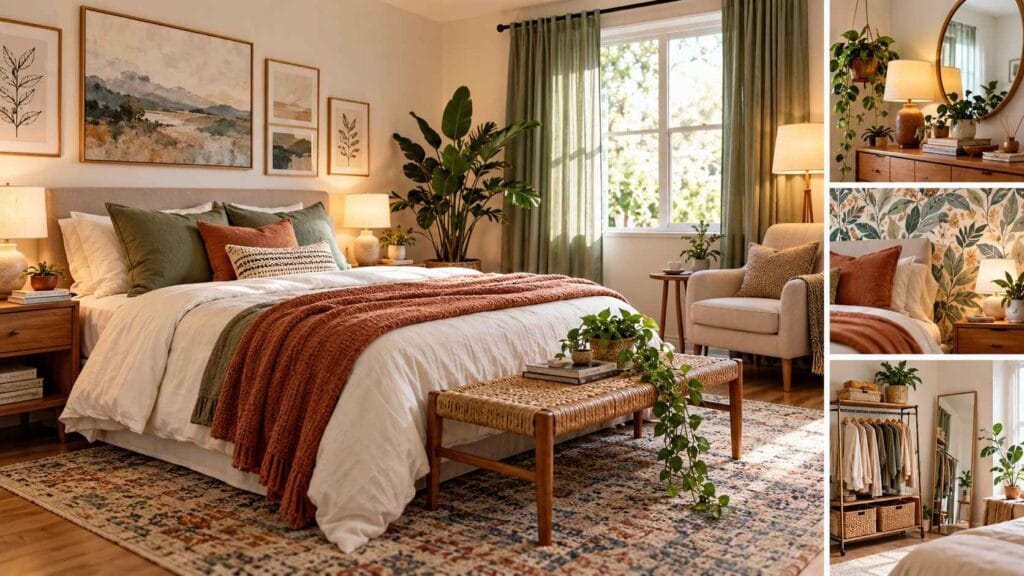
Finding bedroom ideas for renters can be tricky when you want a space that feels personal without making permanent changes. The good news is that you do not need to paint walls, replace flooring, or renovate the room to create a bedroom you love. With the right combination of removable decor, smart storage, lighting, textiles, and furniture placement, even a plain rental bedroom can feel comfortable, stylish, and completely your own.
The trick is to choose changes that you can easily undo. Think of bedding, warm lighting, rugs, removable wall décor, freestanding storage, mirrors, plants and furniture that can move with you when your lease ends.
Whether you are decorating an apartment bedroom, a furnished rental, a shared-house room or a spacious main bedroom, these ideas can help you create a more personal space while respecting your lease and the condition of the property. For inspiration, Apartment Therapy’s rental-wall decorating guide illustrates temporary wallpaper and lightweight decorative options. Treat these as ideas rather than guarantees: lease terms and wall finishes still determine what is suitable.
Before you start: Read your tenancy agreement before changing walls, fixtures, lighting or furniture. Follow each product’s installation and removal instructions, and test removable treatments on an inconspicuous area when appropriate. These bedroom ideas for renters prioritize practical updates that do not require permanent renovations.
Quick Takeaway: The Best Renter-Friendly Bedroom Upgrades
For most renters, the highest-impact bedroom upgrades are reversible ones: improve the bed and lighting first, solve storage with safe, appropriately sized furniture, then add a rug, curtains, mirrors and removable wall decor where your lease allows it. Measure before buying, keep walkways and fixed features clear, and prioritize pieces you can take to your next home.
Which Rental Bedroom Upgrade Should You Try First?
Start with the change that solves your biggest daily problem. A cramped bedroom usually needs a clearer layout before more decor; a furnished rental benefits from portable textiles and lighting; and a strict no-drilling lease calls for movable pieces rather than risky wall treatments.
| Your situation | Best first upgrade | Check before spending |
|---|---|---|
| Small bedroom with poor flow | Rearrange the bed and use a narrower bedside surface | Door swing, wardrobe access and walking clearance |
| Furnished room you cannot repaint | Coordinate bedding, a rug and portable lamps | Room measurements and existing furniture colors |
| No drilling or wall changes permitted | Choose freestanding art, textiles and portable storage | Stability, lease terms and manufacturer instructions |
| Very limited budget | Declutter, restyle the bed and reposition lighting | Reuse what you own before buying anything |
A 30-Minute Renter-Friendly Bedroom Refresh
- Minutes 0–5: Photograph the room, identify the biggest annoyance and check the main walking path.
- Minutes 5–10: Clear the bedside surface and remove items that do not belong in the bedroom.
- Minutes 10–20: Restyle existing bedding, move a portable lamp and group daily-use items where you can reach them.
- Minutes 20–25: Measure the space for any future rug, shelf or bedside table rather than buying on impulse.
- Minutes 25–30: Check access to doors, windows, wardrobes and heaters; note one upgrade worth saving for.
Example (illustrative): In a furnished apartment with a fixed bed and little floor space, moving a lamp closer to the reading side, clearing the bedside table and choosing one coordinated duvet cover can make the room more usable without drilling, painting or replacing furniture. If you share the room or need accessible circulation, prioritize the route through the space before adding decorative pieces.
Three Realistic Rental Bedroom Setups
Furnished apartment with a fixed bed: Start with bedding, a portable reading lamp and one rug sized to the room. Keep the landlord’s furniture in place, measure the door and wardrobe clearances, and spend on pieces you can move to your next home.
Shared or very narrow bedroom: Keep one clear route from the entrance to the bed and storage. Give each person a small, reachable bedside zone, use low-profile containers for occasional items, and avoid placing a chair or storage cart where it blocks access.
Strict no-drilling lease: Choose a freestanding lamp, textiles and low, stable storage rather than assuming adhesive hooks or peel-and-stick wallpaper will suit the walls. Check lease terms and product instructions; tall furniture that needs anchoring should not be left unsecured just to avoid wall fixings.
Measure Before You Buy: Two Rental Bedroom Layout Examples
Measure usable floor space, not just the room on a listing. Sketch door swings, built-in wardrobes, radiators, outlets and the bed frame. The figures below are illustrative, not universal clearance standards: check actual furniture dimensions and how everyone moves through the room.
Example 1 — a 2.7 m-wide bedroom: A 1.35 m-wide bed leaves 1.35 m across the room before bedside furniture. Add a 30 cm-wide bedside unit and 1.05 m remains to distribute between the two sides. Rather than squeezing in two nightstands, test moving the bed toward one wall to leave a more usable route on the other side. Open the wardrobe and door fully before deciding.
Example 2 — a 3.2 m-long bedroom: A 2 m-long bed and a 45 cm-deep dresser at its foot leave 75 cm between them before allowing for open drawers, handles or a door swing. If drawers block the route, place the dresser elsewhere or choose a shallower unit. See our small bedroom layout examples for alternative shapes.
Before purchasing: Measure the bed frame rather than only the mattress, tape furniture outlines on the floor, open each door and drawer, and walk the route carrying a laundry basket. Adjust the plan before ordering.
What Can Renters Change Without Drilling?
Start with portable changes: bedding, rugs, freestanding lamps and low, stable storage usually require no wall alterations. Adhesives, wallpaper, curtain hardware and tall furniture need extra checks; “removable” does not guarantee every paint finish stays undamaged.
| Goal | Try first | Check |
|---|---|---|
| Decorate plain walls | Freestanding framed art or textiles | Lease and surface compatibility before adhesive or wallpaper |
| Improve bedside lighting | Portable lamp | Stable placement, outlets and clear cords |
| Add storage | Low, stable drawers or baskets | Anchoring instructions for tall or tip-prone units |
| Soften windows | Existing rod with removable panels | Rod load rating and permission for new fixings |
Decision rule: If an upgrade needs drilling, adhesive on delicate paint, electrical work or unsecured tall furniture, ask for permission where needed and follow product instructions. Check 3M’s surface and weight guidance for picture strips and CPSC Anchor It! for furniture tip-over prevention.
20 Bedroom Ideas for Renters
1. Make the Bed the Focal Point
If you cannot change the walls or flooring, begin with the largest visual piece in the room: the bed.
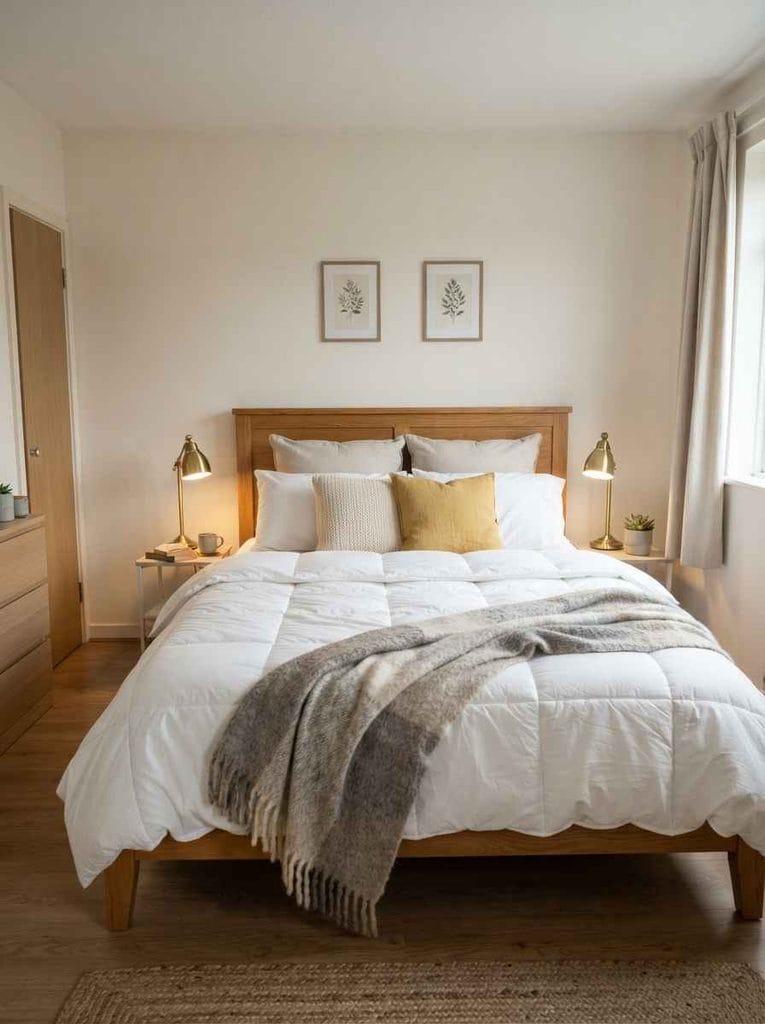
For a furnished rental, begin with the bed you already have. Check its dimensions, choose washable bedding that fits properly and protect any landlord-provided headboard or frame from scratches. A coordinated duvet cover and two complementary pillow textures can change the look without replacing furniture.
Instead of buying many small decorations, choose bedding that gives the room a clear color palette and a touch of texture.
Before buying new bedding, measure the mattress and check the duvet size. Try one coordinated cover, two contrasting pillow textures and a folded throw; photograph the arrangement in daylight to see whether the colors work with the landlord’s furniture.
If the room feels plain, add one accent color through the bedding instead of repeating it on every surface.
This approach works well in a rental because you can make an ordinary landlord‑provided bed feel more personal without replacing it.
Tip: Choose bedding that you really love and that you can take with you when you move.
2. Create a Renter-Friendly Accent Wall
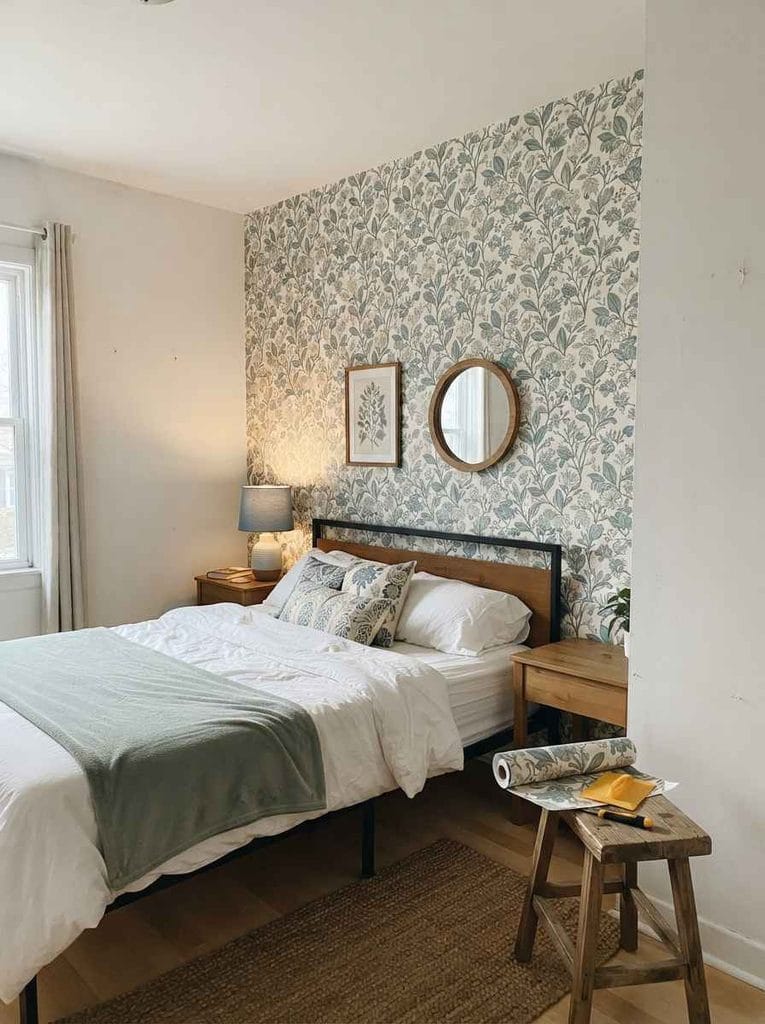
Start by deciding whether your lease allows any wall treatment. If not, create the same focal-point effect with patterned bedding or framed art displayed on furniture rather than attaching anything to the wall.
Renter‑friendly wallpaper and removable wall treatments can create a focal point behind the bed.
If you are unsure about covering a wall, begin with a small, discreet test area only if the lease and manufacturer permit it. Follow the product’s surface-preparation, waiting-time and removal instructions before attempting a full accent wall.
Choose a pattern that works with the furniture you already own.
Botanical prints, geometric patterns, warm neutrals, muted greens and soft abstract designs can all work well without overwhelming a bedroom.
However “removable” does not automatically mean “risk‑free.” Different products and wall surfaces behave differently. Check the product instructions and your tenancy agreement before installing.
3. Layer Your Lighting Instead of Relying on One Ceiling Light
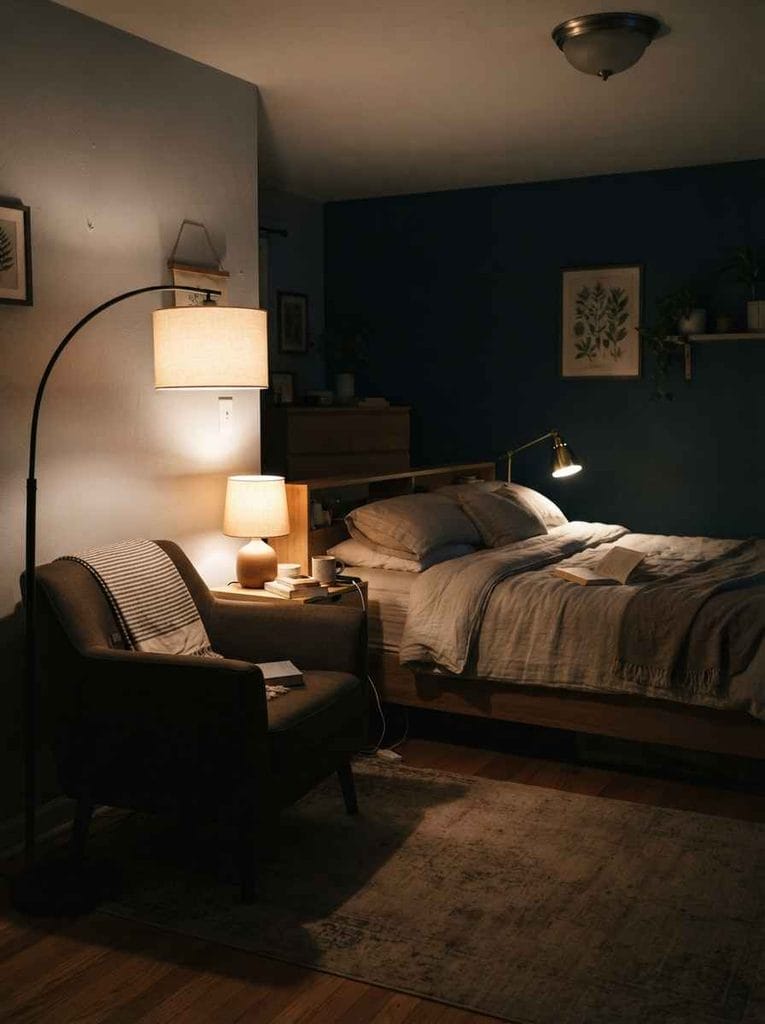
A rental bedroom can have beautiful furniture and still feel uncomfortable if the only light comes from a harsh ceiling fixture.
Layering smaller sources creates a much softer atmosphere.
Try combining:
- A bedside lamp
- A floor lamp
- A small reading light
- Warm-toned bulbs
- Decorative LED lighting where appropriate
Keep the existing ceiling fixture and test a bedside reading lamp plus one portable light in a darker corner. Check outlet access and keep cords away from walkways.
Test the lighting after dark: the goal is comfortable visibility without glare or cords across the floor, not simply more fixtures. A bedside reading lamp and one portable light may be enough.
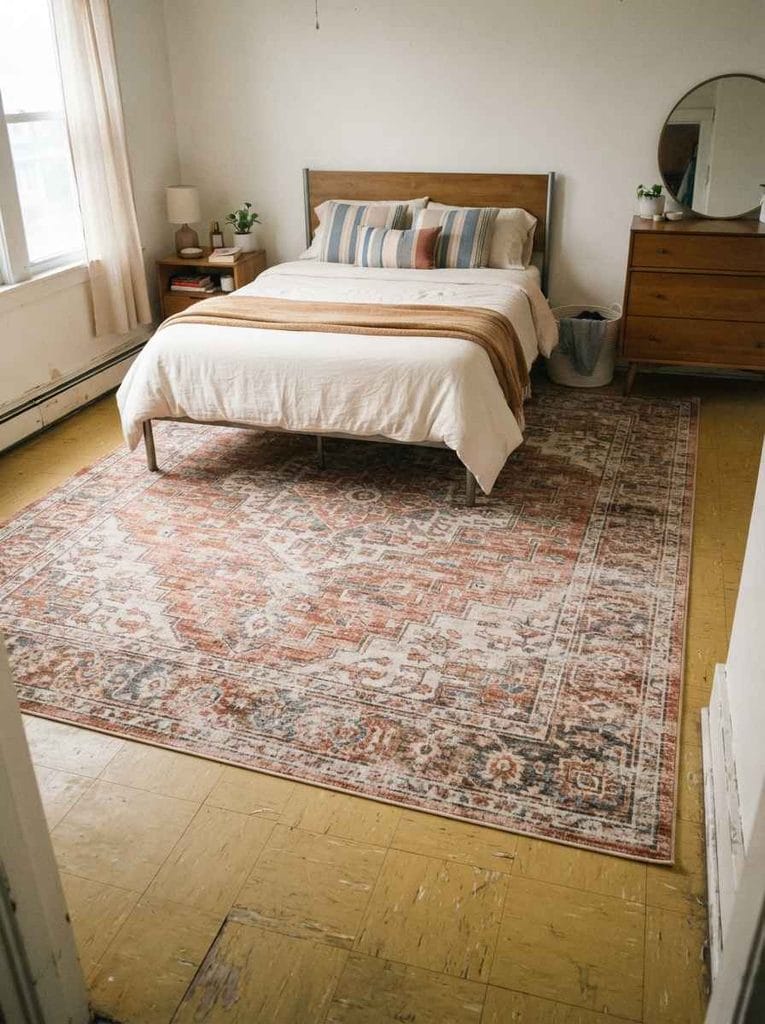
4. Use a Rug to Transform an Unattractive Floor
Not every rental has attractive flooring. Many have dated carpet, scratched laminate or wood, or a floor color that does not suit your taste.
A well-sized rug can visually change the entire room without altering the floor underneath.
For a bedroom, place the rug so it extends beyond the sides of the bed where space allows. In a smaller room, a rug beside or partially underneath the bed can still add warmth without making the space feel crowded.
Measure the exposed floor on both sides of the bed before choosing a rug. Check that its edges will not catch the door and use a floor-compatible non-slip backing where needed; test the arrangement by walking through the room.
5. Dress Plain Rental Windows With Curtains
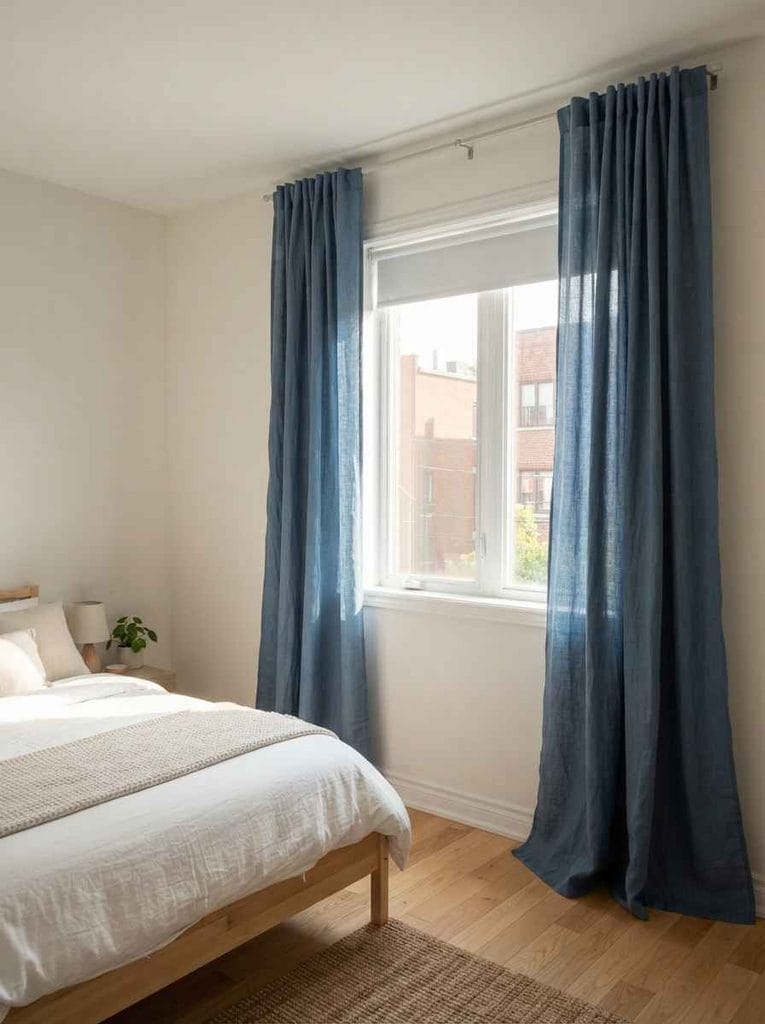
Curtains can make a large difference to a bedroom.
Curtains soften hard window frames, add color and texture, and can make a ceiling appear taller when hung appropriately. They also improve privacy and light control.
If you cannot drill, measure the inside of the window recess and check whether a tension rod can safely support the actual curtain weight. Follow the rod’s load and surface requirements, test the fit, and keep windows and necessary ventilation accessible; otherwise use the existing fittings or ask the landlord.
For a bedroom, linen-look curtains in cream, beige, soft green or muted blue can work particularly well.
6. Use a Large Mirror to Make the Room Feel More Open
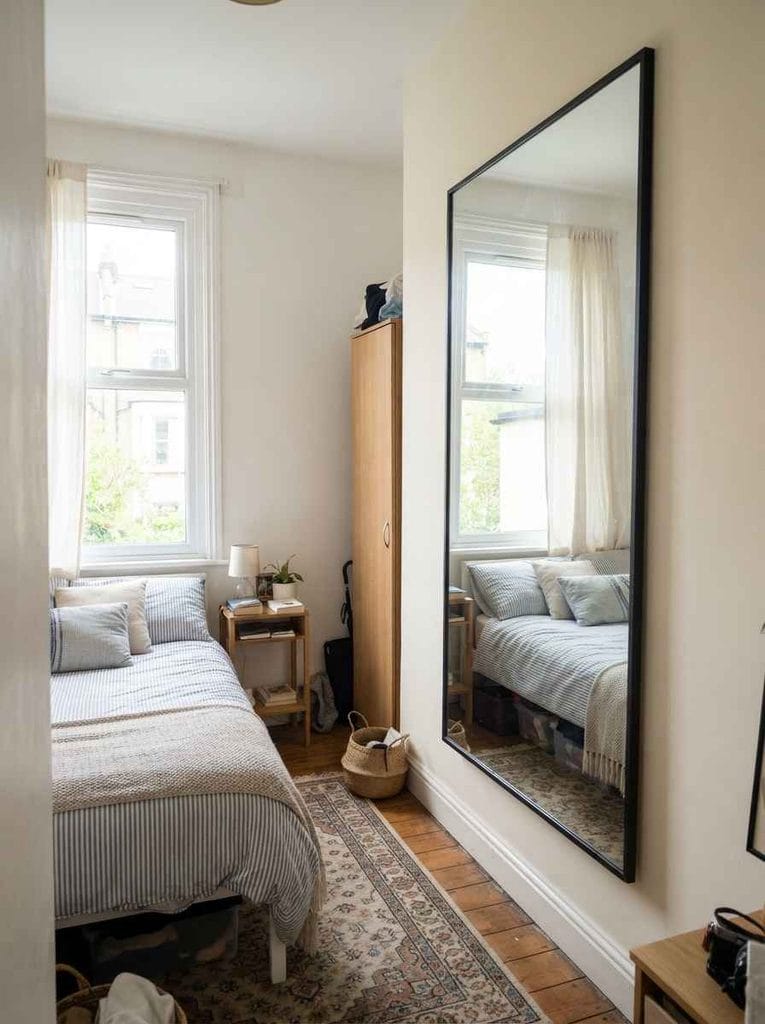
Before choosing a mirror, check what it would reflect in daylight and after dark. A window or tidy corner can add depth, while a reflection of a cluttered wardrobe may make the room feel busier.
A large leaning mirror can reflect light and make a small room feel more open. Position it where it can reflect a window, a piece of furniture or another attractive part of the room.
A full-length mirror is also practical, especially if the rental bedroom does not have a dressing area.
For safety, make sure a large mirror is positioned securely and follow the manufacturer’s installation or support recommendations. If you like the idea of using mirrors to create the feeling of more space, see these mirror wall decor ideas for a small living room for additional ways to use reflective surfaces.
7. Create a Gallery Wall Without Drilling
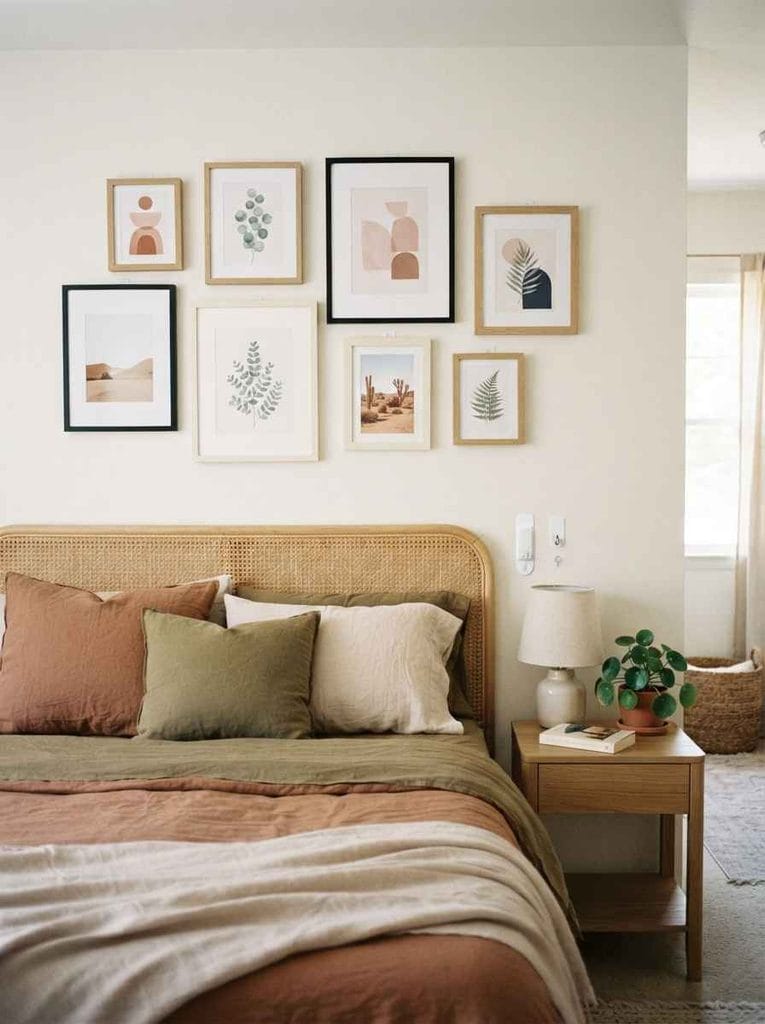
Make a personal display without assuming you can drill: try a few lightweight frames on an existing dresser or shelf first. If the lease and wall finish permit hanging strips, check their surface compatibility, load limits and removal instructions before putting anything on the wall.
If drilling is not permitted, consider artwork and appropriate removable hanging systems. If you use removable picture-hanging strips, always check the manufacturer’s weight limits and surface requirements before attaching anything. 3M’s Command guidance explains which surfaces its picture-hanging products are designed for and how they should be removed.
Before hanging artwork, arrange frames on the floor to test spacing and composition. The photo below shows frames above the bed as styling inspiration, not a recommended mounting position. For your own room, display lightweight frames on an adjacent wall or existing dresser instead of directly above the sleeping area, and follow the hanging product’s surface, weight and removal instructions.
In a bedroom, a small collection of coordinated prints may feel more considered than a crowded arrangement of unrelated pieces.
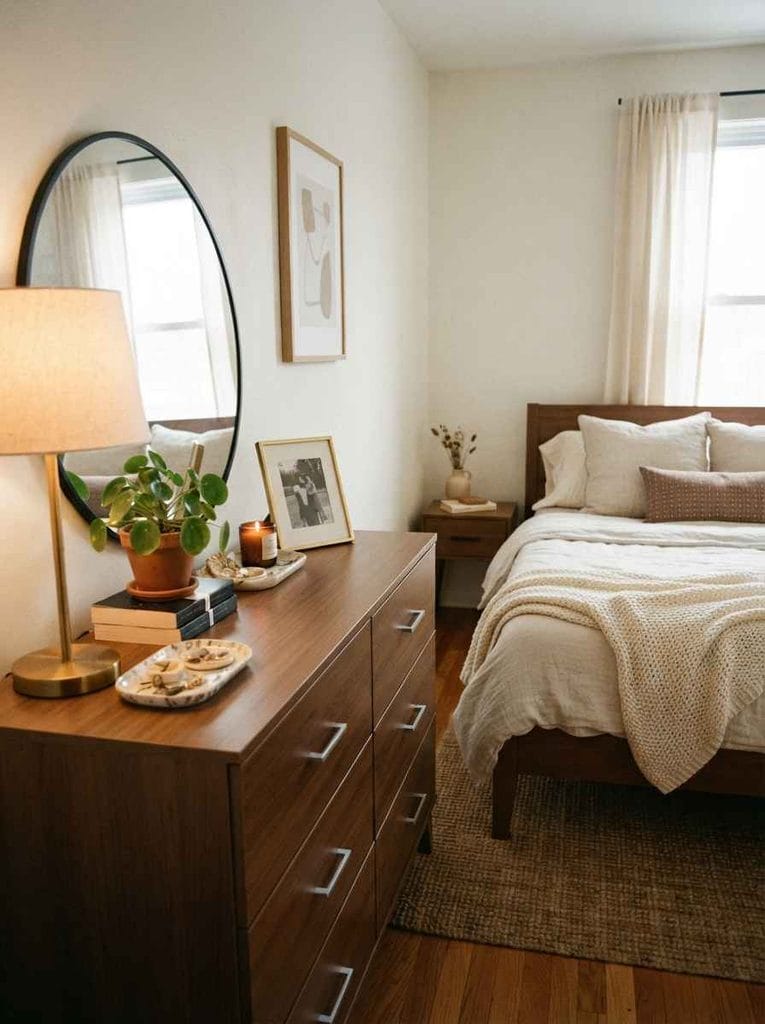
8. Make Landlord Furniture Look Intentional
When a rental includes a dresser, desk or bedside table you would not have chosen, photograph its condition and work with its size rather than replacing it immediately. One useful tray, lamp or textile can help it blend with the rest of the room while keeping the original finish protected.
Instead of trying to hide every piece, make the furniture look intentional.
A plain dresser can become part of the room with a lamp, a small plant and a tray that gathers everyday items. Put a protective mat beneath objects that could scratch or stain the finish, and photograph the arrangement before buying anything to see whether it already looks cohesive. A basic bedside table can look completely different once surrounding bedding, lighting and textile are coordinated.
The goal is not to make every piece perfect. The goal is to make the whole room feel cohesive.
9. Build Storage Upward
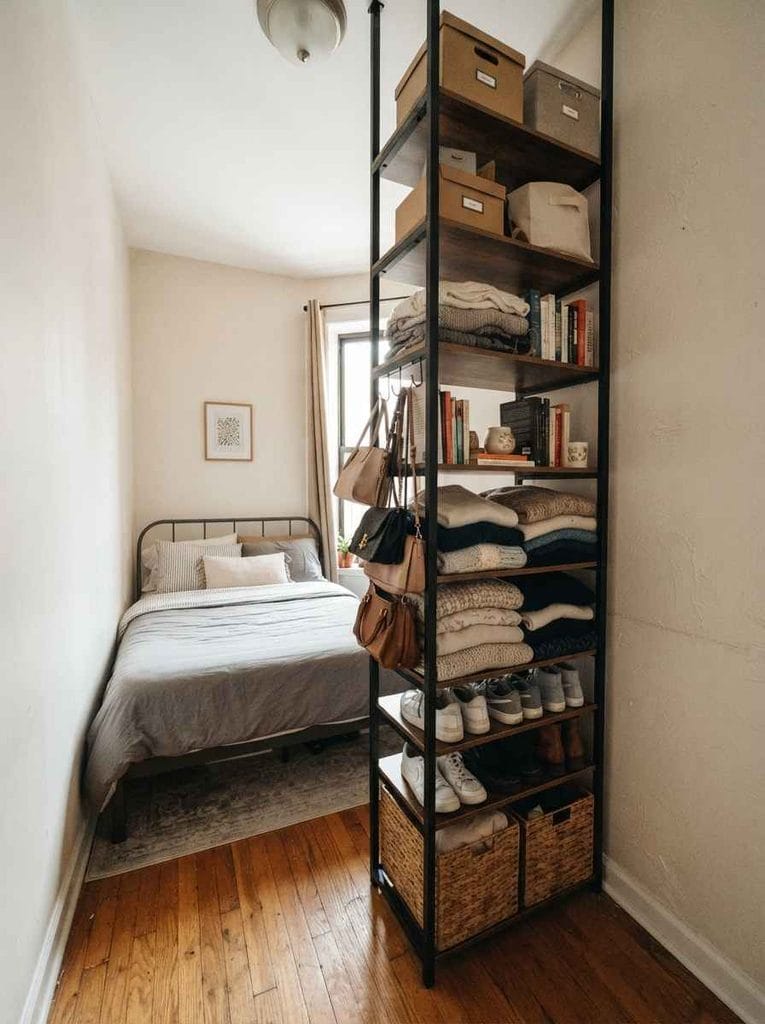
When floor space is limited think vertically and give every item a designated place. Our guide to small space organization hacks has more practical ways to use overlooked areas for storage.
A narrow storage unit can free up floor space, but stability matters more than appearance. Keep everyday items within easy reach and heavier belongings low. Tall bookcases, dressers and other tip-prone furniture should be anchored according to their instructions: the U.S. Consumer Product Safety Commission’s Anchor It! furniture-safety guidance explains why anchoring is important, including in rented homes. If your lease restricts wall fixings, ask the landlord about safe anchoring rather than leaving tall furniture unsecured; a low, stable alternative may be more appropriate. Choose storage you can move later without compromising safety now.
10. Create a Functional Bedside Zone
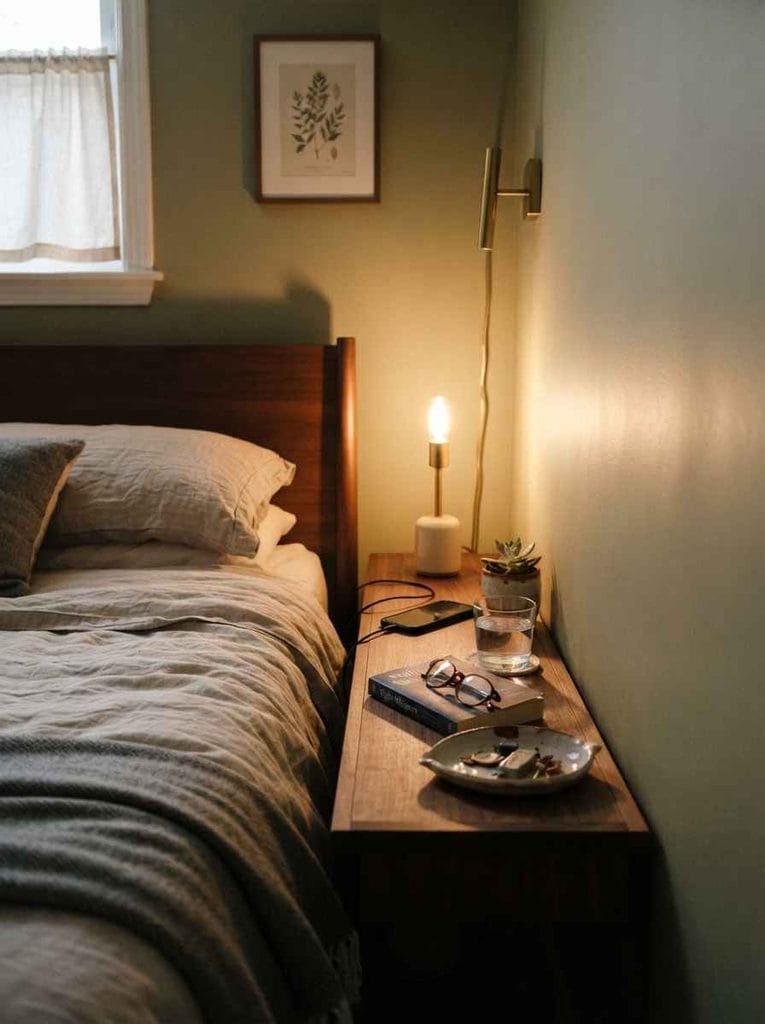
A bedside area does not need to be large to be useful. If a traditional nightstand crowds the room, try a compact table, small cabinet or stable stool that fits the space. Keep only the essentials close to hand:
- A lamp
- A book
- A small tray
- A glass of water
- One meaningful object
Try the bedside setup for three evenings: can you reach the lamp, book and water without stretching or blocking the route beside the bed? If not, swap a bulky nightstand for a smaller stable surface and remove anything you never use.
11. Design Around Awkward Fixed Features
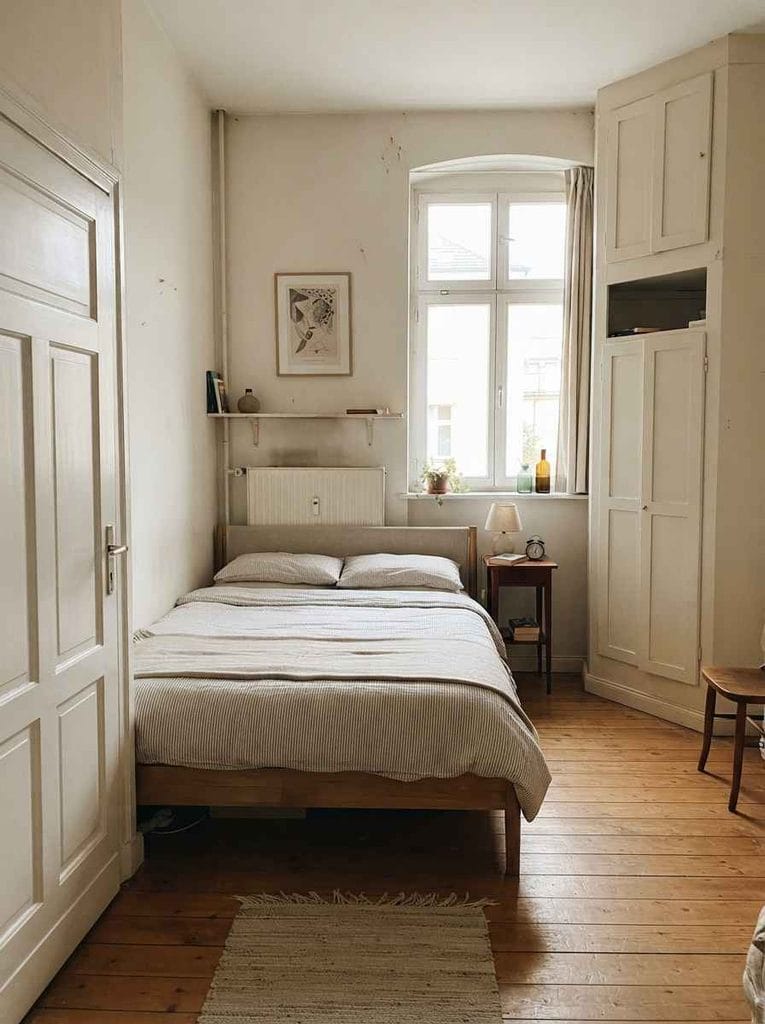
Rental bedrooms often come with features you cannot move: radiators, built-in wardrobes, unusual windows, awkward doors, sloping ceilings or inconveniently positioned outlets. Instead of treating these features as obstacles, make them part of the layout.
For example, avoid placing furniture directly in front of a radiator and follow the heater manufacturer’s clearance guidance. Open the bedroom door, wardrobe doors and drawers fully before deciding where a chair or storage unit can stand. Preserve a comfortable path between the bed and the entrance. Leaving space around a fixed feature may be the most useful decision: it protects everyday access without requiring changes to the property.
12. Choose One Statement Piece Instead of Filling the Room
A common decorating mistake is trying to make a bedroom feel finished by adding more and more accessories. Try the opposite. Choose one feature that attracts attention, such as:
- One large artwork
- A statement rug
- A colorful headboard
- An oversized mirror (secure it according to its instructions)
- An accent chair
- A patterned duvet cover
Choose the statement piece only after checking its footprint and how it will move with you. In a narrow bedroom, a bold duvet cover is often more practical than an extra chair; in a larger room, one well-sized rug may provide enough visual interest on its own.

13. Add Plants and Natural Textures
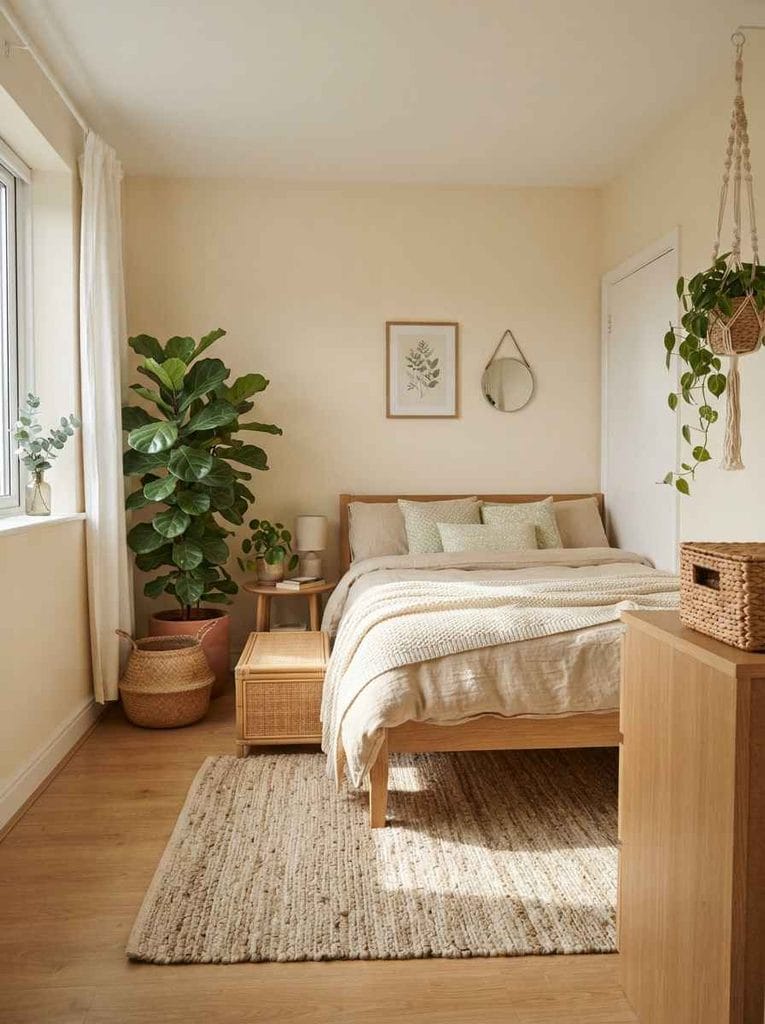
Plants are a way to introduce color and natural texture without changing the structure of a rental. If your bedroom receives natural light a larger plant can fill an empty corner. For lower-light rooms, choose plants suited to those conditions, or use artificial greenery if that better suits your space.
Combine greenery with woven baskets, wood, cotton, linen or other natural-looking materials for a relaxed atmosphere. The key is moderation: a few well-placed plants usually look more intentional than filling every available surface.
14. Create a Small Reading or Relaxation Corner
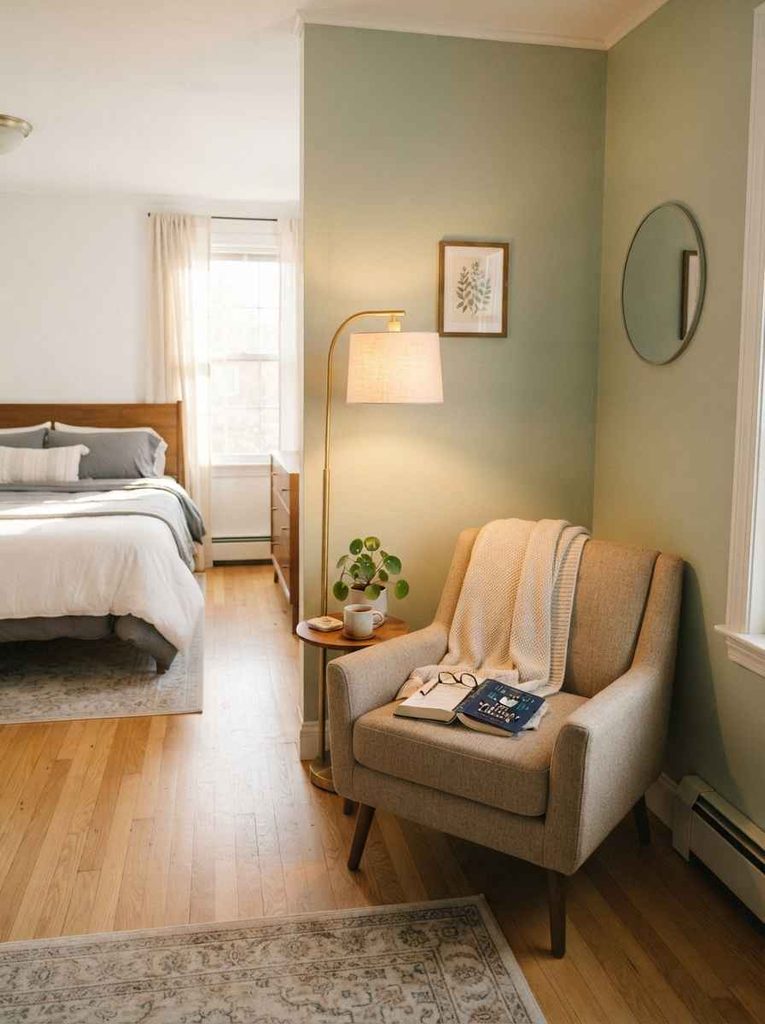
Before buying a reading chair, mark its footprint on the floor with painter’s tape and check the door, wardrobe and bed routes. If the chair blocks movement, try a portable cushion and reading lamp at the bed instead of forcing a separate nook. A compact chair and floor lamp can create a reading spot. In a small room, even a stool or bench may define a quiet corner if it does not obstruct the walkway. Choose furniture that is easy to move.
In a larger rented bedroom, use a reading corner only if it serves a daily habit. Try sitting there with a book and switching on the lamp before buying more furniture; if the spot is awkward or blocks circulation, a comfortable bedside reading setup may be the better choice.
15. Use Freestanding Furniture Instead of Built-Ins
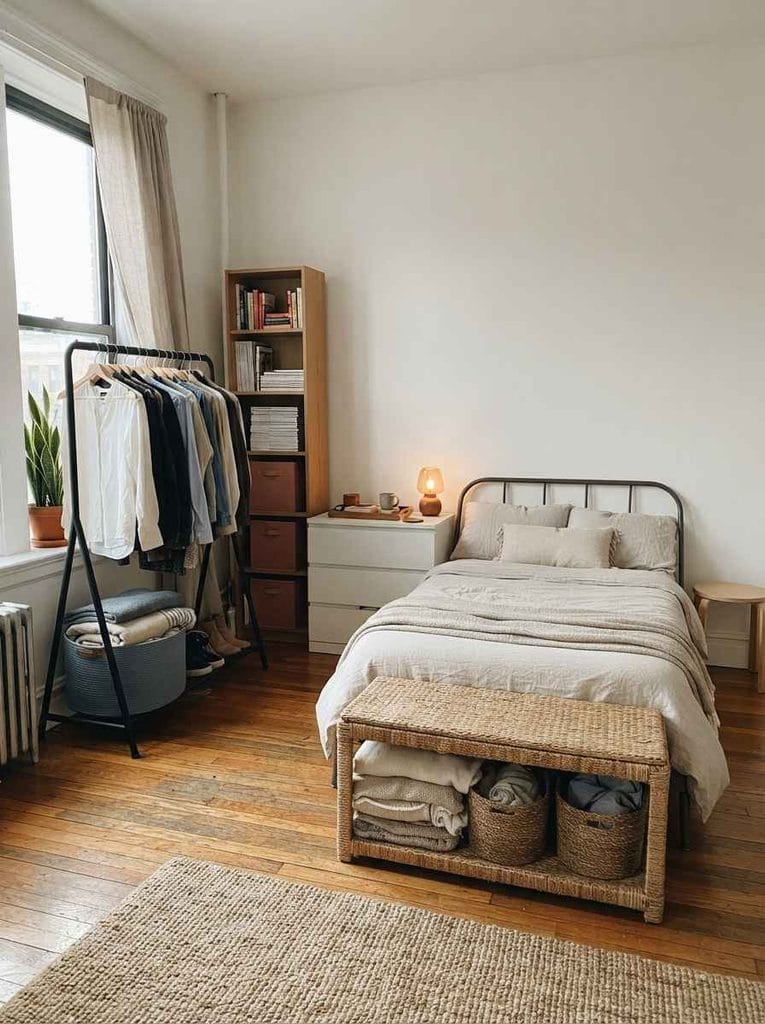
Built-in storage can be wonderful but renters do not always have the option to install it. Freestanding furniture gives you flexibility. Consider:
- Narrow bookcases
- Freestanding wardrobes
- Clothing racks
- Storage benches
- Small drawer units
- Portable shelving
Choose pieces that serve more than one purpose: a storage bench can provide seating while holding bedding, and a low drawer unit can double as a bedside surface. Check dimensions, weight limits and tip-over instructions before buying. Freestanding does not mean a tall wardrobe or bookcase is safe without appropriate anchoring.
16. Create a Modern Bedroom Without Renovating
You do not need expensive built‑ins to create a modern bedroom. Focus on the elements that visually define interiors:
- Simple furniture silhouettes
- Warm neutral colors
- Natural materials
- Layered lighting
- Minimal clutter
- Soft textiles
- A few carefully selected accessories
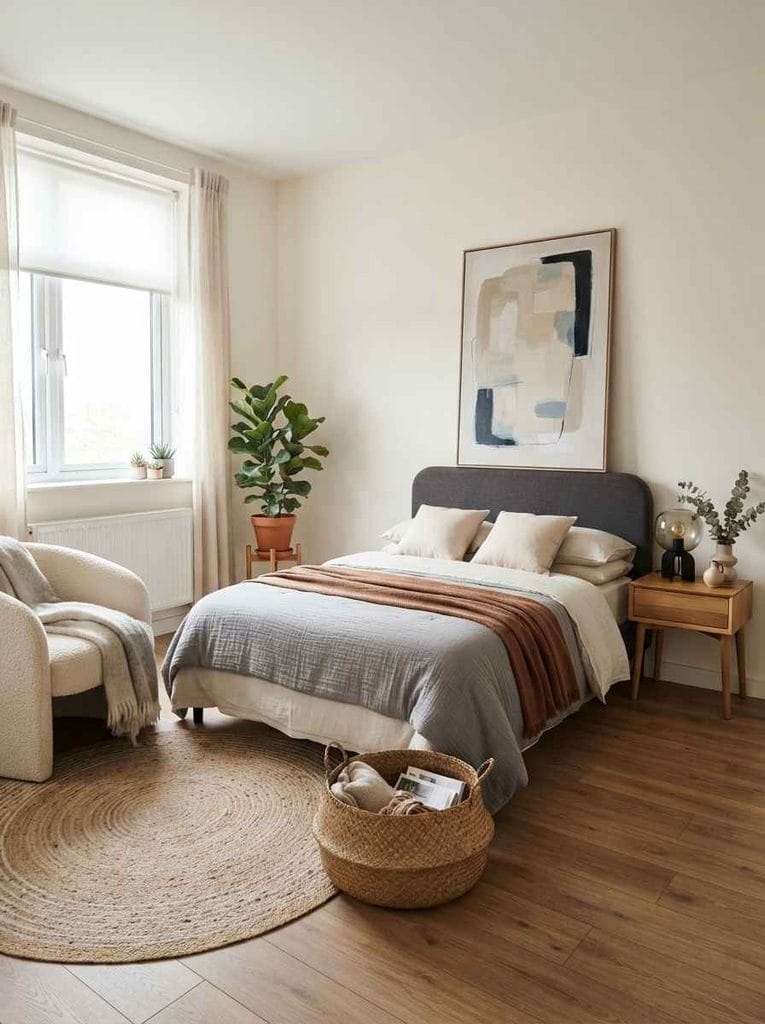
For a contemporary but adaptable look, try wood, woven textures, soft curves and warm lighting through movable furniture and textiles. Use what already suits the room instead of replacing pieces to follow a short-lived trend.
17. Keep a Simple Rental Bedroom Intentionally Minimal
Simple does not have to mean boring. Start with the essentials. Only add items that serve a purpose or genuinely make you happy. A simple bedroom might need only:
- A bed
- One or two bedside surfaces
- Good lighting
- Useful storage
- Curtains
- A rug
- One piece of artwork
- A small amount of greenery
Choose two main colors from items you already own and repeat one accent color in a pillow or throw. Photograph the bed and storage together before purchasing additional decor; this simple test can prevent mismatched impulse buys.
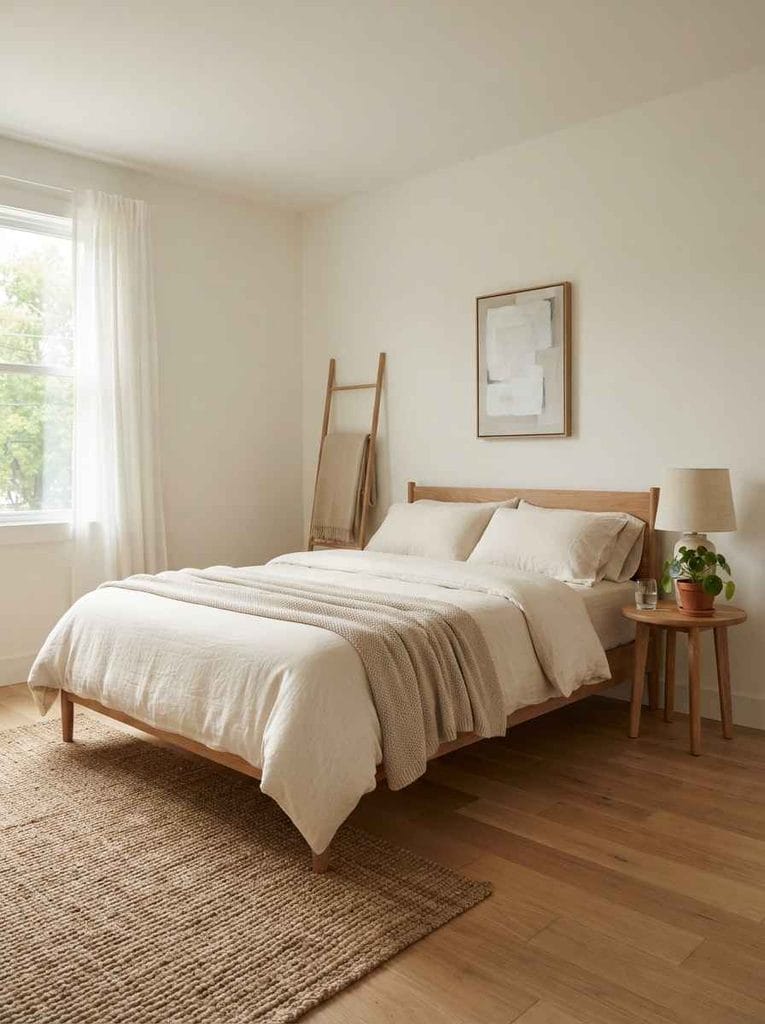
18. Make a Small Rental Bedroom Feel Larger
Small bedrooms need a little planning because every piece of furniture affects circulation. Start by measuring the room and deciding where the bed can go without blocking the door, wardrobe, window or main walking path. Then use tricks:
- Choose appropriately scaled furniture.
- Use stable vertical storage.
- Keep the floor relatively clear.
- Position a mirror to reflect light safely.
- Avoid too many small decorative objects.
- Use a consistent color palette.
- Layer lighting instead of relying on one fixture.
The goal is not to make the bedroom literally bigger; it is to make daily movement easier. Mark the proposed furniture footprints with painter’s tape, open doors and drawers, and walk the route before spending money.
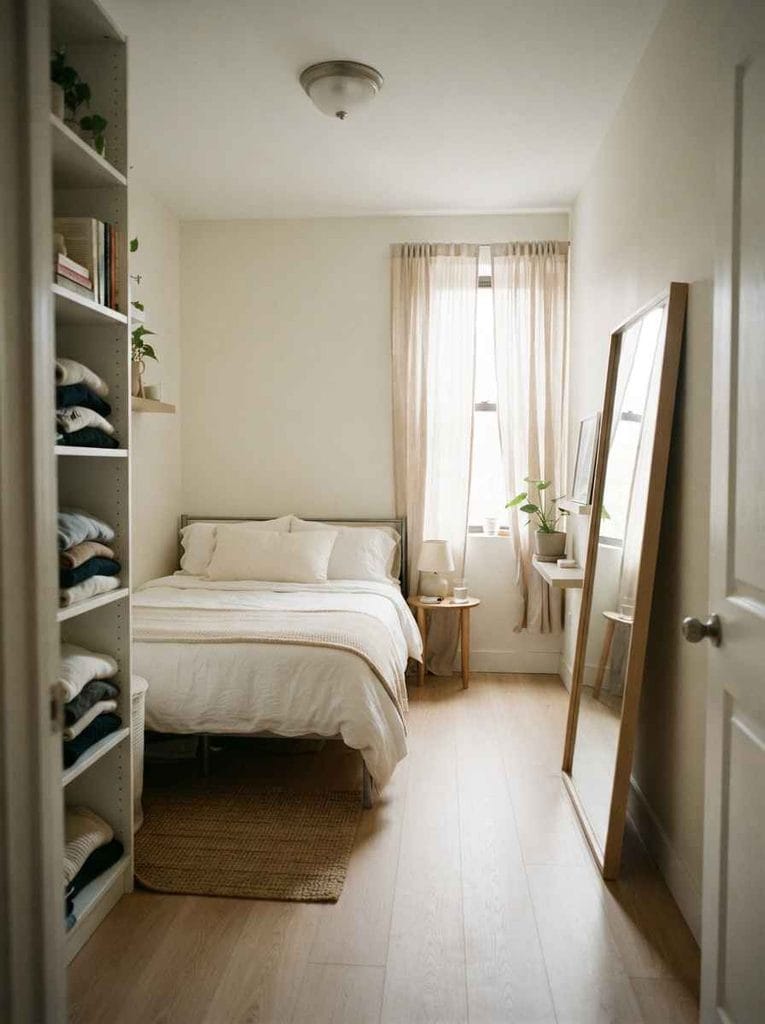
19. Style a Master Bedroom Without Permanent Changes
In a larger rented main bedroom, unused corners can feel disconnected. Start with the bed, then add a purposeful zone only if there is room to move comfortably. A reading chair or compact desk should not block wardrobes, doors or heater clearances.
Place a rug to tie the furniture together and add curtains and layered lighting to finish the look.
In a rented main bedroom, prioritize portable items you can take to your next home rather than investing in fixtures you may need to leave behind.
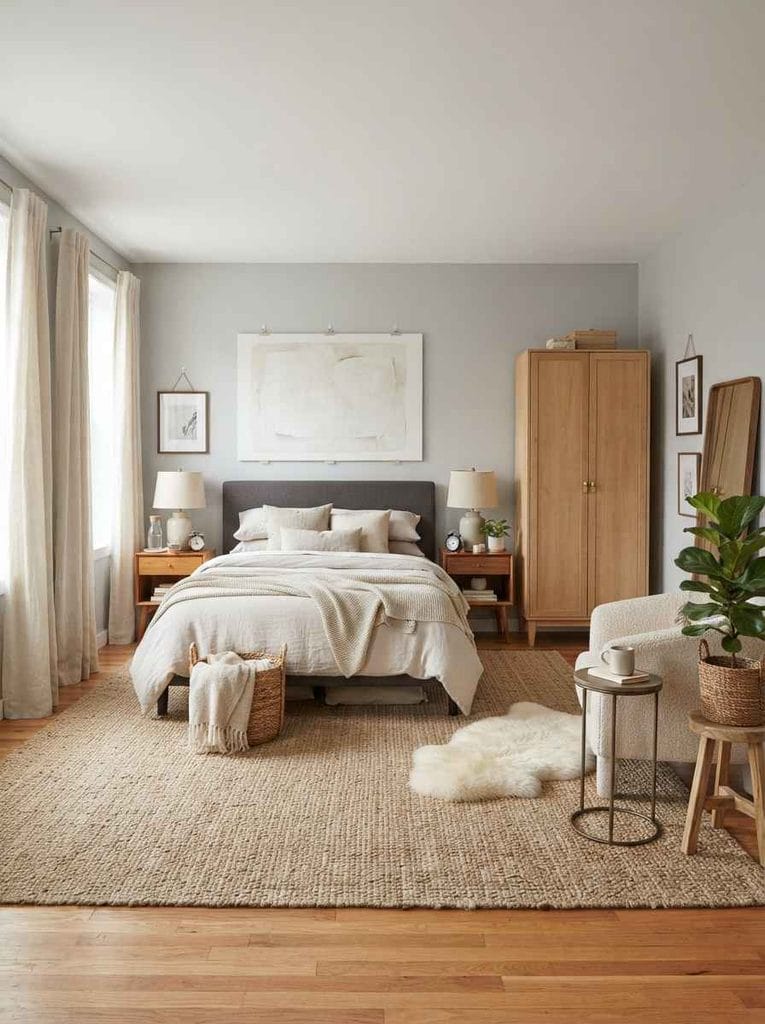
20. Plan Your Rental Bedroom Makeover Around Your Budget
You do not have to buy everything at once.
A staged makeover can give a better result because you have time to decide what the bedroom really needs.
On a small budget:
Start by rearranging furniture, decluttering, restyling the existing bedding, moving the lamps, and adding a few second-hand accessories.
A moderate budget:
Consider bedding, curtains, a rug, artwork or better bedside lighting.
A larger budget:
Prioritize one or two durable pieces, such as a well-sized rug, useful storage furniture, a headboard, or a comfortable chair that can move with you.
The key is to spend money on items that solve a problem instead of buying decoration just because the bedroom feels unfinished.
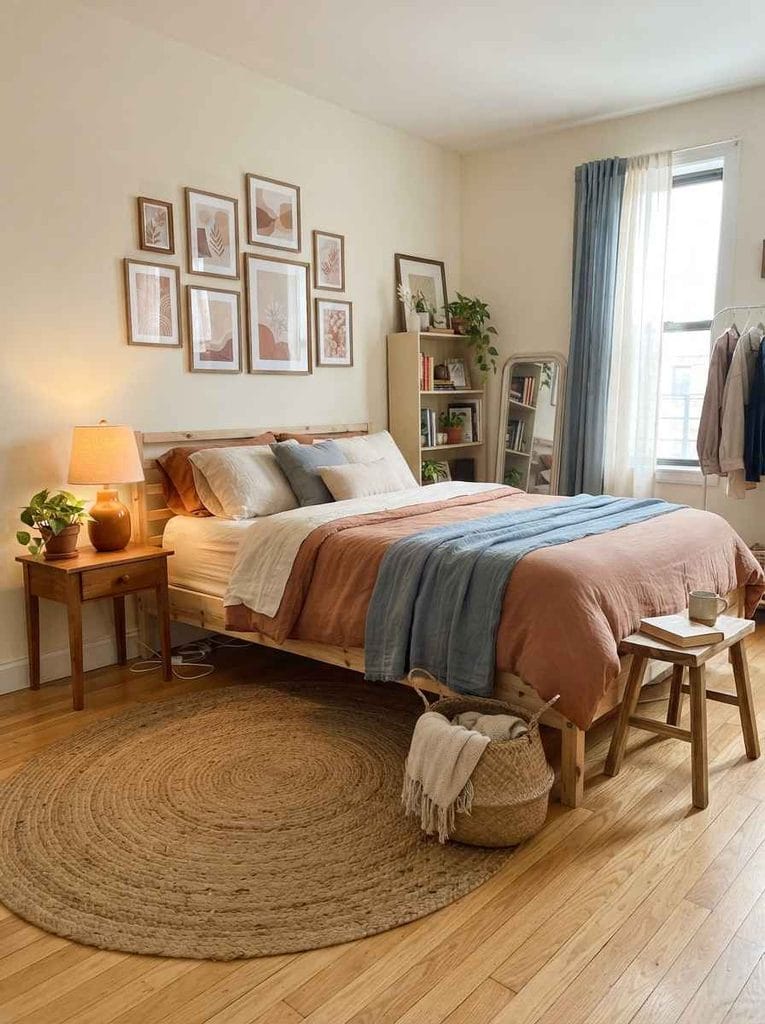
How to Decorate a Rental Bedroom Without Damaging It
Before making any changes, review your tenancy agreement and check what the landlord permits.
A good rule is to split changes into two categories.
| Easier to reverse | Check first |
| Bedding | Painting |
| Rugs | Drilling |
| Freestanding furniture | Permanent shelving |
| Lamps | Hardwired lighting |
| Plants | Changing fixtures |
| Leaning mirrors | Permanent wallpaper |
| Decorative accessories | Major furniture alterations |
| Portable storage | Structural changes |
Adhesive strips, removable wallpaper and similar products should still be handled carefully.
“Rental‑friendly” does not mean every product will work safely on every wall or painted surface. When you move into a rental take photographs of the bedroom before decorating. Keep the fixtures and removable hardware in a safe place if you replace them temporarily.
Small Bedroom Ideas for Renters: Start With the Layout
Some of the most useful bedroom ideas for renters are especially helpful when floor space is limited. A smart layout can make a small room feel much easier to use. If your rental bedroom is small, the layout matters just as much as the decor. These small bedroom layout ideas can help you arrange the bed, storage and walking paths more efficiently. For a broader whole-home system, use the small apartment organization checklist. For inexpensive finishing touches, see these budget-friendly home decor DIYs.
Start with the layout.
Place the bed first, then confirm that you can comfortably reach the door, wardrobe, windows and other important areas.
After that add the storage piece.
Only once those practical requirements are met should you add furniture.
Worked Example: Will a Bedside Table Fit?
Illustrative example: Suppose the gap between your bed and wall is 100 cm. A 35 cm-deep bedside table would leave 65 cm of floor space beside it, before accounting for handles or drawers. That may feel too narrow for your household, so mark the full table footprint with painter’s tape and test the route and drawer opening. If it is uncomfortable, choose a slimmer stable surface or keep essentials in a portable caddy. This is a furniture-planning example, not a universal accessibility or building-code clearance.
Common Small-Bedroom Layout Mistakes
- Blocking a door or wardrobe
- Using furniture that is too large
- Filling every corner
- Having too many small storage pieces
- Placing the bed where it blocks natural light
- Using only one light source
- Buying decor before solving storage
A small bedroom usually feels better when there is a clear visual path through the room.
Modern Rental Bedroom Ideas That Last
If you want your bedroom to feel current without chasing every passing trend, focus on materials and atmosphere rather than expensive statement pieces.
Warm neutrals, natural materials, tactile fabrics, layered lighting, softer shapes and more personal decorating are all useful directions for a modern bedroom.
The renter-friendly way to introduce them is through:
- Linen or linen-look bedding
- Natural wood furniture
- Woven baskets
- Soft rugs
- Curved mirrors or chairs
- Warm lamps
- Textured throws
- Plants
- Personal artwork
This approach gives you a modern bedroom without requiring a permanent renovation.
Five Checks Before Buying Rental Bedroom Decor
Before purchasing an upgrade, test it against the room you actually have. These checks help renters choose useful changes without repeating the decorating ideas above.
- Movement: Tape furniture outlines on the floor, open doors and drawers fully, then walk the route with a laundry basket.
- Safety: Follow anchoring instructions for tall or tip-prone furniture. If fixing is restricted, ask the landlord about safe anchoring or choose low, stable alternatives.
- Permission: Check the lease before adhesives, wallpaper, curtain hardware or electrical work. Removable products can still damage some finishes.
- Daily use: Check whether lamps and bedside items can be reached comfortably. Avoid trailing cords and unstable stools used as tables.
- Move-out value: Choose pieces that solve a real problem and can move with you. Photograph the original condition and keep any removed fittings.
Decision example: If a tall shelving unit fits but cannot be safely anchored, choose a lower cabinet and reduce what is stored there. If a rug catches the wardrobe door, test a smaller bedside rug with suitable non-slip backing instead.
Which Bedroom Layout Is Best for Renters?
There is no universal best layout for every rental bedroom. The right arrangement depends on the room’s shape, windows, doors, storage, outlets and furniture dimensions.
For a small rectangular bedroom, place the bed where it leaves the clearest practical walkway. For a larger master bedroom, create separate zones for sleeping, dressing and relaxing.
For a studio apartment, use rugs, furniture or lightweight dividers to visually separate the sleeping area from the rest of the space.
For an awkward room, work around fixed features rather than forcing furniture into positions that block radiators, doors or wardrobes.
The most important rule is simple: make the room comfortable to move through before worrying about decoration.
Make the Bedroom Comfortable for Different Needs
A rental bedroom should work for the people using it, not just look tidy in a photograph. If someone uses a mobility aid, has limited reach, shares the room or is sensitive to bright light, test the setup together before adding furniture. These are practical checks, not universal building-code clearances.
- Keep a usable route between the entrance, bed, wardrobe and necessary windows. Test with doors and drawers open.
- Put frequently used belongings and bedside essentials within comfortable reach, without unstable steps or heavy overhead storage.
- Try adjustable, glare-controlled lamps and simple storage labels where helpful. Secure cables away from walking routes.
For a shared room, ask each person which change would help most. A clear route and reachable bedside lamp may be more valuable than another decorative shelf. Where specialist adaptations are needed, discuss permissions and suitable options with the landlord and a qualified professional.
How to Make a Rental Bedroom Look Classy
A classy bedroom is usually less about expensive furniture and more about consistency.
- A limited color palette
- Coordinated bedding
- Warm, layered lighting
- One larger piece of artwork instead of many tiny pieces
- Natural-looking materials
- Clear surfaces
- A well-sized rug
- Curtains that complement the bedding
- A few meaningful accessories
Avoid filling the room with unrelated colors and decorations simply because there is empty space. A rental bedroom can look polished without looking expensive.
Renter-Friendly Wallpaper: What to Know Before You Install It
Peel-and-stick wallpaper can be one of the quickest ways to change the personality of a rental bedroom, but it should not be treated as universally damage-free.
- Read the manufacturer’s instructions.
- Check whether the product is suitable for your wall surface.
- Test a small inconspicuous section when appropriate.
- Check your tenancy agreement.
- Follow the recommended installation and removal method.
- Keep the original wall condition in mind.
If full wallpaper feels too risky, consider a smaller accent treatment or removable decorative pieces instead.
A Budget-Smart Order for Rental Bedroom Changes
Start with free changes: declutter, reposition the bed and lamps, and restyle the bedding you already own. Next, choose the one portable purchase that solves the biggest daily problem, such as a reachable bedside lamp, a rug that does not catch doors, or compact storage. The budget planner below helps compare costs and decide whether an item is worth taking to your next home.
Rental Bedroom Budget Planner: Portable Upgrades
Quick answer: Improve the everyday problem first. Rearrange the bedroom and test existing lighting before buying a portable upgrade. Keep moving costs in mind and check lease terms.
These are illustrative budgets, not current retail prices. Measure first and check local costs.
| Budget | First move | Check |
|---|---|---|
| No spend | Declutter and rearrange | Door and wardrobe access |
| About $35 | Portable lamp or used bedside surface | Stability and cord safety |
| About $100 | Compare rug, bedding or low storage | Measurements and portability |
Is an upgrade worth buying?
Choose items you will use often, can take with you and can fit without blocking drawers or doors. Check anchoring instructions for tip-prone furniture.
What if drilling is prohibited?
Try bedding, lamps and low stable furniture. Adhesives and wallpaper are not suitable for every surface. Ask about safety fixings rather than leaving tall furniture unsecured.
Worked example: A renter has a cramped bedside path, a plain wall and a limited budget. Buying artwork or a tall bookcase will not solve the daily inconvenience. Moving the bed, removing an unused chair and trying a narrower bedside surface solves the walking route first; a portable reading lamp can follow later. Photograph the original arrangement and keep approved fittings so the room can be returned to its agreed condition when moving out.
Before you buy: Measure the furniture footprint, not only the available wall length. Open drawers and wardrobe doors fully, then walk the route carrying a laundry basket. Check whether a new piece can be cleaned, returned or reused in a future home. For shared bedrooms, prioritize easy access for each person over matching furniture.
Safety and lease check: A “no-drill” label does not make every product safe or suitable for every wall. Follow the manufacturer’s load and installation guidance, especially for heavy mirrors and tip-prone furniture. If a required anchor conflicts with the lease, seek permission or choose a low, stable alternative rather than leaving a tall unit unsecured.
Final Renter-Friendly Bedroom Checklist
Before decorating
- Check your rental agreement.
- Photograph the original room.
- Measure the bedroom.
- Measure your existing furniture.
- Identify storage problems.
- Check available outlets.
- Decide on a color palette.
- Set a decorating budget.
Before buying
- Measure furniture carefully.
- Check whether the item will fit through the doorway.
- Consider whether you can take it to your next home.
- Check adhesive product instructions.
- Avoid buying items that solve no actual problem.
Before moving out
- Remove temporary wall treatments carefully.
- Remove adhesive products according to instructions.
- Return temporary furniture or fixtures to their original arrangement.
- Clean the room.
- Check walls and surfaces.
- Photograph the room again.
Frequently Asked Questions
What are some renter-friendly bedroom decor ideas?
Some of the easiest renter-friendly bedroom decor ideas include layered bedding, rugs, curtains, freestanding storage, portable lighting, leaning mirrors, plants, artwork and carefully selected removable wall decor. The best choices are generally those that can be removed or taken with you when the tenancy ends.
How can I make a small rental bedroom look bigger?
Start with the layout rather than decoration. Keep walking paths clear, choose appropriately sized furniture, use vertical storage, reduce clutter and position a mirror where it can reflect natural light. A consistent color palette and layered lighting can also make the room feel more open.
Which bedroom design trends work well in rentals?
Choose adaptable ideas rather than expensive trends: warm neutrals, tactile fabrics, layered lighting, soft shapes and freestanding furniture can feel contemporary without changing the property. Use portable pieces you genuinely like, and check dimensions and lease restrictions before buying.
How can I make my rental bedroom look classy?
Use a limited color palette, coordinate your bedding and curtains, layer your lighting, keep surfaces uncluttered and choose one or two larger statement pieces. A well-sized rug and good-quality-looking textiles can also make the room feel more polished.
What is the best bedroom layout?
There is no universal best layout. The right arrangement depends on the room’s dimensions, doors, windows, storage and fixed features. In any layout, prioritize comfortable circulation and access to the bed, wardrobe, door and windows.
How can I decorate a furnished rental bedroom?
Work with the furniture you already have rather than trying to replace everything. Use bedding, rugs, lighting, artwork, plants and accessories to create a consistent look. Styling a plain dresser or bedside table can also make landlord-provided furniture feel more intentional.
What are common bedroom layout mistakes?
Common problems include blocking doors or wardrobes, using furniture that is too large, filling every corner with decor, creating narrow walking paths and buying storage before measuring the room. In a rental, also consider fixed features such as radiators, windows and built-in wardrobes before deciding where furniture should go.
Is renter-friendly wallpaper safe for rental walls?
Not necessarily in every situation. Different products and wall surfaces can react differently, and removal may affect some paint or finishes. Check the product instructions and your tenancy agreement, and test a discreet area when appropriate before committing to a larger installation.
Final Thoughts
The most useful bedroom ideas for renters improve comfort and everyday movement without permanent changes. Start by measuring the room, checking the lease and solving one practical problem: bed placement, lighting, storage or privacy.
Your next step: choose one reversible upgrade, test the layout with the furniture you already have, and take a photograph before spending money. Recheck door access, safe anchoring and surface compatibility. If the change still works after a week, decide whether another purchase is needed.