
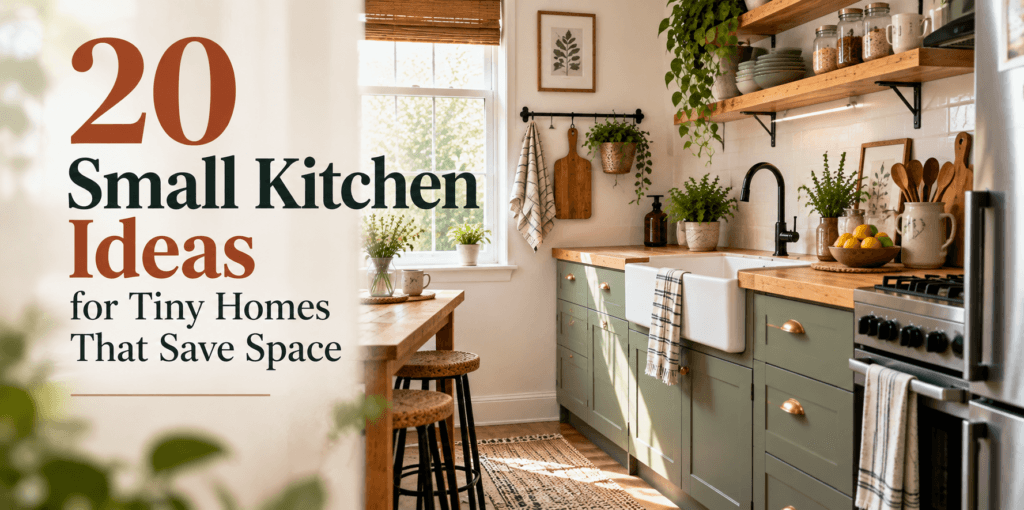
Color can make a compact kitchen feel intentional rather than cramped when the layout stays practical. These colorful small kitchen ideas combine space-saving layouts, useful storage, and controlled color so you can add personality without sacrificing everyday function.
Quick Takeaway: Choosing Color for a Small Kitchen
Choose a layout that supports cooking and movement, then repeat color in one or two places. Galley and one-wall kitchens can suit narrow apartments; L-shaped layouts open up a corner; U-shaped plans add storage only when there is enough clearance. Renters can start with reversible accents instead of permanent finishes. Keep worktops, appliance doors and the main walkway functional before adding decorative layers.
Which Colorful Small Kitchen Layout Fits Your Home?
| Space or need | Layout to consider | Color idea |
|---|---|---|
| Narrow room | Galley or one-wall | Colorful backsplash or lower cabinets |
| Compact corner | L-shaped | One cabinet color with lighter walls |
| More storage needed | U-shaped, if clearance allows | Colored base units and simple upper walls |
| Rental or tight budget | Keep the existing layout | Colorful dishes, washable textiles and removable accents |
Decision rule: Measure the space and test colors in both daylight and evening light before committing. A bold accent works best when there is a calmer background and enough clear work surface. For real-world compact kitchen layouts, browse House & Garden’s small-kitchen examples.
20 Colorful Small Kitchen Ideas by Layout and Style
Browse these examples for inspiration, then adapt the palette to your actual room dimensions, lighting and cooking needs. The illustrations are not measured floor plans; check appliance clearances and local building requirements before changing the layout.
Jump to a kitchen idea: narrow galley · pink L-shaped · one-wall studio · yellow U-shaped · boho terracotta · black and green · maximalist color. Choose a style to explore, then check your own dimensions and door clearances before copying a look.
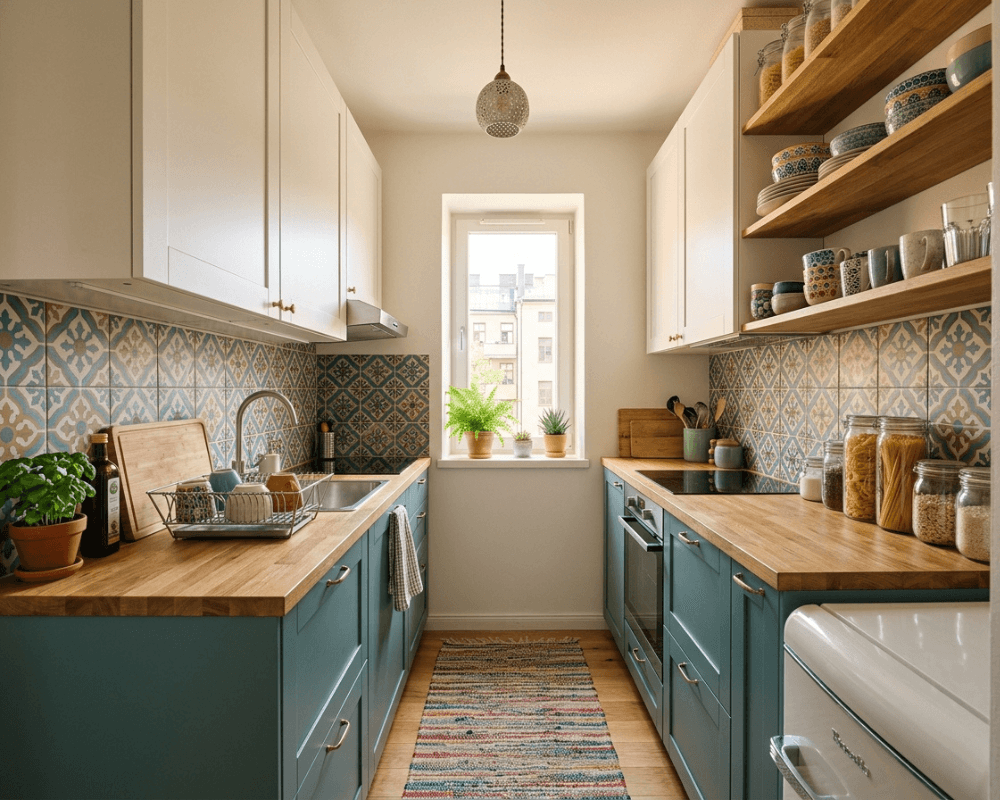
1. Narrow Galley Kitchen with Colorful Tiles
A galley kitchen uses two parallel runs of cabinets, making it practical for a narrow room when there is enough clearance between them. Choose colorful tiles or teal lower cabinets as the main accent, and keep everyday tools close to the preparation area. Avoid stools or open cabinet doors that block the walkway. For more ways to make limited storage work, see our small space organization hacks.
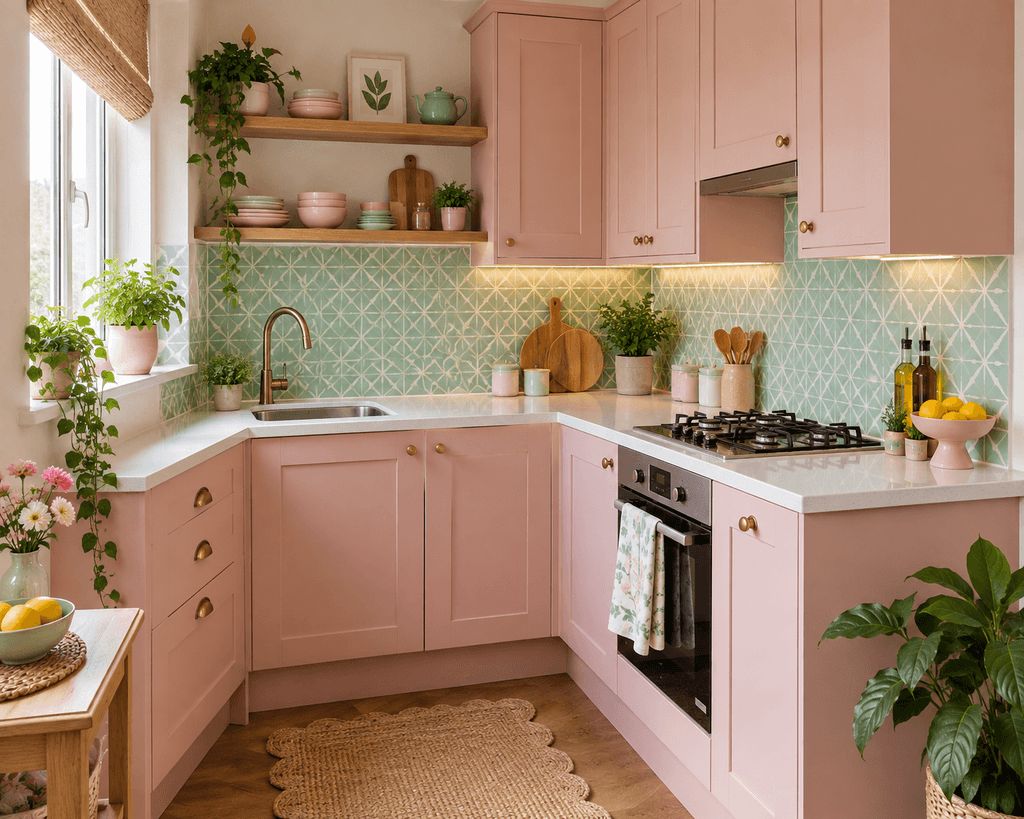
2. L-Shaped Small Kitchen with Pink Cabinets
An L-shaped kitchen uses two adjoining walls, leaving one corner open for movement. Pink lower cabinets and mint tiles can make the corner feel lively while a pale worktop keeps the preparation area visually calm. Try the layout first: stand at the sink while another person opens the fridge and corner cupboard. If the doors clash or block the route, fix the layout before investing in finishes. For renters, repeat pink through everyday dishes and washable textiles rather than changing cabinet fronts.
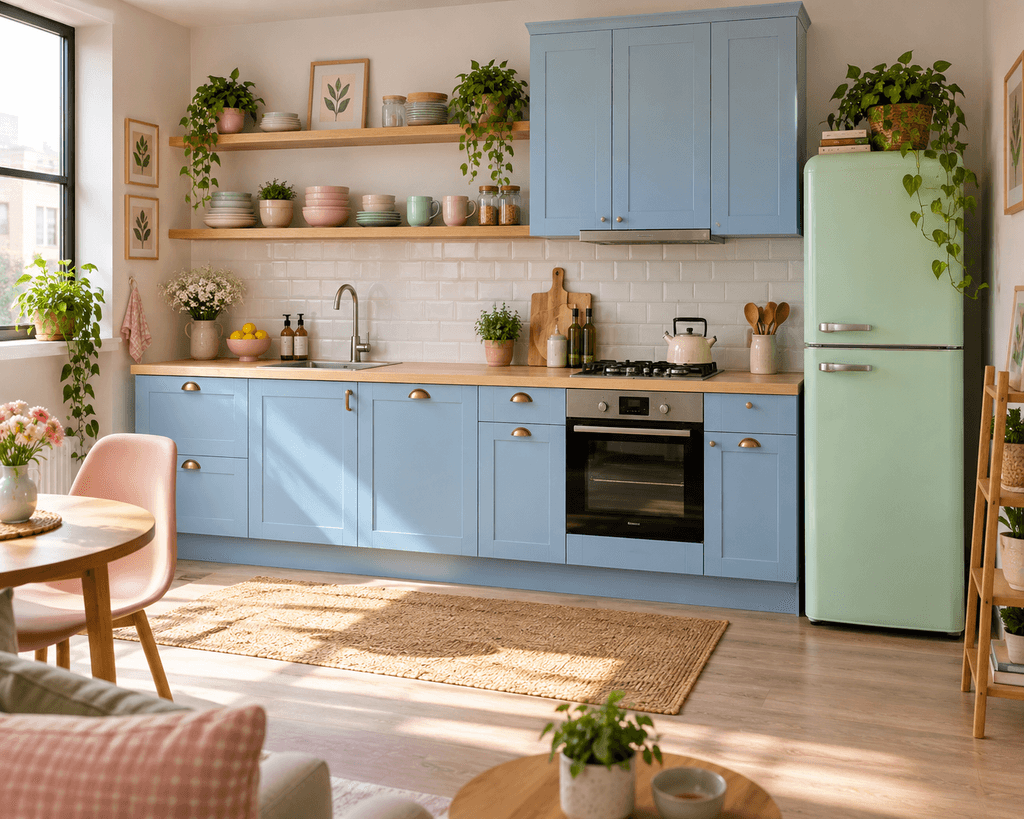
3. One-Wall Studio Apartment Kitchen
A one-wall kitchen groups storage, sink and cooking along one side of a studio, leaving the remaining floor area for living or dining. Sky-blue cabinets can visually define the cooking zone without adding a divider. Keep it usable: check where a chopping board fits, how the fridge door opens and whether a nearby dining chair blocks the route. Choose closed storage for rarely used equipment and limit open shelves to items you can reach and clean easily. For additional inspiration, explore these small kitchen ideas from House & Garden.
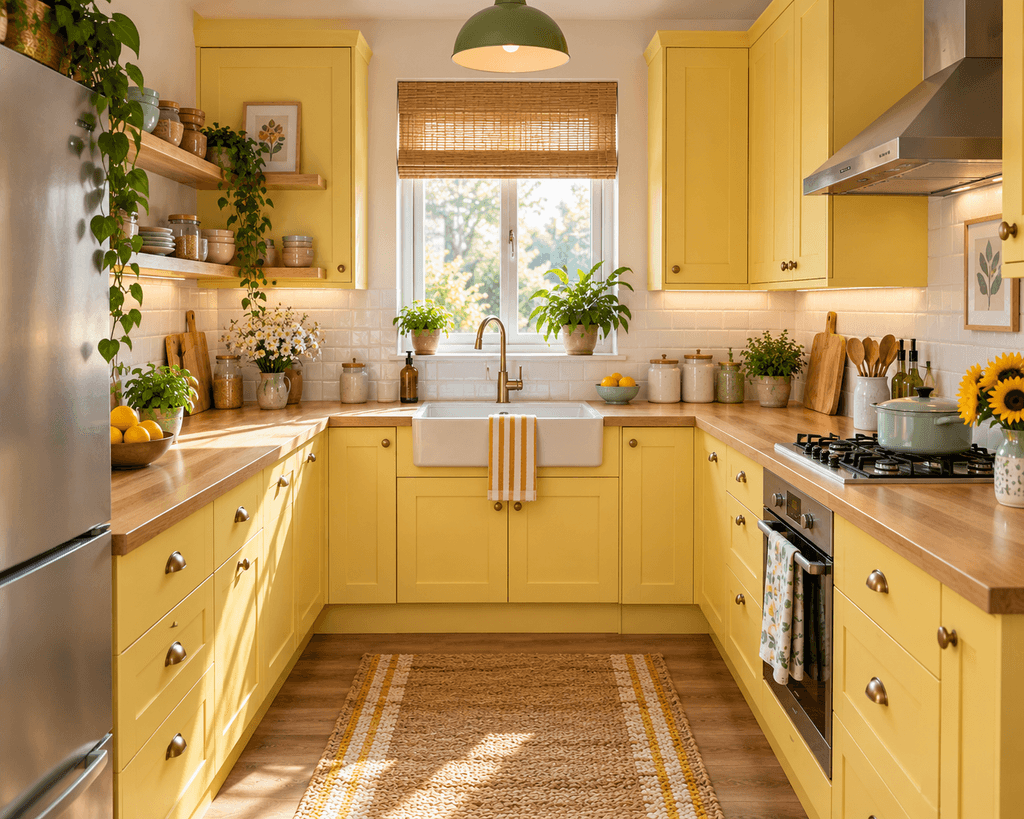
4. U-Shaped Small Kitchen with Yellow Cabinets
A U-shaped kitchen adds worktops and storage on three sides, but it is only practical when the center allows comfortable movement and appliance doors can open. Soft yellow lower cabinets with simpler upper walls can add warmth without crowding the view. Measure before buying: mark the cabinet depth and door swings on the floor, then test whether two people can use the room safely. If the center becomes cramped, keep the yellow palette but consider an L-shaped arrangement rather than forcing a U.
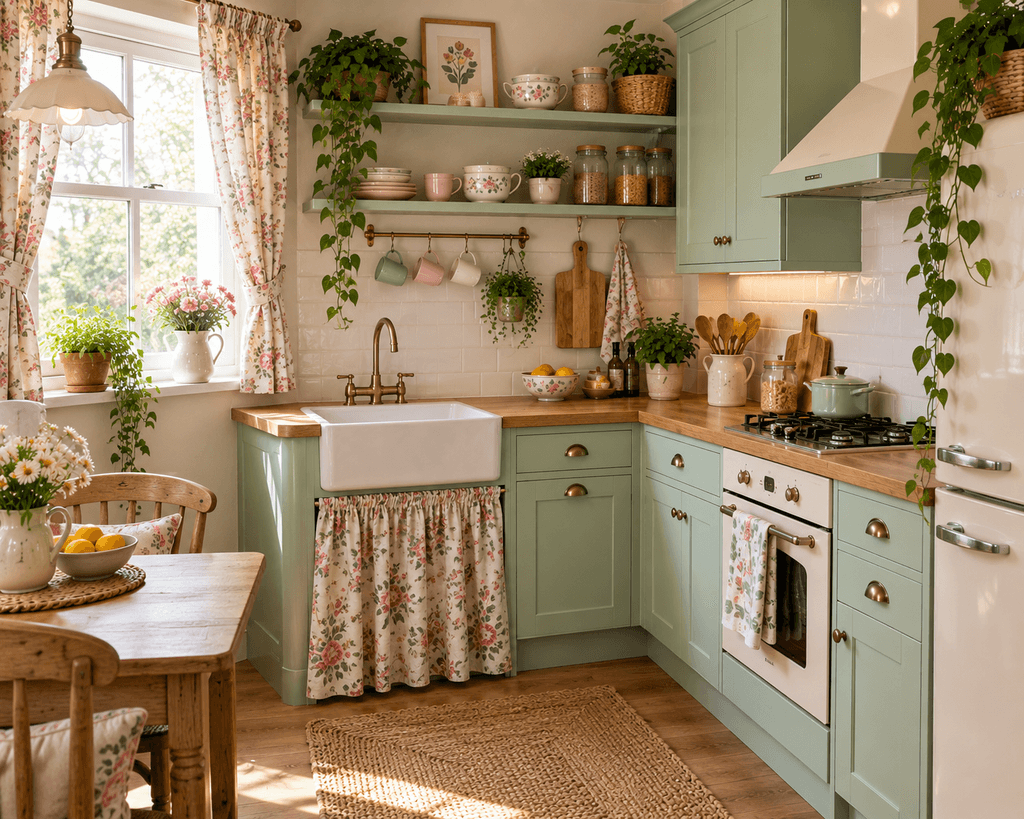
5. Small Cottage Kitchen with Floral Curtain
A cottage-style kitchen can feel welcoming with mint cabinets, vintage dishes and woven baskets, but keep the palette controlled in a small room. Choose one washable floral textile away from the hob, and repeat its colors in two or three accessories. For real-world inspiration, browse these small kitchen designs on Houzz.
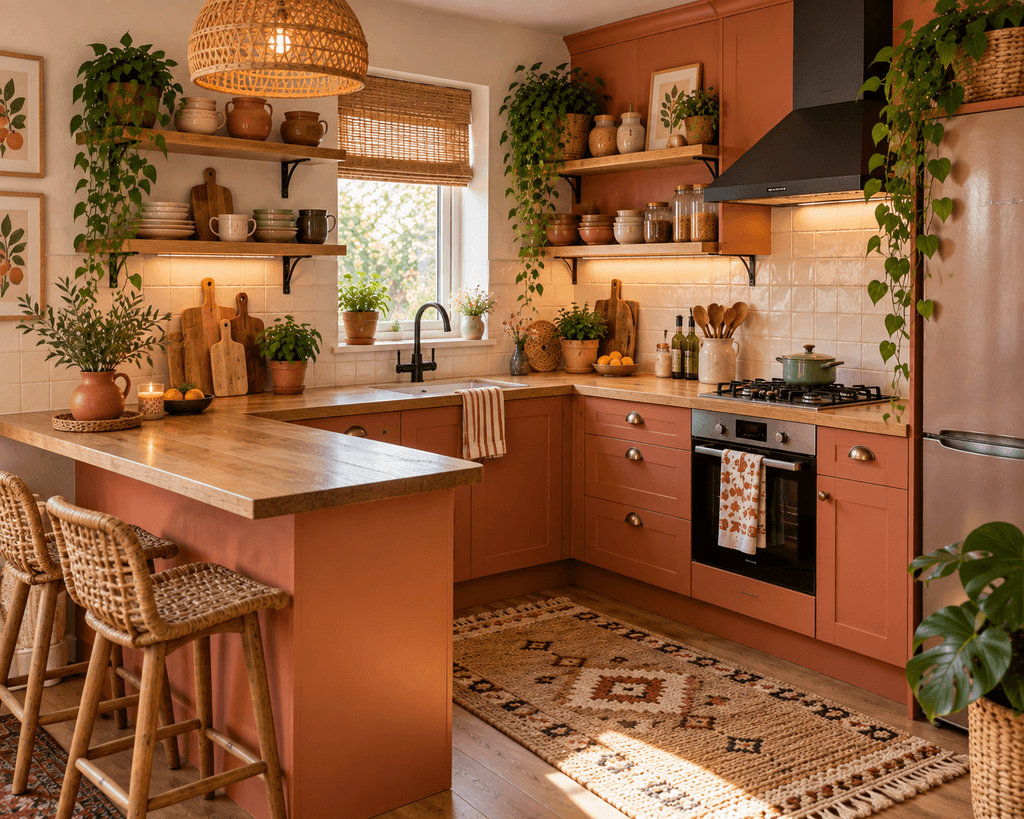
6. Boho Small Kitchen with Rattan and Terracotta
For a compact boho kitchen, use terracotta as a repeated accent in an everyday utensil pot, washable runner and a few ceramics. Pair it with natural wood and a quiet wall color so the room does not feel overloaded. Small-space test: remove one display item for every new one you add, and check that baskets or hanging decor do not obstruct cabinet doors, ventilation or cleaning. Keep woven shades, fabric and dried arrangements away from burners and hot appliances. Renters can start with movable ceramics rather than fixed tile.
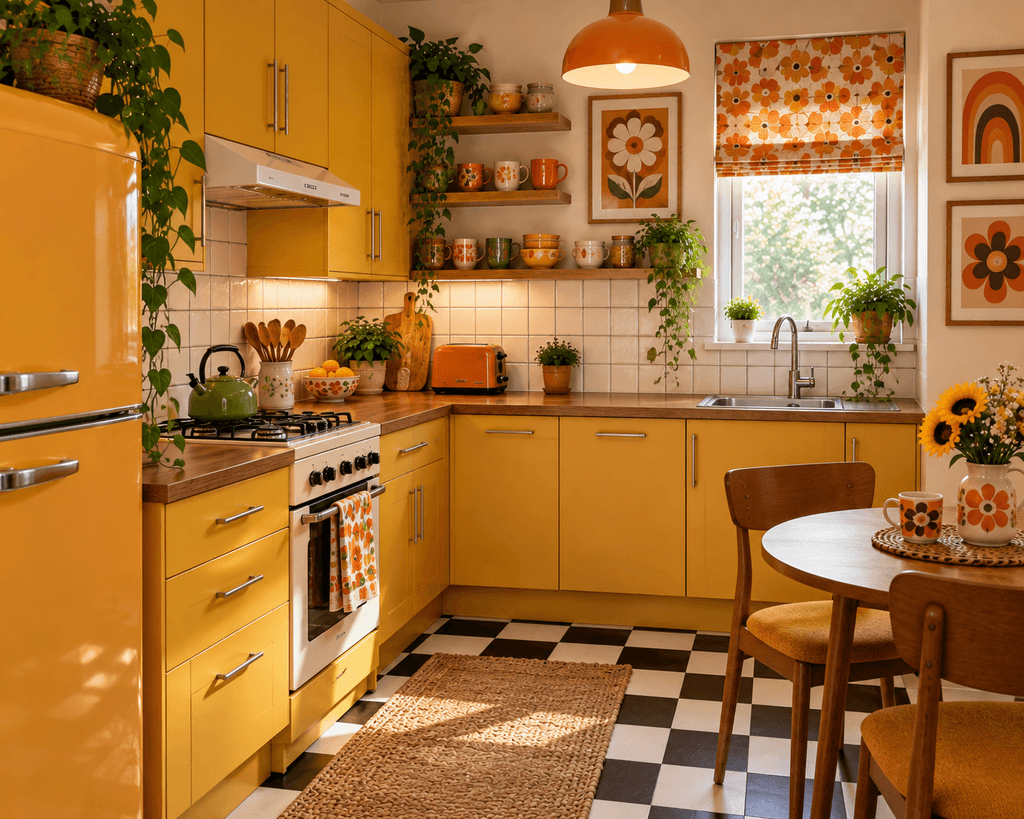
7. Retro 70s Small Kitchen
For a retro look without a full renovation, try a checkerboard washable mat, mustard-yellow accessories and one vintage-style print. Let one pattern lead while keeping the worktop clear. Owners can test a cabinet-paint sample before changing every door.
8. Modern Black and Green Small Kitchen
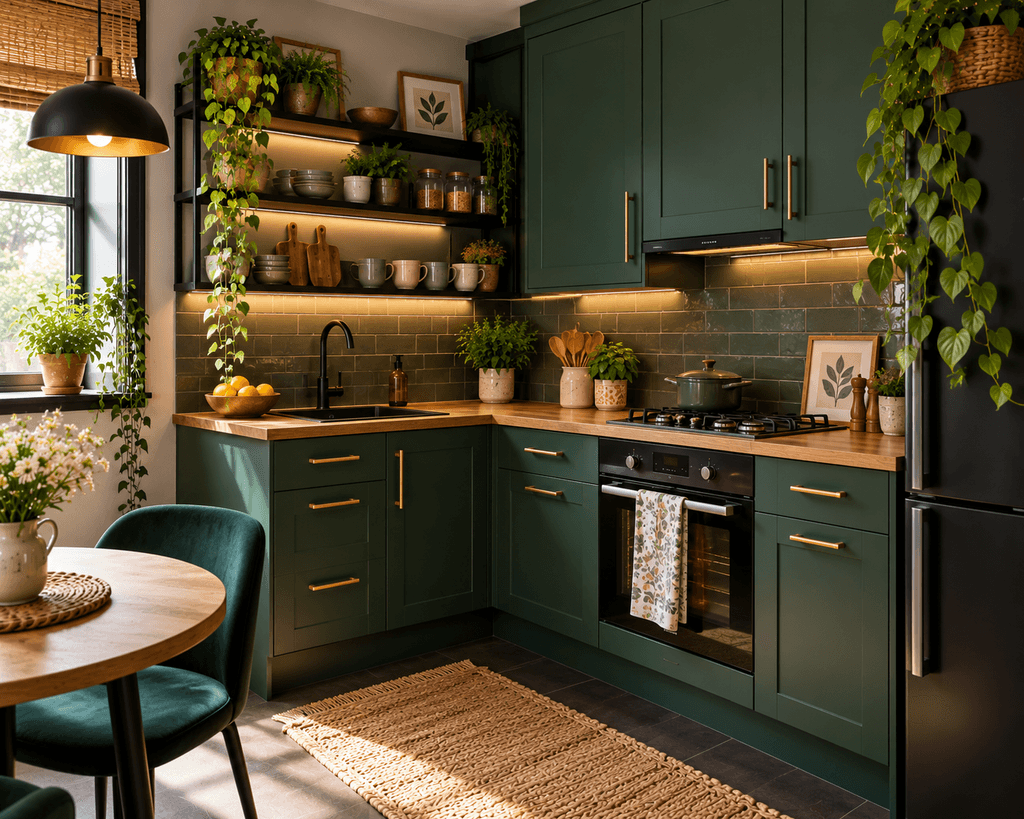
Deep forest green can work in a small kitchen when paired with lighter worktops, effective task lighting and restrained accents. Test the real room: hold a green sample beside the existing worktop in daylight and again with the task lights on. Check the chopping area, not just the overall mood; if it stays dim, improve lighting before choosing darker finishes. Start with one lower-cabinet run, use wipe-clean finishes in splash zones, and keep the rest of the room light enough to make everyday tasks comfortable.
9. Scandinavian Colorful Small Kitchen
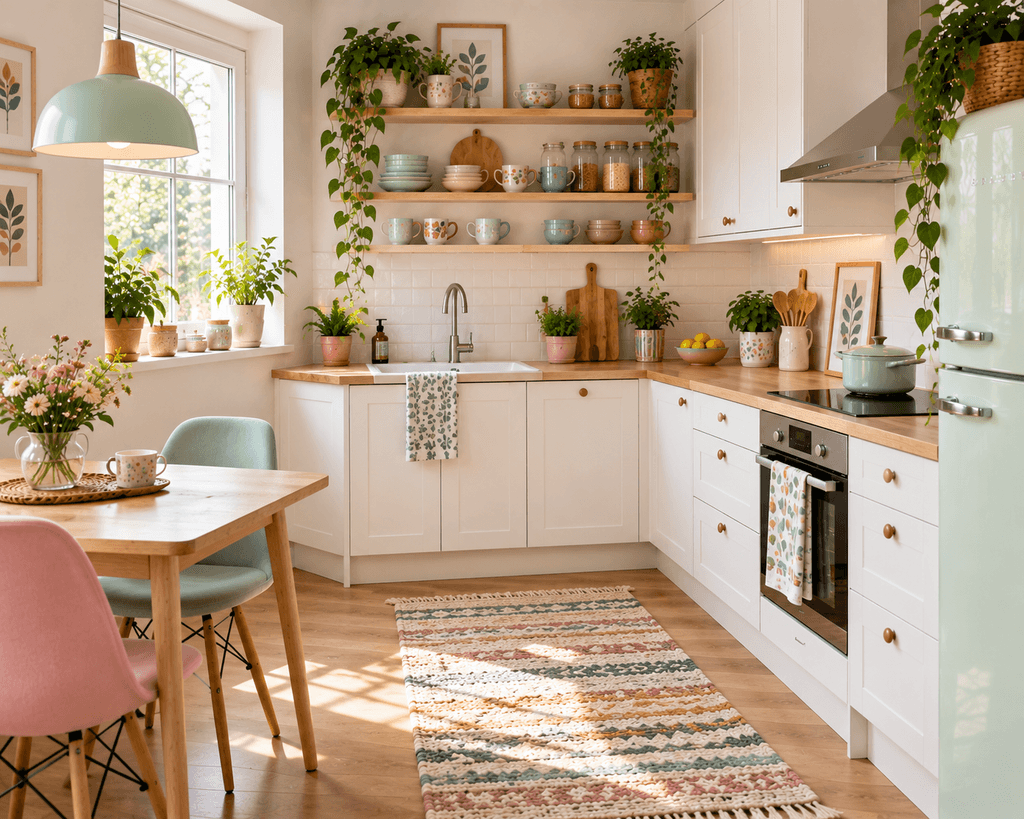
A Scandinavian-inspired kitchen works best when storage stays simple. Keep cabinets pale, then add color with pastel chairs, mugs, a washable runner or artwork. Choose accessories you actually use so the compact work area remains practical.
10. Small Kitchen Under the Stairs
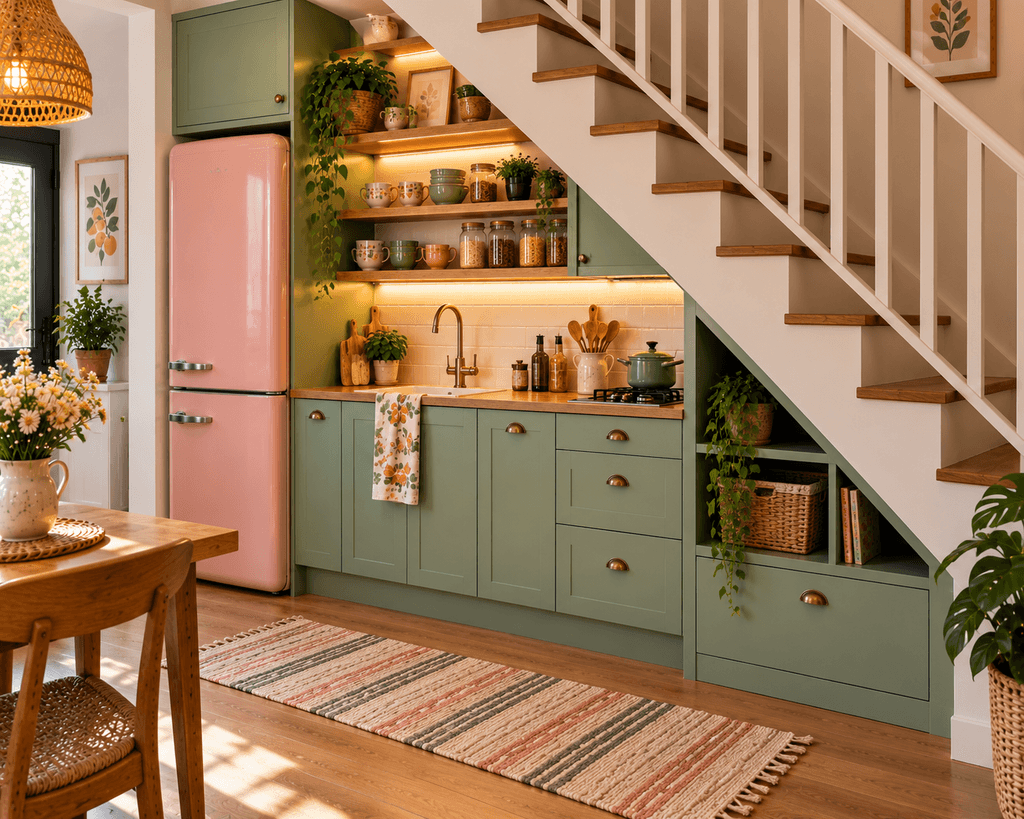
An under-stairs kitchen may use otherwise empty space, but it is not a simple DIY conversion. Cooking appliances, ventilation, fire separation, wiring and access require professional assessment under local rules. If those changes are not practical, consider storage or a preparation surface instead. For connected layouts, see our open plan kitchen and dining room ideas.
11. Parisian Small Kitchen with Pastel Details
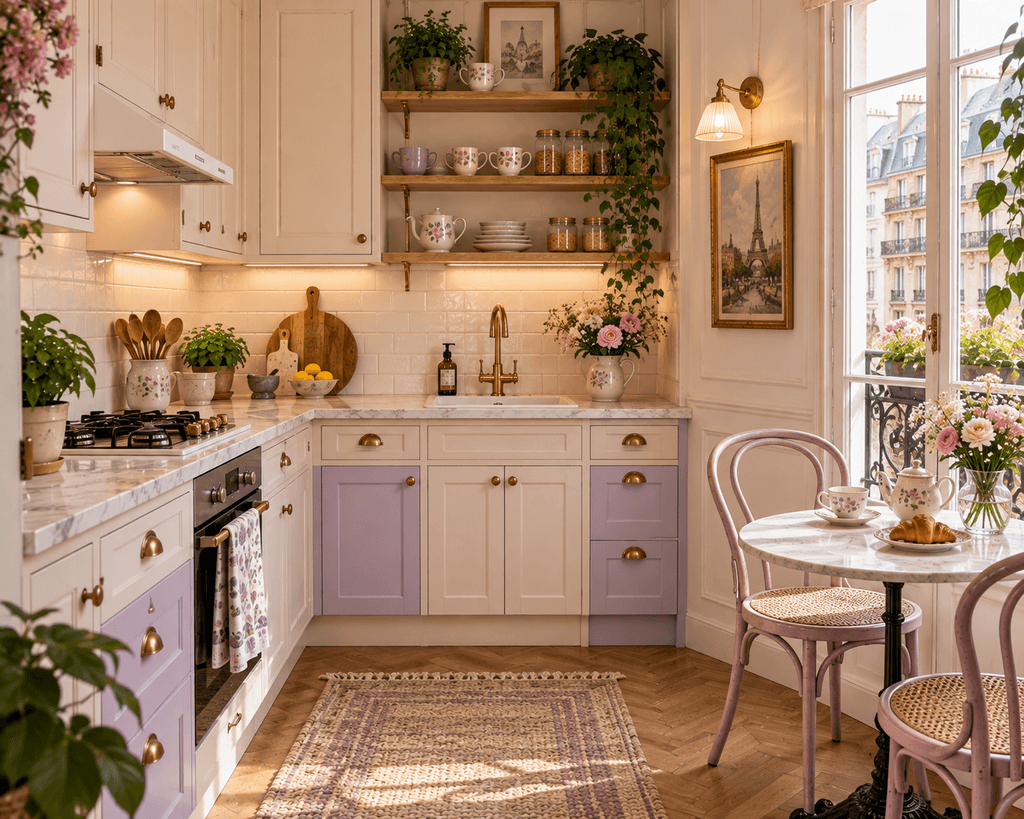
Create a Parisian-inspired look with cream cabinets, a lavender accent, brass-look hardware and a compact bistro table if there is room to pull out the chairs. Renters can use textiles and accessories instead of replacing cabinet fronts. Keep the table out of the route between the sink, hob and refrigerator.
12. Tropical Small Kitchen with Bold Green Wallpaper
Use botanical green as a focal accent on a wall away from the hob, or repeat it through washable accessories with bamboo and light wood. Practical check: look for condensation, grease splashes and frequent wiping before selecting a wall covering. A removable product is not automatically safe for every paint finish or heat-exposed area; check the maker’s surface, moisture and temperature instructions, test discreetly where appropriate, and confirm rental permissions. If the wall gets damp, use movable green accessories instead.
13. Small Kitchen with Arched Moroccan Niche
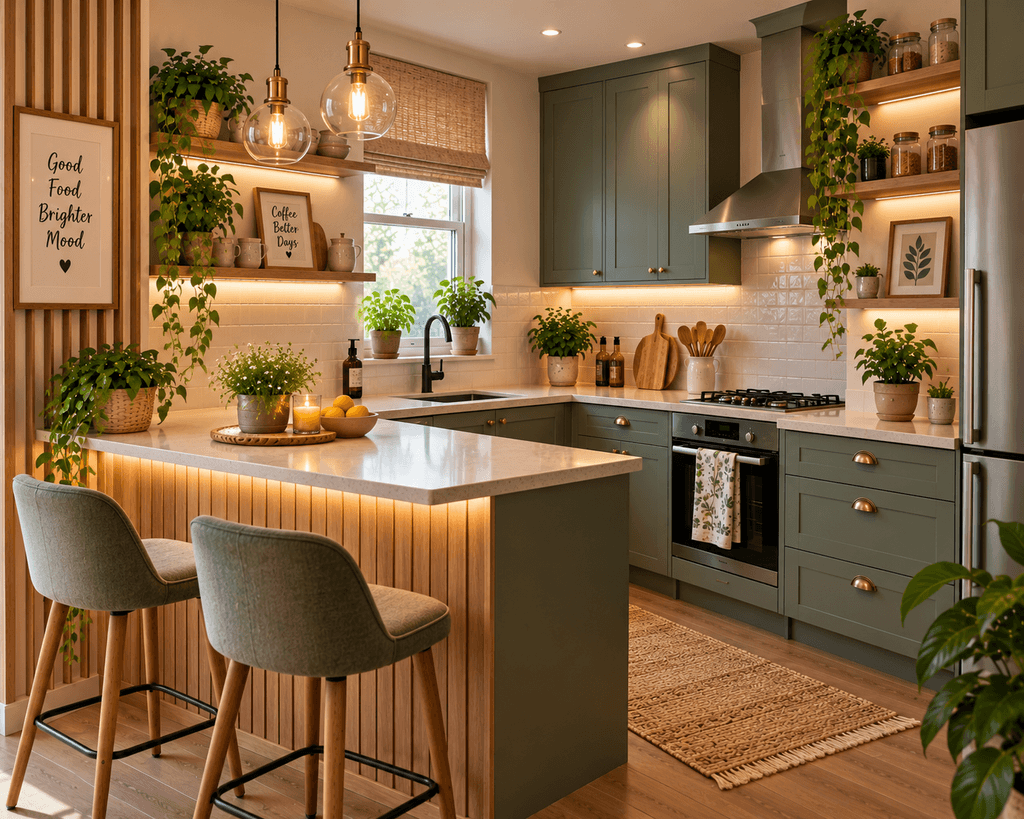
A teal cabinet run or small area of patterned tile can give a compact kitchen a Moroccan-inspired focal point. Balance intricate patterns with quieter worktops and simple storage. A decorative arched niche is a structural change, not a quick DIY task. To borrow the shape without altering a wall, try an arched print or a curved-edge tray on an existing shelf away from the hob and splash zones. Keep the preparation surface clear.
14. Industrial Small Kitchen with Color Pop
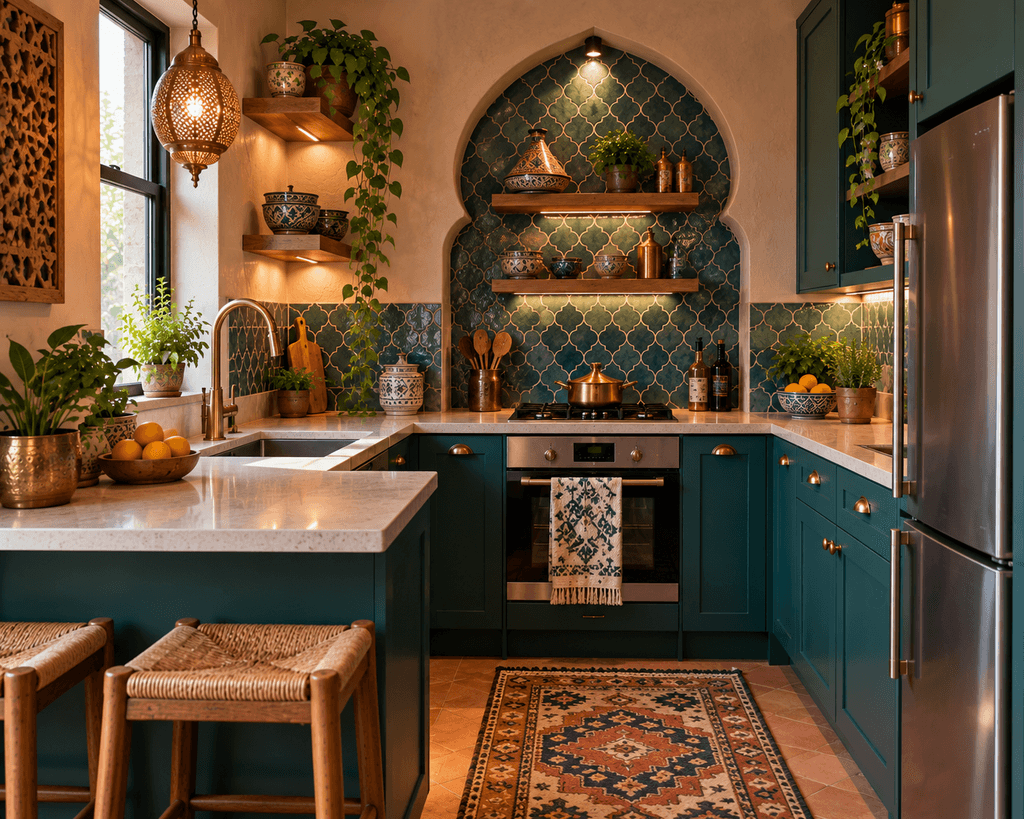
Start with one cobalt-blue backsplash or a few bright accessories against charcoal cabinetry and exposed-brick textures. Keep shelving selective so the space remains easy to clean, and choose finishes suited to grease and moisture. One accent color can do most of the visual work.
15. Tiny Rustic Farmhouse Kitchen
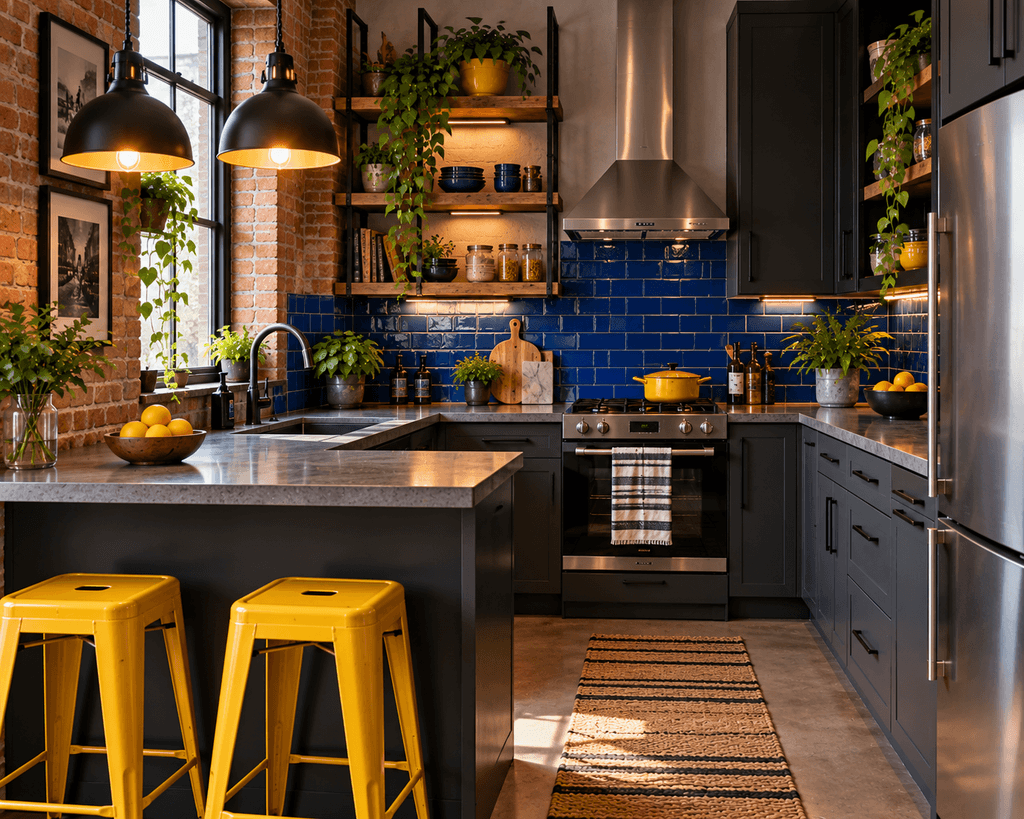
Combine cream or sage cabinets with warm wood, simple ceramics and a few copper-toned accents for a farmhouse look. Follow care instructions for butcher-block worktops, and keep fabric curtains, dried herbs and other combustible decorations away from the hob.
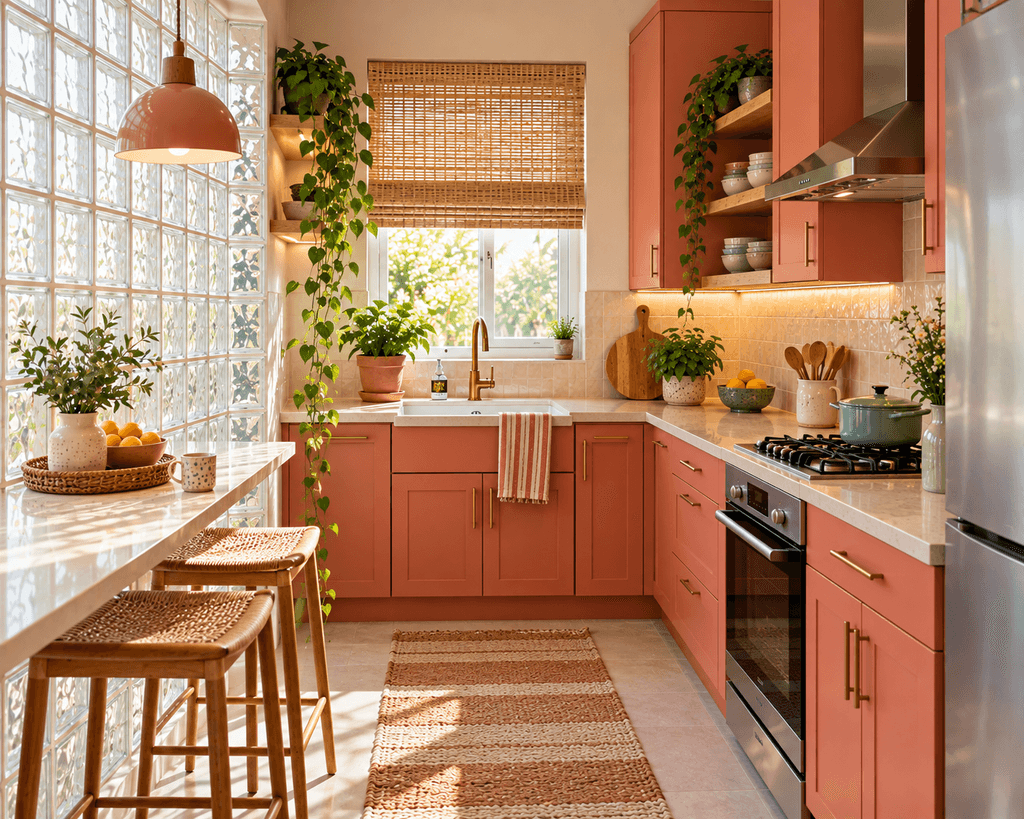
16. Small Kitchen with Glass Block Wall
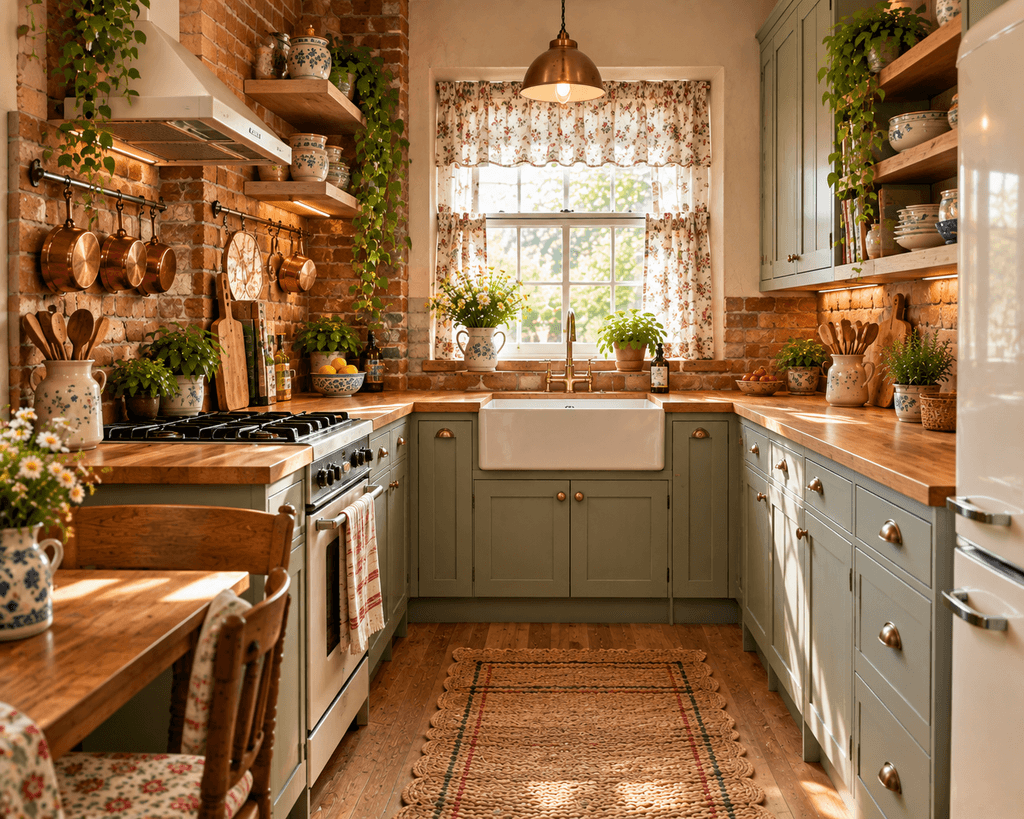
Glass blocks can bring borrowed light into a compact kitchen while preserving some privacy. Pair them with coral accents and pale worktops instead of adding competing patterns. Installing a glass-block wall may affect structure or services, so have it assessed before altering the wall.
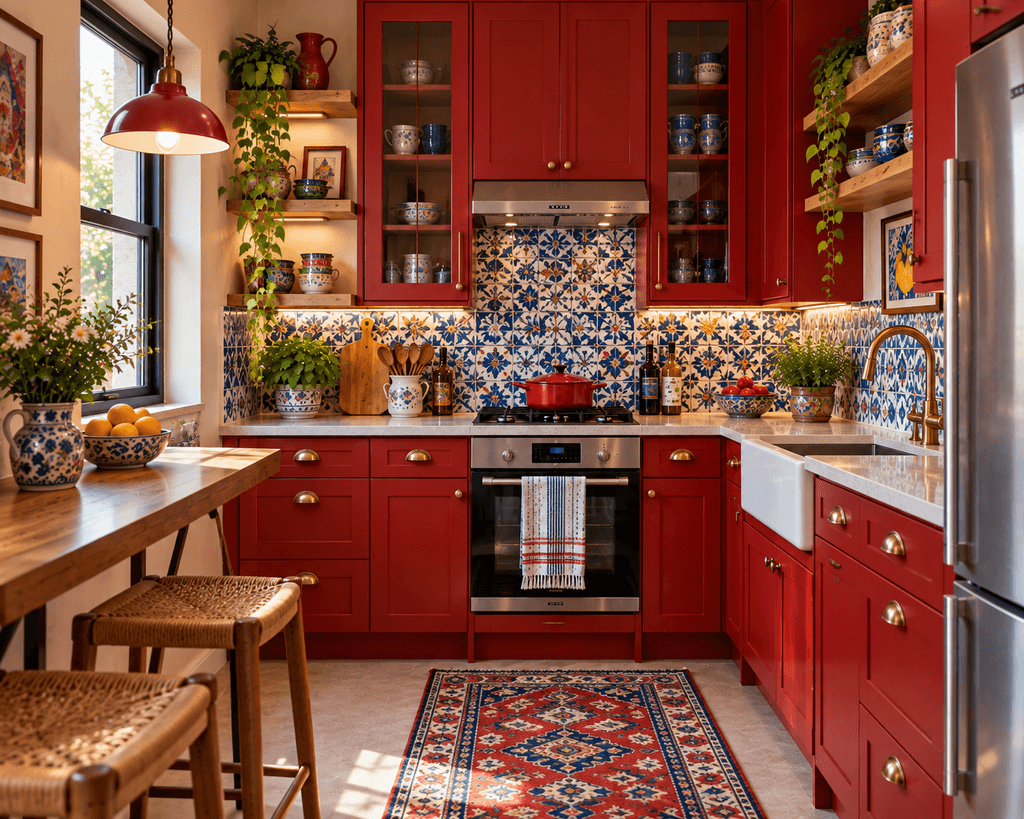
17. Small Kitchen with Bold Red Accent Cabinets
Give red a defined role: try one row of lower cabinets, a small backsplash or a few accessories against cream walls. Test a sample in the actual kitchen before painting. Keep the other colors controlled so the red looks intentional rather than making the compact room feel busy.
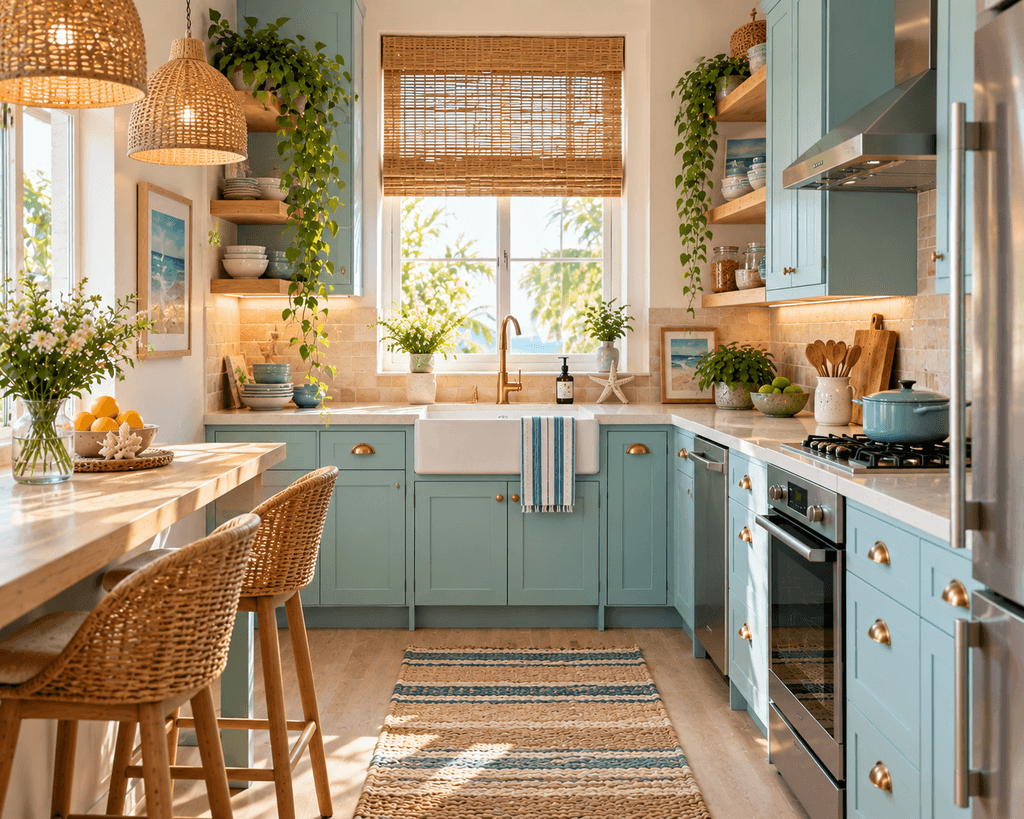
18. Coastal Small Kitchen with Aqua and Sand Colors
For a coastal look, pair soft aqua cabinets with sandy beige tiles and pale wood to keep a compact kitchen light and cohesive. Try it in stages: photograph the room in daylight, compare an aqua sample with the existing worktop, and repeat the chosen shade in one washable accessory. Choose a low-profile runner that does not catch under cabinet doors, and keep woven shades and other textiles away from the hob. If natural light is limited, check the aqua shade under task lighting before committing.
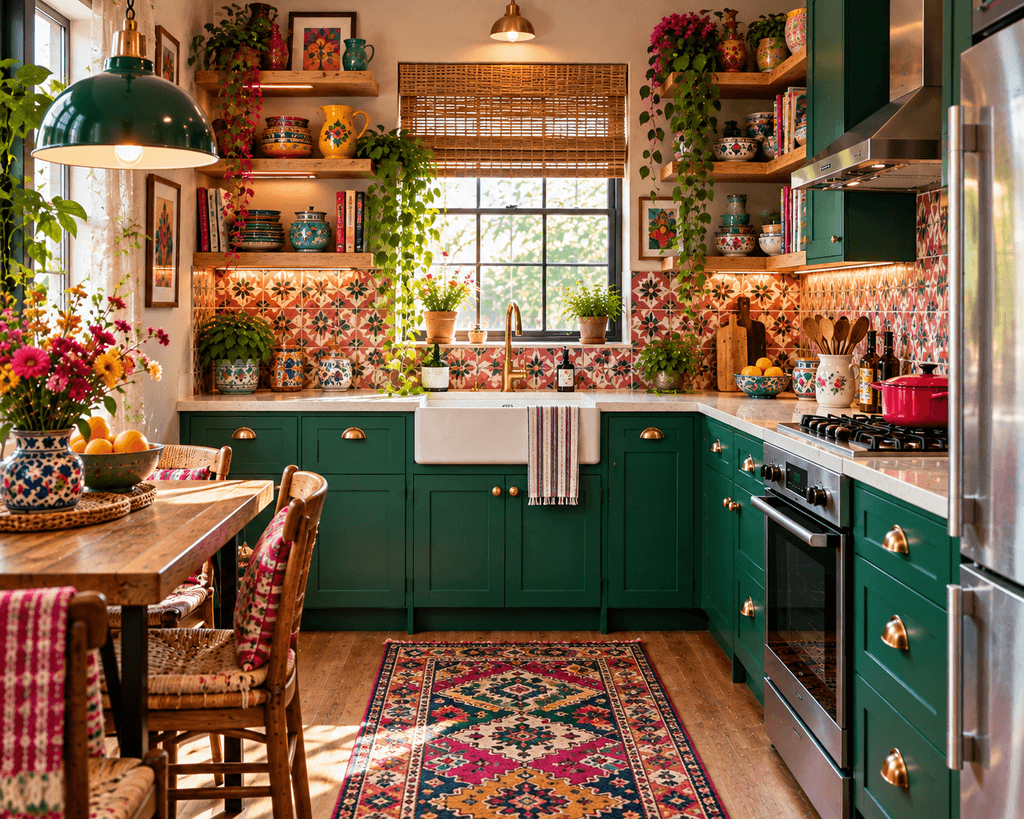
19. Colorful Maximalist Small Kitchen
Maximalist color can work in a tiny kitchen when patterns have boundaries. Choose one dominant cabinet color, one patterned surface and two or three contrasting accessories; keep the remaining supplies in closed storage. Try a cooking test: prepare a normal meal and notice whether display items block the chopping board, sink, vents or a drawer. Remove anything that interrupts the task. For a budget-friendly version, repeat one bold color through dishes you already use instead of filling shelves with new ornaments. The goal is expressive color, not reduced workspace.
20. Japanese-Inspired Small Kitchen with Soft Color
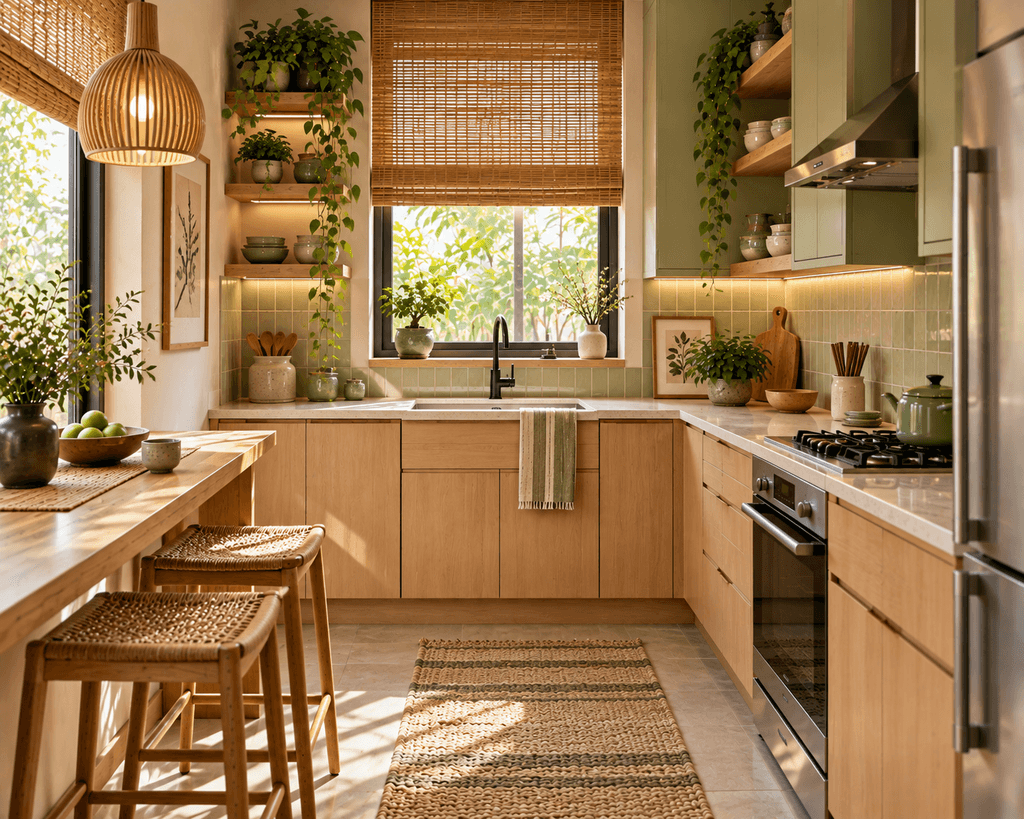
For a Japanese-inspired palette, combine pale wood with restrained matcha-green accents and simple ceramics. Limit open shelves to everyday pieces and leave some wall and worktop space clear. This works for small kitchens that need to feel calm without becoming entirely neutral.
Colorful Small Kitchen Ideas for Different Homes
Narrow rental galley: Keep the existing cabinets and repeat one accent through a washable runner, a tea towel and a framed print away from the hob. Choose low-profile accessories so the aisle stays clear. Test any removable adhesive in a hidden spot and check the lease first.
One-wall studio kitchen: Repeat a cabinet or backsplash shade in one dining accessory to connect the spaces. Prefer closed storage and keep the route to the refrigerator, sink and cooker unobstructed.
Dark compact kitchen: Compare paint samples in daylight and after dark. Prioritize useful task lighting, a clear worktop and a calmer background before buying more decorative pieces.
Family kitchen on a budget: Choose washable, durable accents and organize frequently used items first. A few coordinated pieces are easier to maintain than crowded display shelves.
A Practical Color Refresh You Can Test Before Buying
Best first move: keep the layout unchanged, then test one accent color with items you already own. This suits renters, small budgets and anyone unsure about committing to paint.
- Photograph the kitchen in daylight and notice the natural focal point.
- Choose one accent and one neutral, such as sage with cream or blue with pale wood.
- Test with reversible items like a towel, tray or artwork away from heat and food preparation.
- Check function: open appliance doors and protect the main walkway and worktop.
- Look again after dark before deciding whether permanent paint is worth the cost.
Two Measured Small-Kitchen Color Plans
Start with the floor plan, not the paint chart. Color can change the mood of a compact kitchen, but it cannot fix a blocked aisle or a refrigerator door that will not open. These measurements are illustrative calculations, not building-code clearance recommendations.
Example 1 — a 2.1 m-wide galley: If base units extend 60 cm from each facing wall, the open width is approximately 90 cm (210 − 60 − 60 = 90 cm) before handles, people or open doors. That may be too tight for your household. Open the dishwasher, oven and drawers to test movement. Add color to existing cabinet fronts or a backsplash rather than putting a trolley in the aisle.
Example 2 — a 2.4 m-long one-wall kitchen: When worktop space is scarce, avoid filling it with decorative jars. Try a colored tea towel on a safe hook, matching everyday dishes in existing storage, and one nearby dining accessory. Keep textiles away from cooking heat and avoid loose rugs that could cause trips. For shared-room planning, compare these open-plan kitchen and dining layouts.
Which Color Update Is Worth the Commitment?
Renters and first-time decorators should usually test movable accents before changing fixed surfaces. Compare reversibility, upkeep and disruption, and follow product instructions and lease terms. For painting and renovation, the EPA’s remodeling guidance explains why ventilation and preparation matter.
| Update | Best use | What to check |
|---|---|---|
| Washable textiles and everyday dishes | Reversible color test | Keep fabric away from the cooker and worktops clear. |
| Portable art and accessories | Empty shelf or wall outside cooking zones | Stable placement, lease rules and door clearance. |
| Removable backsplash film | Permitted, compatible surfaces | Product heat and moisture limits; never cover unsuitable areas near a hob. |
| Cabinet paint or permanent tile | Owner-approved longer-term refresh | Preparation, ventilation, curing and possible professional work. |
How do you add color without cluttering a small kitchen? Keep the main worktop clear, repeat one accent in two or three useful objects, and leave some empty space on open shelves. If storage is the real issue, use this room-by-room organization checklist. For low-cost projects using existing materials, see these DIY home decor ideas.
Paint, Wallpaper and Cooking Safety in a Small Kitchen
For paint or cabinet refinishing, follow product instructions, ventilate the area during and after painting, and avoid disturbing old coatings without checking for lead-paint risks. The U.S. Environmental Protection Agency’s remodeling guidance explains ventilation and preparation. Renters should confirm permission before painting or applying adhesives.
Keep curtains, paper decorations and other flammable materials away from the stove. The U.S. Fire Administration’s cooking-safety guidance explains key precautions. A kitchen beneath stairs, a new glass-block wall or changes to plumbing, electrical systems or ventilation need qualified professional assessment under local rules.
Example: A narrow rental galley kitchen can gain a repeated blue accent from a tea towel, a small framed print away from the hob and matching storage jars, without altering cabinets or reducing counter space. For a dark kitchen, compare colors under actual task lighting before buying more.
Before decorating, use the small apartment organization checklist to clear the surfaces needed for food preparation.
Four Color Palettes for Different Small Kitchens
| Your kitchen | Color palette to test | Low-commitment first step |
|---|---|---|
| Narrow rental galley | Soft blue, warm white and light wood | Repeat blue in washable textiles and a print away from heat; keep door swings clear. |
| Dark compact kitchen | Pale sage, cream and warm metal | Improve task lighting first, then compare samples after sunset. |
| One-wall studio | Dusty pink, off-white and oak | Carry one accent from the kitchen into a dining accessory. |
| Busy family kitchen | Navy accents, warm white and muted yellow | Choose wipe-clean storage and removable accessories before painting. |
Choose a palette based on your light, layout and cleaning needs rather than the color alone. Start with movable items, then decide whether permanent paint or tile is worth the cost. Preserve food-preparation space, ventilation and safe clearance around the hob.
Make Color Work in an Everyday Small Kitchen
Where to Add Color When Counter Space Is Scarce
In a very small kitchen, color should not compete with the surface you need for chopping, serving or washing up. Start with a vertical or already-used surface: cabinet fronts, the backsplash, a narrow section of wall or the everyday mugs you keep in a cupboard. A single blue cabinet run can make more impact than five decorative objects on the worktop. If you prefer movable accents, choose a washable towel, a tray stored away after use or a print positioned well away from the hob.
Try this five-minute test: prepare an ordinary meal with your proposed accessories in place. Can you still set down a chopping board, reach the sink and open every drawer? If not, remove an item rather than buying more storage to display it. When coffee equipment is taking over the preparation area, these compact coffee corner setups offer ways to group supplies without creating another obstacle.
Choose Colorful Finishes That Work After the Photos
A kitchen color scheme has to survive cooking, cleaning and changing light. Before choosing cabinet paint, tile or peel-and-stick covering, check whether the product is intended for that particular surface and exposure to moisture, heat and routine wiping. Test a small, inconspicuous patch, follow the manufacturer’s preparation and curing instructions, and avoid placing decorative films or textiles close to burners. A beautiful finish that peels, traps grease or cannot be cleaned easily is not a useful upgrade.
For a household that cooks every day, begin with a wipe-clean accent and leave frequently touched handles and work areas simple. For a rental, keep original fittings and choose reversible items only where the lease and surface condition allow. For a studio where the kitchen faces the living space, repeat one accent in the eating area instead of covering every cabinet: these small apartment dining layouts show how to connect the zones while preserving walking space.
Decision rule: Keep a color change only if it passes three checks: it looks good in daylight and evening light, it does not reduce safe cooking or walking space, and it can be maintained with your normal cleaning routine. If one check fails, scale the accent back before spending more.
How to Add Color to a Kitchen With Little Natural Light
Best first step: test the lighting before buying paint. A north-facing or windowless kitchenette may make the same blue or green look different at breakfast and dinner. Switch on the actual task lights, hold two sample colors beside the existing cabinets and worktop, and photograph each option without filters. Keep the main preparation surface well lit; color alone cannot replace practical lighting. If the room is dark, try pale cabinet fronts or one small accent rather than painting every surface a deep shade.
Low-cost example: in a one-wall rental kitchen, keep cream cabinets and use one cobalt-blue tea towel and matching mugs before considering adhesive tile. If the blue looks dull under the existing lights, adjust the lighting or choose a warmer accent instead of adding more decor.
Keep Color Changes Practical for Families and Different Mobility Needs
A colorful kitchen still needs to work for the people using it. Before adding a trolley, stool, rug or freestanding cabinet, check the walking route with appliance doors open and with everyone who regularly cooks or moves through the space. People using mobility aids may need more turning and approach room than a layout photograph suggests. Keep often-used items within comfortable reach, choose slip-resistant, easy-clean finishes, and avoid decorative objects protruding into circulation space. The U.S. Access Board’s accessible-route guide explains the importance of clear paths and turning room; its formal standards do not automatically apply to every private home, so tailor choices to local requirements and household needs.
Two-minute household test: carry a tray from the sink to the eating area while someone opens a cupboard. If the proposed decor creates a pinch point, keep the color idea but move it to a cabinet front, wall print away from heat, or everyday dishware. Function and access come before the visual effect.
Small Colorful Kitchen Checklist
- Measure the room and check appliance-door and drawer clearance.
- Choose one main color and one supporting accent.
- Protect clear food-preparation space, task lighting and the walkway.
- Use closed storage for clutter and keep open shelving selective.
- For rentals, check lease rules before painting, drilling or applying adhesives.
- Test color samples in daytime and evening light.
Frequently Asked Questions About Colorful Small Kitchens
What colors work best in a very small kitchen?
There is no single best color. Soft green, blue, yellow and warm neutrals can all work when balanced with good lighting and a clear background. For bold shades, try one cabinet run or backsplash first.
How can I add color to a rental kitchen?
Start with removable accessories: colorful dishes, towels, a washable runner and framed prints away from cooking heat. Confirm lease rules and surface compatibility before making changes to cabinets, tiles or walls.
Which layout is most practical for a narrow kitchen?
A one-wall or galley layout can work well. The right choice depends on the available aisle, appliance door swings and where the sink and work surfaces sit. Measure the room before choosing furniture or an island.
Can dark cabinets work in a small kitchen?
Yes. Forest green, navy and charcoal cabinets can look intentional in compact kitchens when paired with sufficient task lighting, lighter worktops or walls and restrained accessories. Test samples in the actual room.
Final Thoughts
A colorful small kitchen works best when layout, storage and everyday movement come first. Choose a palette you genuinely enjoy, repeat it in a few places, and leave enough clear counter and floor space for cooking. A teal backsplash, pink cabinet fronts or warm terracotta accessories can add personality without a full remodel. If your kitchen connects to a dining area, these open plan kitchen and dining room ideas show how to carry colors between zones. For a compact room that needs storage first, use our small space organization guide. Start with one change, test it in your room, and build from there.