
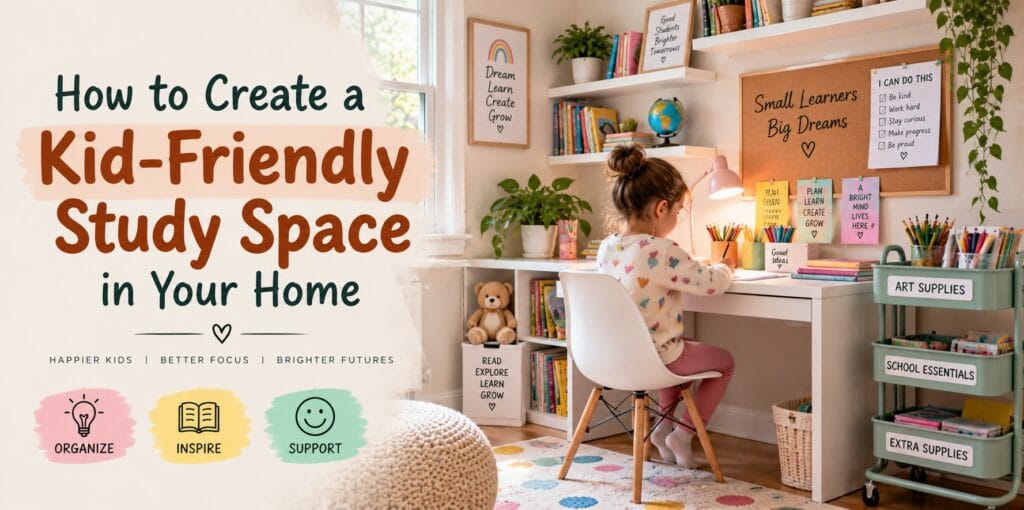
A kid-friendly study space does not require expensive furniture or a picture-perfect room. A simple learning nook with good lighting, comfortable seating, practical storage, and only the essential study supplies can help children focus, work more independently, and enjoy learning at home.
A learning nook can work in a rental, shared bedroom or at the family table. Younger children may benefit from nearby adult help; older children may prefer a quieter corner. Choose the spot for the task, then test it for a week before buying furniture.
Quick Takeaway: What Makes a Good Kid-Friendly Study Space?
A good kid-friendly study space is a repeatable, low-distraction place with comfortable seating, enough light and essential supplies within reach. It can be a bedroom corner, dining-table spot or small nook. Start with a cleared surface, supportive seat and supply caddy; test the setup before buying new furniture.
Why a Study Space Matters
A study space matters because it gives homework a predictable place and reduces avoidable friction from noise, clutter, missing supplies, or uncomfortable seating. The goal is not perfect silence or an elaborate room; it is a setup that helps your child settle into the task.
A consistent study spot can help your child:
- Begin a task with fewer delays when the work surface is ready
- Practice a repeatable homework routine
- Stay organized
- Take age-appropriate responsibility for returning supplies
- Mark a clear transition between play and study time
A repeatable place can make homework easier to start, but adapt the routine if your child needs movement, a different level of adult help, or a quieter time.
Set Up the Study Space
Choose the Right Location
You do not need a separate room. Choose the quietest practical location where your child can still get the level of adult help they need. A bedroom corner can suit an independent older child, while a younger child may work better at a dining table or living-area nook during a quiet period. Scholastic likewise recommends matching the location to the child: some benefit from a secluded spot, while elementary-age children may prefer working near family support.
When choosing a location, consider:
- Natural lighting if possible
- Less noise and fewer distractions
- Enough space for books and supplies
- Comfortable seating
If a television is usually on nearby, choose a quieter time or position the desk away from the screen. A shared family table can still work when interruptions are manageable and an adult can help when needed.
Keep the Space Simple
Give your child a say in a few decorations, but keep the writing surface clear except for the current task and essential supplies. Move toys into a bin or outside the immediate view, then ask whether the setup feels easier to use.
For a simple reset routine, aim for a space that is:
- Clean
- Organized
- Comfortable
- Easy to maintain
Keep one clear spot for homework and one container for supplies. At the end, ask your child to put away the same few items. This quick reset makes the space ready for the next task.
Use Child-Sized Furniture
Furniture should fit the child rather than forcing the child to fit the furniture. Aim for a stable chair with back support, a work surface that allows relaxed shoulders and elbows, and feet supported by the floor or a footrest. Recheck the setup as your child grows, especially if they spend longer periods reading, writing, or using a computer.
Look for:
- Chairs with back support
- Tables at the correct height
- Easy access to learning materials
- Comfortable seating arrangements
Test the fit by asking your child to sit and write for a few minutes. If they hunch, swing their feet or strain to reach the page, adjust the chair, add a stable footrest or change the work surface before buying a new desk.
Safety check: Keep lamp and charging cords away from walkways, use age-appropriate supplies, and secure tall storage furniture as directed by the manufacturer. The U.S. Consumer Product Safety Commission’s Anchor It! programme explains how anchoring furniture with drawers, doors or shelves can prevent tip-overs.
Organize School Supplies
Searching for missing pencils, notebooks or books interrupts a task. Keep the supplies used most often together and easy to return after homework.
For younger children, start with a stable writing surface, supportive chair, reachable books and one sturdy organizer. Keep only the supplies needed for today’s schoolwork nearby. Store extras elsewhere so your child can put things away without help.
Store supplies in simple containers:
- Pencil holders
- Small baskets
- Shelves
- Labeled boxes
Show your child where each item belongs, then let them return the pencil, folder and books at the end of a short session. If a container is too difficult to open or reach, change the storage instead of repeating reminders.
First-Grader Learning Nook: Essentials and Budget Choices
For a first-grader, start with a stable writing surface, supportive chair, paper, pencils, current school books and one portable supply caddy. Before buying a new desk, ask whether your child can sit comfortably, see the page clearly and return supplies without help. A shared dining table can work well if the supplies have a consistent place to go afterwards.
| Need | Try first | Check |
|---|---|---|
| Seating | Stable family chair and foot support | Comfortable writing position |
| Supplies | Pencils, eraser, paper and current books | Easy to grip and replace |
| Storage | One caddy and a homework folder | Child can reset independently |
| Lighting | Room light or stable task lamp | No glare or loose cords |
Rental example: Use one end of the dining table, a reused pencil pot and a low shelf for the folder. A free daily checklist can help a caregiver plan realistic homework and break times without buying another planner.
Durable Supplies for a First-Grader’s Learning Nook
What supplies are worth buying for a first-grader? Start with the teacher’s list: comfortable pencils, an eraser, paper, current books, a durable homework folder and one portable caddy. Reuse a stable table and chair if they fit. Choose items the child can open, carry and return independently; add a book stand, footrest or picture checklist only when it solves an observed problem.
- Check durability: Look for reinforced folder edges, secure caddy handles and containers that wipe clean.
- Check independence: Have the child carry the caddy, open the folder and return three items without assistance.
- Check fit: Test the writing position and foot support before purchasing a desk or chair.
- Check after one school week: Replace only the item that repeatedly fails, spills or gets lost.
A Four-Step Homework Start-and-Finish Routine
- Give a short warning before moving from play to homework.
- Let the child gather the book, pencil and folder.
- Help read the first instruction, then let the child try.
- Return supplies and check what goes back to school.
The American Academy of Pediatrics recommends a consistent, low-distraction homework space, allowing enough time for assignments, and speaking with teachers when a child struggles. Reading Rockets recommends keeping supplies organised and talking with the teacher when homework is unclear.
Make the Study Space Comfortable and Flexible
Adjust for Different Learning Needs
Adapt the nook to the child. Allow short movement breaks when helpful; for noise or glare sensitivity, try another seat or lamp position before buying equipment. For difficult written directions, show one step at a time or use a visual task list. Keep learning aids within reach, follow any school support plan, and discuss persistent difficulties with the teacher.
Add Good Lighting
Good study lighting makes the page easy to read without glare or hand shadows. Begin with comfortable room lighting. Add a stable task lamp if needed. Scholastic’s child-friendly workspace guidance recommends combining ambient and task lighting.
Check the page from your child’s usual seated position, both during daylight and when homework normally happens in the evening:
- Use a stable task lamp suited to your child’s age
- Light the page evenly while keeping the room comfortably lit
- Move the lamp or desk if shadows cover the writing hand or page
Position a lamp so it lights the page without shining into your child’s eyes or creating distracting glare.
Reduce Distractions
Distractions vary by child and task. Start by reducing the sights and sounds that regularly interrupt homework in your household.
Common distractions include:
- Television
- Mobile phones
- Loud conversations
- Toys around the study area
Keep only the materials needed for the current task nearby and move recreational screens or toys out of the immediate work area. If your child needs supervision, reduce distractions without isolating them from the adult support they need.
Create a Fun Learning Atmosphere
A study space should feel welcoming, not stressful.
Simple ideas:
- Display encouraging quotes
- Add artwork made by your child
- Use colorful folders
- Include a calendar or achievement board
Personal touches can make the area feel like your child’s own without turning the desk into a display shelf. Keep the work surface mostly clear and place artwork, a calendar, or a small encouragement board nearby so the space stays welcoming but usable.
Make It Flexible
Children grow quickly, and their learning needs change.
A preschool child may need:
- Drawing supplies
- Alphabet charts
- Interactive materials
Older children may need:
- Computer space
- Bookshelves
- Homework planners
Adjust the setup as your child develops. A useful test is whether the child can sit comfortably, reach everyday supplies, reset the area with minimal help, and complete the kinds of tasks school currently requires.
Involve Your Child in the Process
Invite your child to help set up the space, then let them try a real reading or writing task before deciding where everything should stay.
Allow them to:
- Choose colors
- Pick storage containers
- Organize books
- Decorate the area
Give your child two or three practical choices rather than unlimited control—for example, let them choose between two storage bins, select a desk-lamp style, or decide where a small piece of artwork goes. This adds ownership while keeping the space functional.
Sharing One Study Table
When siblings share a table, give each child a separate folder and a clear side of the surface. Stagger their starts if one needs quiet while the other needs spoken help. For example, help a younger child read the first instruction while an older sibling gathers supplies. Pack both folders away before meals.
Study Space Setup by Age and Home Layout
Choose a setup that fits your child and your available space. These are flexible examples, not fixed developmental milestones.
| Child or home | Essentials | Helpful adult role |
|---|---|---|
| Preschool | Washable supplies, picture books, low work surface | Stay close; use short playful activities |
| Early primary | Pencils, paper, current books, supportive seat, small caddy | Help begin and review instructions |
| Older primary | Planner, reference books, clear desk, simple filing | Check the plan, then step back |
| Shared or small home | Repeatable table spot, portable caddy, task lamp | Agree on quiet time and cleanup routine |
Three Realistic Study Nooks You Can Copy
Small rental or shared dining table: Keep pencils, a notebook and current reading material in one handled caddy. Use the same end of the table each day, then clear everything away before meals. No drilling or dedicated desk is needed.
First-grader who needs nearby help: Choose a corner of the family room where an adult can answer questions without hovering. Add a stable chair, foot support if needed, and a small lamp positioned to avoid shadows on the page.
Older child sharing a bedroom: Face the writing surface away from toys or recreational screens, use one folder for unfinished work, and leave the main route to the door clear. Ask the child to test the spot for a week before adding furniture.
Troubleshoot the Study Nook After One Week
If the nook is not working, change one thing at a time rather than buying more furniture. Ask your child what feels uncomfortable or distracting, observe a few homework sessions, and try the most relevant adjustment below for several days.
| What you notice | First adjustment to try | What to check |
|---|---|---|
| Homework starts with repeated searching | Keep current supplies in one portable caddy and use a consistent start cue. | Can your child begin with fewer interruptions? |
| The chair or table feels uncomfortable | Check back and foot support, writing height, and whether a short movement break helps. | Can your child work without straining or staying in one position too long? |
| Reading pages are hard to see | Move the task lamp, adjust the page angle and reduce screen or window glare. | Can your child see the page comfortably? |
| Your child avoids the nook | Ask why; try a calmer time, a different nearby spot, or more adult support. | Does the revised setup suit the task and the child? |
When the Desk Is Not the Problem
If assignments stay confusing or upsetting after reasonable changes to light, noise and seating, ask the teacher what support or task adjustment is appropriate. Share one concrete example of where your child got stuck. A new desk cannot fix unclear instructions.
Set Up a Study Nook in 20 Minutes
- Minutes 1–4: Choose a repeatable spot away from the TV and busy walkways.
- Minutes 5–8: Check chair support, foot placement, writing height and glare.
- Minutes 9–12: Gather current books, paper, pencils and one organizer.
- Minutes 13–16: Move toys and nonessential devices; tidy cords and check stability.
- Minutes 17–20: Ask your child to begin a short task and put supplies away.
Kid-Friendly Study Space Checklist
- A repeatable location with manageable noise
- Stable, comfortable chair and suitable work surface
- Good light without glare
- Only the current supplies, within easy reach
- Simple storage and a clear reset routine
- TV and nonessential screens outside the work area
- Furniture secured where necessary and cords out of walkways
Frequently Asked Questions
Does a child need a separate room for studying?
No separate room is necessary. A regular corner of a shared table, bedroom or living room can work if your child can see the task clearly, reach supplies and get appropriate adult support. Store materials in a portable caddy when the surface has another use.
What should be in a first-grader’s study space?
Start with a comfortable writing surface and chair, pencils, paper, crayons, current books and one easy-to-use organizer.
How can I make a study space work in a small home?
Use a shared table and portable homework caddy, then reset the surface after each session. See our small space organization hacks.
How do I reduce glare on books and homework pages?
Place the desk or lamp so bright windows and bulbs do not shine directly into your child’s eyes or reflect off the page. Combine comfortable room light with an adjustable task lamp, and ask your child to check the page from their normal sitting position.
Should a study space be completely silent?
Not necessarily. Aim for manageable sound, and choose the quietest spot that still offers appropriate supervision and help.
What if my child keeps leaving the study space?
Check whether the chair fits, the task feels manageable, or your child needs a short movement break or nearby help. Ask what is making the space difficult to use, then adjust one factor and see whether the next session goes more smoothly.
Can siblings share one study space?
Yes. Give each child a separate folder or caddy and agree on a simple turn-taking plan for adult help. Start together only when their tasks and noise needs are compatible; otherwise use short, staggered sessions. Clear the table between uses so shared space stays practical.
How do I know whether the study space is working?
After five school days, ask three questions. Can your child find supplies? Can they begin with fewer reminders? Are they comfortable? If not, change one factor, such as the chair, lamp, location or start cue. Test the adjustment for a few sessions before buying furniture.
Can a kid-friendly study space include a computer or tablet?
Yes, when schoolwork requires one. Position the screen to reduce glare, keep charging cables away from feet, and close unrelated games or notifications during the task. A separate clear area can still be useful for reading and writing on paper. Match the setup to the assignment and the child’s needs rather than banning a tool required by school.
Sources: Scholastic’s workspace guidance covers lighting, supplies and family support. The American Academy of Pediatrics’ sleep guidance explains why a regular daily routine and adequate rest matter alongside homework arrangements.
Pair the nook with daily habits that help kids learn and our guide to children’s independence. For a break from desk work, try screen-free activities or indoor activities for rainy days.
Final Thoughts
A useful study nook is one your child can return to comfortably, not a perfect-looking desk. Start with a stable work surface, clear lighting and only the supplies needed for today’s task. Test it for a week, ask your child what helps, and make small adjustments before spending more.
For a shared dining table, keep pencils, paper and other supplies in one portable caddy so the surface can be cleared for meals and reset quickly for the next study session.
Next step: Choose the row in the age-and-home comparison that best fits your situation, gather the supplies you already own, and invite your child to try the nook with a short reading or writing activity today.